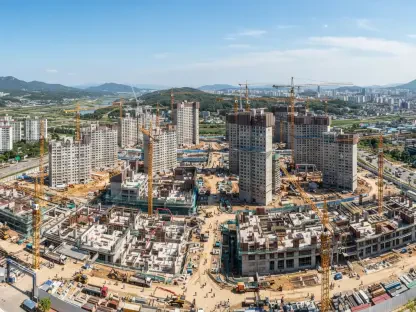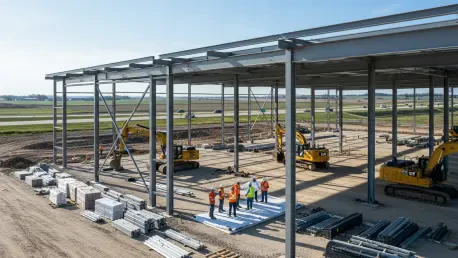

Construction in Central Illinois has undergone a massive transformation, moving away from traditional agricultural storage toward sophisticated industrial and commercial infrastructure that meets modern global demands. As one drives through cities like Peoria, Bloomington, and Springfield, the visual evidence of this evolution becomes undeniable through the rising steel skeletons and advanced logistical hubs that define the current landscape. Kelley Construction stands at the forefront of this regional metamorphosis, leveraging decades of expertise to bridge the gap between legacy building practices and the high-tech requirements of the current decade. The firm has successfully managed to integrate sustainable energy solutions with heavy industrial capacity, ensuring that local businesses can compete on an international stage while maintaining roots in the Midwest. This shift is not merely about aesthetic changes to the horizon but represents a deeper economic recalibration designed to attract diverse industries and a specialized workforce to the heart of the state.
Integrating Advanced Engineering: Regional Identity
The intersection of high-precision engineering and local architectural heritage requires a delicate balance that preserves the character of Central Illinois while introducing necessary modern efficiencies. Kelley Construction has prioritized this equilibrium by implementing building information modeling (BIM) technologies that allow for predictive analysis and resource optimization long before the first shovel hits the ground. By utilizing these digital twins, project managers can anticipate environmental stressors unique to the Illinois climate, such as drastic temperature fluctuations and soil instability, leading to more resilient structures. This technological integration ensures that industrial facilities are not just large enclosures but are smart assets capable of real-time monitoring and energy management. Consequently, the regional supply chain has become more robust, as new facilities are designed to accommodate automated logistics systems that streamline the flow of goods from the rural heartland to urban centers.
Beyond technical specifications, the firm has reshaped the local labor market by fostering a culture of continuous skill development among its tradespeople and subcontractors. This commitment to professional growth has resulted in a more versatile workforce capable of handling complex installations that were previously outsourced to coastal firms. By keeping these specialized roles within the community, the economic impact of every project is amplified, circulating wealth back into the local school systems and municipal services. The physical manifestations of this expertise are visible in the seamless integration of renewable energy components, such as rooftop solar arrays and geothermal heating systems, into traditional warehouse designs. This approach has effectively demystified green technology for local stakeholders, proving that sustainability and profitability are not mutually exclusive in the heavy construction sector. As a result, the region has seen a surge in interest from tech-adjacent manufacturing companies looking for modern, energy-efficient spaces.
Strategic Infrastructure: Driving Economic Revitalization
Large-scale infrastructure projects act as catalysts for peripheral commercial development, creating a ripple effect that revitalizes stagnant urban corridors and underutilized industrial zones. When Kelley Construction undertakes a major renovation or a ground-up development, the surrounding area often experiences a subsequent influx of retail, dining, and housing investments. This phenomenon is particularly evident in the redevelopment of former manufacturing sites, where the firm has repurposed contaminated brownfields into vibrant logistical hubs that meet current environmental standards. Such projects require extensive coordination with state regulators and local planners to ensure that the infrastructure supports both current needs and future expansion. By navigating these complex bureaucratic landscapes, the firm provides a blueprint for how private-sector initiatives can align with public-sector goals to foster regional prosperity. This strategic alignment has turned once-overlooked parcels of land into high-value assets that contribute significantly to the local tax base.
The construction landscape across Central Illinois shifted decisively toward a model of efficiency and technological sophistication that prioritized long-term durability over short-term savings. Kelley Construction demonstrated that the integration of localized knowledge with global standards of excellence could successfully redefine a region’s economic trajectory. Stakeholders who embraced these comprehensive building strategies found themselves better positioned to weather market volatility and attract top-tier talent from across the nation. Moving forward, the focus must remain on expanding regional broadband infrastructure and electrical grid capacity to support the increasing density of smart buildings. Investing in the apprenticeship programs that sustained this growth became a vital component of municipal planning, ensuring a steady pipeline of experts for the next wave of industrial modernization. By viewing every structure as a piece of a larger interconnected network, the region solidified its role as a critical hub for innovation and distribution, providing a clear pathway for continued growth.