
The Green Tools team provides the essential technical resources and planning assistance needed to ensure every municipal department meets its sustainability goals. This foundational support has been a primary driver since King County first articulated its vision for sustainable development over two and a half decades ago. What began as a bold environmental commitment in 1999 has matured into a sophisticated strategy that permeates all levels of public works and community development. By treating green building not as a specialized niche but as a standard operating procedure, the region has successfully navigated the complexities of rapid urban growth while maintaining its ecological integrity. This initiative serves as a model for how a major metropolitan government can move beyond rhetoric to achieve measurable, lasting results. The county’s journey demonstrates that consistent leadership and a clear policy direction are necessary to transform the architectural and environmental landscape effectively.
The Legislative Framework: Codifying Environmental Responsibility
The institutional success of these green building practices is deeply rooted in a legislative framework that successfully converted elective environmental goals into mandatory standards. In 2001, a landmark Executive Order established the first rigorous green building requirements for all county-led capital projects, marking a departure from traditional construction methods. This policy was further solidified in 2005 when it was codified into the Green Building Ordinance, creating a permanent mandate for environmental stewardship. This legislative evolution ensured that every public project, whether a large transit facility or a small community center, adheres to high standards of resource conservation. By making sustainability a legal requirement, the county removed the uncertainty often associated with green initiatives, providing a stable environment for long-term planning and investment in high-performance infrastructure across the region.
Beyond simple compliance, the Green Building Ordinance focuses on the entire lifecycle of a project to maximize environmental and economic returns. This comprehensive approach guides a building through every stage of its existence, starting from the initial conceptual design and planning through construction, maintenance, and eventually deconstruction. By prioritizing high-efficiency heating and cooling systems alongside non-toxic materials, the county reduces the operational costs and environmental footprint of its facilities. This system of accountability requires departments to report on energy use, water consumption, and waste diversion, ensuring that buildings perform as intended throughout their service life. The emphasis on durability and low-impact operations reflects a shift toward a circular economy model, where public assets are managed as long-term investments rather than temporary expenditures, ultimately saving taxpayers significant funds over time.
The Social Dimension: Bridging Sustainability and Social Equity
A central pillar of the county’s long-term strategy is the deliberate intersection of sustainable construction and social equity for all residents. The county applies its rigorous green building requirements to every affordable housing project it finances, ensuring that lower-income families reside in homes that are healthy and energy-efficient. This approach recognizes that green housing provides more than just environmental benefits; it offers a direct solution to the high energy costs and indoor air quality issues that frequently disproportionately affect vulnerable populations. By utilizing high-efficiency windows, advanced insulation, and non-toxic building materials, these developments significantly lower the monthly utility burdens for residents. This commitment to equitable sustainability ensures that the benefits of modern, high-performance architecture are accessible to everyone, fostering a more inclusive urban environment.
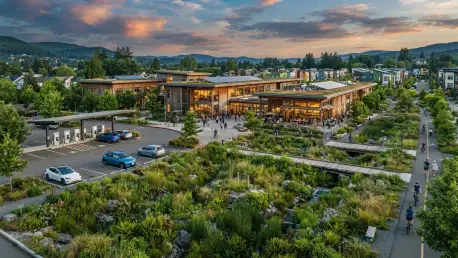
The White Center HUB and Canopy Apartments represent a premier example of how these equitable green building principles are put into practice today. This $16.1 million community-led development provides 76 affordable homes for households earning well below the area’s median income, while featuring a variety of advanced sustainable technologies. The project includes extensive solar panel arrays and is entirely fossil-fuel-free, significantly reducing the carbon footprint of the residential complex. Additionally, the development features on-site electric vehicle charging stations and sophisticated stormwater treatment systems that manage runoff while preserving existing mature trees. By integrating critical community services such as health and dental care and youth programs, the project demonstrates how sustainable infrastructure can serve as a foundation for community resilience. This development serves as a modern blueprint for how housing and ecology coexist.
Infrastructure Innovation: Advancing Resilience and Energy Independence
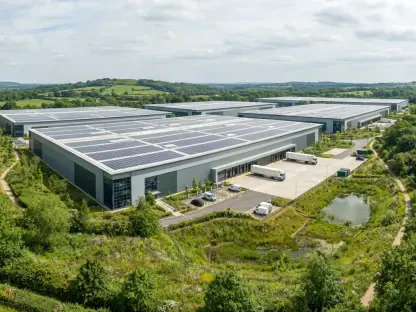
In addition to residential developments, the Green Building Ordinance has revolutionized the county’s critical infrastructure to enhance regional climate resilience. Modern facilities are now designed to be energy-independent, shielding public services from the volatility of energy markets and the instability of the power grid. For instance, the Vashon Recycling and Transfer Station has successfully achieved Zero Energy Certification, meaning it generates more renewable energy on-site than it consumes during daily operations. This level of efficiency is mirrored at the South County Recycling and Transfer Station, where solar arrays cover nearly three-quarters of the massive roof. These innovations not only reduce the environmental impact of waste management but also provide a template for how large-scale industrial facilities can contribute to a clean energy future. By prioritizing renewable energy, the county has decreased its reliance on external power sources.
Climate resilience is particularly critical for wastewater and transit systems that must withstand the increasing frequency of intense weather events. At the West Point Treatment Plant in Seattle, the installation of a first-of-its-kind battery system and high-capacity raw sewage pumps has significantly improved the facility’s storm readiness. These technological upgrades ensure that critical operations remain functional during power disruptions or heavy rainfall, preventing overflows and protecting the water quality of the surrounding environment. Similar principles are applied to maritime and transit infrastructure, such as the Pier 50 terminal for the Water Taxi, which utilizes green design to improve air quality and operational efficiency. By embedding resilience into the physical fabric of these essential services, the county ensures that its infrastructure remains reliable and safe for the public. This proactive approach to facility management mitigates the risks of climate change.
Holistic Progress: Ecological Health and Economic Growth
The scope of green building in the region extends far beyond traditional structures to include the preservation and restoration of vital natural habitats. The county has pioneered the integration of industrial infrastructure with ecological health, specifically through the pursuit of Salmon-Safe certification for major public works. This rigorous certification ensures that projects are designed and maintained in a way that protects local waterways and the diverse species that depend on them for survival. For example, the new recycling and transfer station in Algona and major sewer upgrades in Bellevue are setting national precedents by achieving this status. These projects prove that industrial facilities can exist in harmony with the environment by managing runoff and reducing the heat island effect. By treating the natural landscape as a critical component of the built environment, the county has successfully balanced urban development with ecological conservation.
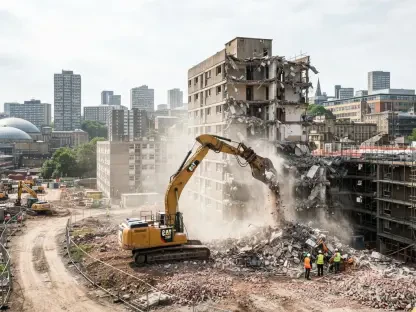
The 25-year legacy of sustainable development has also functioned as a significant engine for local economic growth and the diversification of the regional workforce. By prioritizing green construction, the county has created a demand for specialized green collar jobs that offer living-wage salaries and valuable technical skills. Programs targeting apprenticeships and specialized training ensure that local workers and diverse companies are well-equipped to participate in the burgeoning sustainable economy. A key component of this strategy is the emphasis on deconstruction over traditional demolition, which involves carefully disassembling structures to salvage high-quality materials. The Construction and Demolition Program successfully diverts up to 90% of waste from landfills, fostering a circular economy where salvaged wood, metal, and glass are reused. This practice not only protects natural resources but also supports local businesses that specialize in material recovery.
King County successfully established a sustainable blueprint that integrated environmental health, social equity, and economic pragmatism into the core of local governance. Over the past quarter-century, the initiative produced thousands of healthy, affordable homes and resilient infrastructure capable of withstanding modern climate challenges. Officials proved that long-term vision and mandatory standards could transform a metropolitan region without compromising its financial stability or operational efficiency. As the region moves forward, actionable next steps include scaling these proven strategies to reach more community-led projects and further refining the Green Building Ordinance to address emerging technologies. The program stood as a testament to the power of consistent policy and technical support in creating a more resilient urban future. By continuing to evolve these practices and fostering a culture of innovation, the county positioned itself to lead the nation in sustainable development for many years to come.