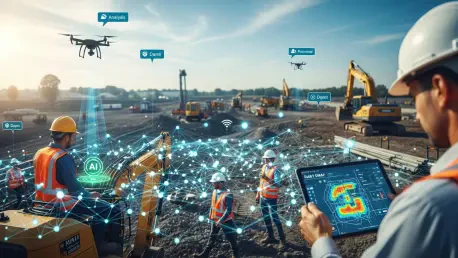

With over two decades of experience navigating the intersection of architectural design and emerging technologies, Luca Calaraili has become a leading voice in the evolution of modern construction. As the industry grapples with labor shortages and increasingly complex project demands, his work focuses on how digital tools can be harnessed to protect the workforce without sacrificing efficiency. Today, we explore the groundbreaking release of an AI-powered safety assistant designed to democratize high-level safety expertise across the entire building sector. Our conversation covers the shift from proprietary technology to open-access resources, the rigorous validation process involving dozens of field stakeholders, and the practical impact of real-time coaching on the front lines of a jobsite.
Large firms often keep proprietary technology in-house to maintain a competitive edge. Why choose to offer an AI-powered safety assistant free of charge to the entire industry, and how do you believe this open-access model will fundamentally change safety standards for smaller trade partners?
The decision to share this technology stems from a belief that safety should never be a competitive advantage; it is a basic human right for every person who steps onto a jobsite. By providing this virtual safety consultant free of charge, we are leveling the playing field for smaller trade partners who might not have the capital to invest in a dedicated, full-time safety department. When a small subcontractor can access the same high-level environmental and health framework as a multi-billion dollar firm, the entire industry’s baseline for protection rises. This open-access model turns safety into a shared language, ensuring that the worker on a small renovation project is just as protected as the one building a massive skyscraper.
This safety tool utilizes internal environmental and health frameworks alongside OSHA standards rather than the general internet. How was the AI trained to ensure policy citations are accurate, and what specific steps were taken to validate the tool through jobsite pilots before its public release?
We were extremely intentional about the “brain” behind this tool, choosing to feed it a curated diet of our internal health and safety protocols and official OSHA standards rather than letting it scrape the unpredictable landscape of the open internet. To ensure the advice it gives is ironclad, we engaged in a collaborative design process and extensive field pilots involving more than 80 stakeholders who poked and prodded the system in real-world conditions. This wasn’t just a tech experiment; we also brought in an independent external risk partner to conduct a full review of the AI’s logic and citations. Only after proving its reliability through these rigorous tests did we feel confident enough to move toward a public release.
Field teams can take photos of site setups, such as scaffolding or vertical shafts, to receive instant coaching. Can you walk through a specific scenario where this real-time feedback prevented a hazard and describe how the tool facilitates technical conversations between superintendents and trade partners?
Consider a scenario on a high-pressure lab project where a superintendent, like Darren Dreas, is looking at a vertical shaft and wondering if it requires a specific “confined space” permit. Instead of waiting hours for a consultant to return a call, he can use the tool to generate a decision flow chart and a start-of-day permit checklist right there on the spot. This immediate feedback doesn’t just catch errors; it transforms the dynamic between the superintendent and the trade partner’s safety manager. They can look at the phone screen together, review the specific policy citations provided by the AI, and have a factual, technical conversation that removes the guesswork and ego from safety enforcement.
Transitioning the platform to work across both OpenAI and Google’s Gemini environments offers builders more flexibility. How do you manage data security for external users who may be hesitant about privacy, and what specific measures ensure that their sensitive jobsite information remains confidential?
We recognize that data privacy is a significant hurdle for many builders, which is why we have built a clear, impenetrable wall between our internal operations and the external version of the tool. When an outside contractor uses the assistant, we have absolutely no visibility into the questions they ask or the photos they upload; their data stays within their chosen environment. By offering the tool on both OpenAI and Google’s Gemini, we allow builders to stick with the ecosystems where they already have established security protocols and comfort levels. Internally, we operate within a secure enterprise environment with strict data controls, ensuring that our proprietary site information is never compromised.
With over 25,000 interactions already logged during the pilot phase, what trends have you observed in how workers interact with AI? How do you plan to scale this technology to address more complex environmental or health risks beyond basic site inspections?
The most striking trend from those 25,000 interactions is the sheer speed at which field teams have embraced “plain language” queries over traditional, bulky safety manuals. Workers are visual and tactile, so the ability to snap a photo of scaffolding and receive an instant critique of the toe boards or cross-bracing feels like having a mentor standing right next to them. As we look to scale, we are moving beyond simple physical inspections and into more nuanced risks, such as monitoring environmental health factors or complex chemical exposures. The goal is to move the tool from a reactive assistant to a proactive partner that can help predict hazards before the first piece of equipment is even moved.
What is your forecast for the role of artificial intelligence in construction safety over the next five years?
In the next five years, AI will transition from a tool we occasionally consult on our phones to a continuous, invisible layer of protection integrated into every aspect of the jobsite. We will see AI-powered wearables and “smart” PPE that provide real-time sensory alerts to workers, such as a vibration in a vest if they are approaching an unprotected edge or a visual overlay in safety glasses highlighting a trip hazard. The era of the static safety manual is ending, and we are entering a time where site-specific expertise is democratized and available to every worker in real-time. Ultimately, this technology will make the “zero-accident” goal a tangible reality by ensuring that no hazard goes unnoticed by the human eye alone.