
Urban density in historical capitals like Paris has forced a radical rethinking of residential architecture, where even the most neglected corner of a building can be reimagined as a high-end sanctuary. The transformation of a mere 248-square-foot attic, once a series of disjointed and derelict maid’s rooms, serves as a masterclass in modern spatial efficiency and luxury design. Architect Baptiste Legué of ABL studio faced the daunting task of converting this dark, cramped environment, which notably lacked a functional bathroom and basic kitchen facilities, into a cohesive and light-filled pied-à-terre. This project highlights a significant shift toward prioritizing quality of experience over sheer square footage, proving that thoughtful architectural intervention can mitigate the constraints of historic building footprints. By stripping the space to its core and analyzing the unique geometry of the sloped roofline, the design team was able to uncover hidden potential within the structural limitations of the 19th-century building, ultimately delivering a serene and sophisticated home.
Spatial Engineering: Maximizing Functionality in Limited Dimensions
Success in such a confined area required a departure from traditional room divisions, favoring instead a layout that leverages the inherent irregularities of the attic structure. Legué strategically utilized the lowest-ceilinged zones beneath the eaves to house essential service elements that are frequently omitted in small-scale urban renovations. By integrating a full walk-in closet and dedicated laundry facilities into these often-wasted spaces, the project provides a level of convenience typically reserved for much larger residences. This approach ensures that the primary living areas remain open and flexible, rather than being choked by the storage requirements of daily life. The deliberate placement of these utility zones acts as a thermal and acoustic buffer against the rest of the building while maintaining a clean aesthetic. Every square inch was scrutinized to ensure that the transition between the service core and the living quarters felt seamless and intentional rather than forced.
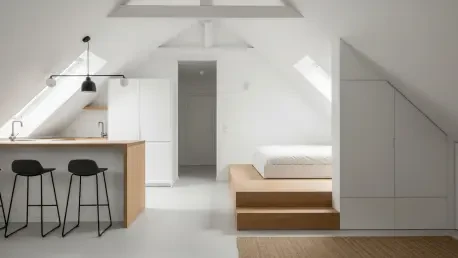
Central to the spatial fluidity is the implementation of bespoke, multi-functional furniture that serves multiple purposes without increasing the visual footprint of the room. A custom-built, raised sleeping platform does more than just provide a designated area for rest; it incorporates hidden storage and a versatile bench that extends to offer seating for guests. Similarly, the kitchen area is designed with integrated benches and a compact bar that functions as both a prep station and a dining table, eliminating the need for bulky, standalone furniture pieces. This strategy allows the central floor space to remain clear, fostering an atmosphere of airiness that is rare in properties under 300 square feet. By elevating the bed, the architect also created a psychological distinction between the private and social spheres of the home. This vertical layering of functions effectively doubles the perceived utility of the floor plan, allowing the inhabitant to host others without compromising personal privacy.
Materiality and Light: Crafting Visual Depth Through Texture
The aesthetic cohesion of the retreat is achieved through a carefully curated palette of materials that prioritize light reflection and tactile variety. A foundational layer of light oak unifies the lower horizontal surfaces of the apartment, grounding the space in a warm, organic tone that contrasts with the white walls. Above this timber base, the application of lime wash paint provides a subtle, velvety texture that captures and softens the incoming natural light from the skylights. This specific choice of wall finish avoids the flat, clinical feel of standard latex paints, instead offering a sense of historical depth that honors the building’s heritage. Legué further enhanced the sensory experience by contrasting matte polished concrete floors in the wet areas with more lustrous finishes on the cabinetry and fixtures. This interplay between rough and smooth, matte and reflective, creates a complex visual landscape that prevents the small space from feeling monotonous or overly simplistic.
Luxury is further expressed through high-end material details that elevate the functional aspects of the home into works of architectural art. The kitchen features countertops crafted from river-sand terrazzo, a material that provides both durability and a sophisticated, speckled aesthetic that complements the overall color scheme. In the bathroom, a translucent stone sink with distinct ochre veining serves as a focal point, demonstrating that small-scale fixtures can still make a significant design statement. One of the most critical architectural achievements involved the strategic cutout in the partition wall separating the sleeping area from the shower. This transparency allows natural light to penetrate deep into the center of the apartment, illuminating the bathroom and creating a sense of symmetry between the different zones. By using these high-quality materials and smart light-sharing techniques, the renovation successfully transformed a once-claustrophobic attic into a serene environment.
The completion of this Parisian attic renovation provided a clear blueprint for the future of high-density urban living, where luxury is defined by precision rather than size. Designers and homeowners should prioritize the integration of multi-functional structural elements and high-quality materials early in the planning phase to ensure a cohesive result. Moving forward, the focus in urban centers must remain on the adaptive reuse of existing historical shells, utilizing modern light-sharing techniques and advanced cabinetry to reclaim neglected square footage. This project demonstrated that even the most challenging footprints could support a sophisticated lifestyle when the design emphasizes spatial logic over traditional partitions. Prospective renovators would do well to invest in bespoke cabinetry and specialized lighting solutions that enhance the perception of volume. The success of this retreat proved that architectural ingenuity could overcome the physical limitations of the past. As urban populations continue to grow from 2026 to 2030, these micro-luxury solutions will become essential tools.