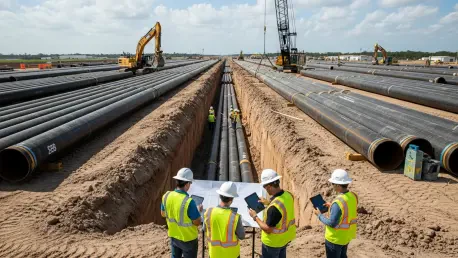

The sheer scale of the one point two billion dollar investment into the One Water – South Wastewater Conveyance and Treatment Project signals a transformative shift in how rapidly expanding metropolitan regions prioritize long-term resource stability and environmental resilience. By breaking ground on this massive initiative, Hillsborough County has moved beyond traditional utility management to embrace a holistic, integrated approach to the water cycle. Led by the Kansas City-based contractor Garney, the project represents the largest capital improvement effort in the history of the region. This market analysis explores the technical breadth and strategic importance of the undertaking, illustrating how modern infrastructure serves as the primary engine for sustainable economic development.
Understanding the Foundations of Regional Growth and Utility Demand
The surge toward the One Water project is rooted in the necessity of supporting a booming population that has consistently outpaced the capacity of existing utility systems. For years, the infrastructure in the Tampa Bay area faced the challenge of aging components and decentralized treatment methods that could no longer handle the influx of new residents. This investment is a calculated response to those pressures, transitioning the county toward a centralized, high-capacity model. By establishing a robust utility backbone now, local officials are ensuring that future residential and commercial developments are not throttled by service limitations or environmental constraints.
Furthermore, the implementation of a progressive design-build contract marks a significant evolution in public sector construction management. This delivery method allows for a more collaborative relationship between the county and the contractor, fostering flexibility and risk mitigation throughout the construction process. Historically, large-scale projects often suffered from rigid timelines and cost overruns; however, the progressive design-build model facilitates real-time adjustments as technical challenges arise. This shift is essential for a project of this magnitude, where the complexity of the systems requires a seamless integration of engineering, procurement, and field execution.
Technical Specifications: The Core Components of the System
Phase 1: Advancing Treatment Capabilities with Scalable Infrastructure
At the center of this initiative is a new, state-of-the-art wastewater treatment facility designed to handle an initial flow of 24 million gallons per day. Recognizing that regional growth shows no signs of slowing, engineers designed the plant with built-in scalability, allowing it to expand to 30 million gallons per day without requiring extensive structural overhauls. This forward-thinking design minimizes future operational downtime and reduces the long-term cost of expansion. By utilizing advanced filtration and purification technologies, the facility will transform wastewater into a high-quality resource, aligning with the county’s commitment to environmental stewardship.
System Reliability: The Balm Road Super Lift Station
To manage the massive volumes of wastewater moving through the southern part of the county, the project includes the construction of the Balm Road Super Lift Station. This critical node possesses a capacity of 54 million gallons per day and serves as a vital anchor for the entire conveyance network. A standout feature of the station is a five-million-gallon emergency storage tank, which provides a necessary buffer during extreme weather events or unforeseen power outages. Such redundancy is a hallmark of modern engineering, ensuring that public health and environmental safety remain protected even under significant stress.
Physical Backbone: High-Durability Pipeline Infrastructure
The physical delivery of these services relies on an extensive 23-mile pipeline network, strategically divided between 10 miles of wastewater lines and 13 miles of reclaimed water lines. The county is utilizing high-durability ductile iron pipes, with diameters ranging from 42 to 48 inches, to ensure a long lifecycle and minimal maintenance requirements. This dual-pipeline strategy is a key component of the circular water economy, allowing treated water to be returned to the county’s reuse network. By providing reclaimed water for irrigation and industrial use, the project significantly reduces the overall demand on the potable water supply, preserving local aquifers.
Shifting Paradigms in Sustainable Water Management and Construction
The One Water project serves as a prime example of the emerging trend toward integrated water management, where wastewater is viewed as a valuable asset rather than a waste product. This shift is being driven by both regulatory mandates and the economic reality of water scarcity in the Southeast. As more municipalities face the dual challenge of population growth and climate variability, the focus has moved toward creating closed-loop systems. The project demonstrates how large-scale investments can achieve environmental goals while simultaneously providing the infrastructure necessary for continued urban expansion.
Moreover, the heavy reliance on digital monitoring and advanced filtration suggests a broader trend toward the “smart utility” model. As the project progresses toward its 2028 operational milestone, the integration of real-time data analytics will likely become a standard feature for managing flow and detecting system vulnerabilities. For the construction industry, this project highlights a preference for contractors who can handle multifaceted, multi-year projects with a high degree of technical precision. These trends suggest that the future of public works will be defined by a combination of massive physical scale and sophisticated technological integration.
Strategic Best Practices for Navigating Large-Scale Public Works
For stakeholders and professionals within the infrastructure sector, the Hillsborough project offers several vital takeaways regarding long-term planning. First, the emphasis on scalability and redundancy should be adopted as a standard best practice for any municipality expecting sustained growth. Investing in excess capacity and emergency storage during the initial construction phase is significantly more cost-effective than attempting to retrofit systems later. Second, the use of reclaimed water systems proves that environmental sustainability can be integrated into the core functionality of a utility system, creating a tangible return on investment through water conservation.
To successfully apply these insights, local governments should prioritize flexible contracting methods like progressive design-build to manage the inherent risks of large-scale construction. It is also essential to invest in high-quality materials, such as ductile iron, which provide the durability needed to withstand the environmental conditions of the region. Professionals are encouraged to maintain a proactive stance on infrastructure, as waiting for a system to fail before upgrading leads to higher costs and public dissatisfaction. Proactive investment remains the most reliable method for ensuring economic stability and a high quality of life for residents.
Securing a Sustainable Future for the Tampa Bay Region
The $1.2 billion One Water project functioned as a vital stabilizer for the region’s long-term development goals. By addressing the infrastructure needs of a growing population through the end of the decade, the initiative positioned the county as a leader in proactive utility management. The transition to vertical construction in early 2026 marked a pivotal moment when the theoretical plans became tangible assets for the community. The project successfully integrated environmental protection with economic necessity, creating a system that was both resilient and efficient.
Ultimately, the initiative established a new benchmark for how modern municipalities handled the complexities of urban growth. The dual-pipeline network and the scalable treatment plant provided a clear path toward a sustainable circular water economy. By the time the facility reached full operational capacity, it had already begun to mitigate the pressures on local water sources. This strategic investment ensured that the region remained a viable and thriving location for businesses and residents alike, proving that visionary infrastructure was the foundation of a prosperous future.