
Power flickers feel rare until the wrong building goes dark, turning a routine outage into a mission risk that ripples from a data center to a flight line and into every taxpayer’s ledger. That specter—reliability as the bedrock of public service—animated a razor-thin House vote that cleared the Reliable Federal Infrastructure Act (H.R. 4690), a Republican-led bid to scrap long-standing efficiency mandates for new federal buildings.
The drama of the roll call matched the stakes. The bill passed 215–202, with Rep. Brian Fitzpatrick of Pennsylvania breaking ranks on the GOP side and five Democrats—Virginia Davis of North Carolina, Adam Perez of Washington, and Texans Marc Veasey, Henry Cuellar, and Vicente Gonzalez—crossing over in favor. Supporters framed the measure as a practical correction; opponents called it a retreat.
Nut Graph
The fight matters because it redefines how the federal government balances three forces every time a shovel hits the ground: upfront cost, lifetime energy use, and operational assurance under stress. By repealing Section 305(a)(3)(D) of the Energy Conservation and Production Act and related provisions in the Energy Independence and Security Act of 2007, the bill would lift efficiency baselines that have governed new federal buildings for years.
In practice, agencies would regain “design flexibility”—including the ability to specify natural gas systems and to sidestep prescriptive efficiency targets that supporters say inflate budgets and delay schedules. The central claim is bold: fewer mandates today will yield faster, cheaper projects without compromising reliability tomorrow. The counterclaim is equally direct: efficiency is reliability’s ally, not its enemy, and abandoning standards risks higher lifecycle costs and emissions.
Body
How The Bill Moved, and Why It Mattered
H.R. 4690 traveled a tight corridor: Energy and Commerce to Rules, then the House floor without major changes. That path signaled intent as much as process. Leadership wanted a clean test of the argument that “technology openness” promotes security by letting agencies choose from the full menu of energy options, fossil and otherwise.
Debate coalesced around the word reliability. Backers described military bases and mission-critical hubs as facilities that “cannot guess” whether intermittent resources will cover every hour of demand. “We are not picking winners,” supporters insisted on the floor, “we are protecting missions.” Dissenters answered that modern efficiency design and on-site clean generation can meet demanding reliability standards while lowering bills over time.
What Repeal Restores—And What It Risks
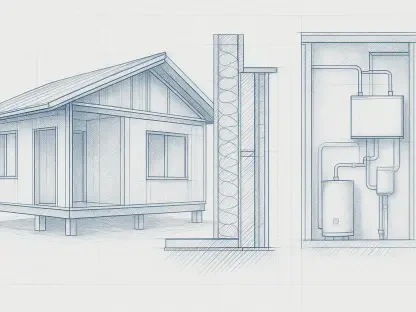
The statutes set for repeal locked in strict energy performance benchmarks for new federal construction. Removing them would broaden design latitude, especially where thermal loads or round-the-clock operations make gas-driven systems attractive on paper. Project managers who have wrestled with compliance documentation argue that eliminating those checklists saves months.
Yet cost curves bend over decades, not months. Independent analyses of high-performance buildings frequently find that tighter envelopes, efficient HVAC, and smart controls cut utility bills enough to offset capital premiums within typical federal payback windows. Opponents warned that “cheap to start” can become “expensive to own,” especially if fuel price spikes hit facilities designed without efficiency guardrails.
Politics, Defections, and Energy-State Gravity
The vote map told a familiar story with a few revealing footnotes. Nearly unified Republicans embraced the deregulatory frame; Democrats largely opposed the measure on climate and stewardship grounds. Fitzpatrick’s no vote reflected a track record of environmental breaks from the party line. The three Texas Democratic yes votes underscored a perennial tension: national climate aims meet the economic gravity of energy-producing districts.
Those defections were not random. They mirrored local priorities around jobs, industrial demand, and fuel infrastructure. “Flexibility is a feature, not a bug,” one supporter said in debate, pointing to combined heat and power, dual-fuel boilers, and black-start generators as examples of capabilities that strict rules were said to hinder.
Reliability As Security, Efficiency As Leadership
Proponents stitched reliability directly to national security. Bases, labs, and control centers need assured energy, they argued, and federal builders should be free to integrate dispatchable fuels to meet that baseline. They invoked grid strains and interconnection queues as reasons to avoid narrowing technology choices during design.
Opponents countered with a different organizing principle: the federal government should lead by example. They emphasized that efficient buildings reduce operating costs, lighten grid demand at peak, and cut emissions without sacrificing resilience when combined with microgrids, storage, and demand response. “Efficiency is the first fuel,” critics said, “and the cheapest reliability we have.”
The Broader Agenda and Industry Echoes
H.R. 4690 did not stand alone. House Republicans paired it with bills such as the GRID Power Act (H.R. 1047), which pushes dispatchable resources in federal interconnection backlogs, and the National Coal Council Reestablishment Act (H.R. 3015), reviving a coal advisory panel. Together, they mapped a shift from prescriptive climate rules toward what sponsors called technology neutrality.
Industry engagement hummed in the background. Utilities and developers—including Duke Energy, the Edison Electric Institute, Invenergy, and ITC Holdings—leaned into adjacent fights over transmission buildout, interconnection timelines, and resource adequacy. Their involvement did not pin directly to H.R. 4690, but it framed the ecosystem in which “reliability” became the watchword.
Senate Outlook and Policy Durability
Across the Capitol, the bill awaited a schedule. Other House energy measures sat in committee, hinting at a slow lane. Still, supporters recognized a crucial difference: a statutory repeal, once enacted, is hard to unwind. Reinstating strict efficiency standards would require new legislation, not an executive memo.
That durability shaped agency planning. Procurement leads began gaming scenarios: one track with restored latitude to choose gas and standard envelopes, another with high-efficiency specs reminiscent of the repealed mandates. “Design both, price both, stress-test both,” a former federal project executive advised, describing a two-track strategy that meets uncertainty with options.
Implications On The Ground
For agencies, the promise was speed. Fewer compliance checkpoints could mean quicker awards and earlier groundbreaking, especially on smaller projects where paperwork weighed heavily. Construction managers viewed the bill as a way to “unclog” design reviews without rewriting performance briefs from scratch.
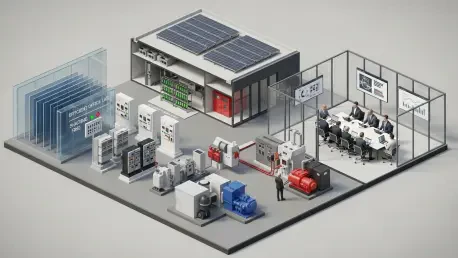
For mission-critical facilities, the question narrowed to risk. Dual-fuel boilers, redundant feeders, islandable microgrids, and storage stacks could all coexist with strong efficiency—if owners made the numbers work. The lifecycle math mattered: capex today against operating and maintenance, fuel volatility, resilience benefits, and emissions costs over decades.
The White House, Quiet Signals, and Messaging Discipline
No formal Statement of Administration Policy surfaced during the House push, but the deregulatory tilt aligned with prior executive preferences. That quiet was telling; without a flashing red light from the White House, Republican floor managers kept the frame tight: cost, speed, flexibility, reliability.
Democrats stayed similarly disciplined on the other side. The caucus message landed on climate leadership and taxpayer value over time. “Our buildings teach,” one member said, arguing that federal choices set market signals for materials, equipment, and workforce training that spill into the private sector.
Conclusion
The path forward rested on execution rather than rhetoric. Agencies that designed two parallel concepts—one flexibility-first, one high-efficiency—could evaluate net present value across plausible fuel prices, outage scenarios, and maintenance profiles. Budget teams that paired capex trims with performance guarantees and energy service contracts could capture savings without giving up resilience. Military planners who mapped mission risks to black-start capability, islanding, and thermal loads could integrate microgrids and storage while still demanding aggressive efficiency where it penciled out. Policymakers who applied a reliability-plus-efficiency screen to approvals, tracked Senate calendars for movement or amendments, and read coalition signals from energy-state delegations had clearer sightlines on what would endure. The House vote had narrowed the federal energy debate to a single hinge—does flexibility buy reliability without mortgaging the future—and the answer, in practice, depended on disciplined design, transparent cost modeling, and steady follow-through.