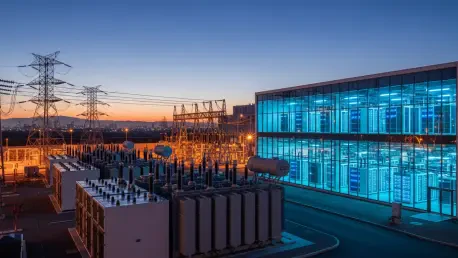

The United States currently stands at a historic crossroads where the unprecedented surge in artificial intelligence development is directly colliding with a national electricity affordability crisis that threatens to destabilize regional power markets. For the first time in several decades, electricity load growth is accelerating at a pace that far exceeds the current expansion of transmission infrastructure and generation capacity. This imbalance has prompted the Federal Energy Regulatory Commission to issue clear directives requiring system operators to prioritize grid access for massive industrial loads that can prove they are capable of immediate operational flexibility. In this high-stakes environment, data center developers have realized that negotiating their consumption patterns is no longer just a corporate social responsibility goal but a necessary strategy for securing power in an increasingly crowded queue. By offering the ability to ramp down during times of grid stress, these facilities are bypassing the years-long delays associated with traditional infrastructure upgrades that would otherwise keep their chips dark and their investments idle. The trade-off is simple: accept a variable power supply today rather than waiting for a guaranteed, static connection that may not arrive for a decade. This shift marks a fundamental change in how the technology sector interacts with public utilities, turning the largest consumers of energy into the grid’s most agile partners.
The magnitude of this power demand is truly unprecedented, with financial analysts projecting that data center electricity needs will more than double within the next few years. This surge is fueled by the rapid growth of hyperscalers like Amazon, Microsoft, and Google, whose cloud businesses are expanding at a rate that requires a near-constant increase in compute capacity. As AI training becomes the backbone of the modern economy, the ability to secure and energize massive data facilities has become the defining challenge for the entire technology sector. Consequently, the industry is moving away from the “always-on at full capacity” model toward a more nuanced approach. By adopting flexible frameworks, data centers can function as virtual power plants that release energy back to the system when it is needed most. This evolution is not merely a technical adjustment but a survival mechanism for companies that need to scale faster than the physical grid can grow. The integration of high-density AI clusters into the energy ecosystem represents a shift where “speed to power” is the ultimate competitive advantage, often outweighing the benefits of a traditional, non-interruptible power contract.
The Economic Reality: Balancing Industrial Growth and Utility Rates
Public opposition to the expansion of data centers is often rooted in deep-seated concerns over rising electricity rates for local residents and small businesses. When utilities are forced to invest billions in new power plants and complex transmission lines to support massive industrial loads, those capital costs are frequently passed on to the general public through rate hikes. However, load flexibility offers a viable way to align massive corporate growth with the broader public interest. Even a small reduction in peak demand from a single large data center can significantly lower the overall electricity costs for everyone on the grid by avoiding the activation of expensive peaking power plants. By participating in demand-response programs, data center operators can effectively subsidize the grid’s operational costs, ensuring that their presence does not place an unfair financial burden on their neighbors. This collaborative approach helps to mitigate the “not in my backyard” sentiment that has historically stalled many large-scale infrastructure projects across the country.
To ensure long-term stability and reliability, the North American Electric Reliability Corp. has begun integrating large-load risk mitigation into its comprehensive guidelines for 2026. By reducing their demand during times of extreme system stress, such as heatwaves or winter storms, data centers provide the critical “headroom” necessary for grid operators to maintain system balance without immediate, rate-raising investments. This strategy transforms data centers from potential liabilities into active grid assets that help stabilize the system while exerting downward pressure on utility rates over time. The implementation of these guidelines ensures that the rapid expansion of the digital economy does not come at the expense of the average ratepayer. As utilities learn to leverage the inherent flexibility of AI workloads, they can defer expensive capital projects, thereby keeping electricity affordable for residential consumers while still meeting the intensive power needs of the technology sector. This symbiotic relationship is becoming the standard model for industrial development in energy-constrained regions.
Technical Standards: Implementing the FlexMosaic Framework
The Electric Power Research Institute has developed the FlexMosaic framework to standardize how data center flexibility is measured and utilized by utilities across different states. This comprehensive framework categorizes flexibility into five distinct classes, ranging from support during rare, extreme weather events to high-speed services that maintain the grid’s frequency equilibrium on a second-by-second basis. By linking these specific capabilities to contractual agreements, utilities can offer faster and larger interconnections to facilities that provide the most value to the power system. This standardization is critical because it gives utility engineers a predictable set of parameters they can use when modeling grid stability. Instead of treating every data center as a monolithic, static load, the FlexMosaic framework allows for a more granular understanding of how much power a facility can shed and how quickly it can do so. This level of technical clarity is essential for streamlining the interconnection process and reducing the administrative backlog that currently plagues many regional transmission organizations.
To achieve these sophisticated levels of support, the industry relies on three foundational pillars: managed workloads, facility optimization, and backup power integration. While optimizing cooling systems and using onsite battery storage are established practices, the dynamic orchestration of AI workloads represents a significant technological leap forward. Modern modeling shows that AI training tasks, which often involve processing massive datasets over several weeks, offer a high degree of flexibility. These tasks can be modulated in real-time, allowing data centers to reduce their power draw without compromising the quality or accuracy of their computational output. For example, an AI model being trained on a massive cluster can have its processing speed dialed back during a peak energy event and then ramped up again once the grid stabilizes. This ability to treat compute cycles as a flexible resource is a game-changer for grid management, as it allows for a level of responsiveness that was previously impossible with traditional industrial processes like manufacturing or chemical refining.
Operational Success: Validating Workload Shifting in Real Time
The technical feasibility of these concepts has been validated through various pilot programs involving orchestration software that bridges the gap between utilities and data centers. These tests have demonstrated temporal flexibility, where high-intensity AI tasks are successfully paused or slowed during peak demand periods without damaging the underlying hardware or corrupting sensitive data. This ability to ramp power consumption up or down on demand proves that data centers can be highly responsive to the immediate needs of the grid operator. In one notable pilot, a large-scale training facility was able to reduce its total energy consumption by forty percent in under ten minutes, providing immediate relief to a local substation that was nearing its thermal limit. These results suggest that the “interruptible” nature of AI compute is far more robust than many skeptics initially believed. As these software platforms become more integrated, the communication between the grid’s control center and the data center’s load balancer will become fully automated, ensuring near-instantaneous response times.
Innovation has also extended to spatial flexibility, where data centers shift their computational workloads geographically to regions where power is more abundant or the grid is less stressed. Pilots have shown that moving tasks between different states or even across international borders can be done with minimal impact on service quality for non-latency-sensitive applications. Furthermore, high-speed tests have proven that AI loads can be reduced by over a third in less than a minute, providing the kind of rapid response required to stabilize the grid during sudden supply imbalances or the loss of a major transmission line. This geographic shifting capability effectively allows data center operators to “follow the wind” or “follow the sun,” moving their heavy compute loads to areas where renewable energy production is currently at its peak. This not only helps to balance the grid but also maximizes the utilization of clean energy resources that might otherwise be curtailed due to lack of local demand. The success of these pilot programs has provided the necessary evidence for regulators to move forward with more aggressive flexibility mandates.
Regulatory Hurdles: Managing Grid Control and Hardware Safety
Despite these technical successes, a significant hurdle remains regarding who holds the ultimate control over a data center’s power connection during an emergency. Utilities often insist on having direct control over load-side breakers to protect the integrity of the grid, while data center operators fear that abrupt, unmanaged shutdowns could damage expensive AI chips or corrupt massive datasets. Resolving this stalemate requires the implementation of sophisticated software platforms that offer utilities the visibility and certainty they need without jeopardizing the data center’s physical assets. These platforms act as a middle layer, allowing the utility to request a specific load reduction while leaving the data center’s management system to execute that reduction in a safe, orderly manner. This “soft-landing” approach ensures that hardware is protected while still meeting the grid’s urgent requirements for load shedding. The development of these interface protocols is currently a top priority for both energy engineers and computer scientists working in the hyperscale space.
The path forward involves the creation of standardized, binding agreements that simplify the negotiation process across different regulatory jurisdictions and utility territories. Currently, the lack of uniform standards makes it difficult for tech firms to deploy flexibility at scale because each utility has its own unique set of requirements and technical protocols. Efforts like the ongoing collaboration between the Electric Power Research Institute and the Open Compute Project are working to align utility requirements with the technological community’s protocols, paving the way for a more streamlined and predictable interconnection process. By creating a “plug-and-play” model for grid flexibility, the industry can reduce the legal and administrative costs associated with these complex power contracts. This standardization will also allow smaller data center operators to participate in these programs, as they will no longer need a dedicated team of energy experts to navigate the regulatory landscape. As these standards gain traction, the industry will move toward a more transparent and efficient energy market where flexibility is traded as a valuable commodity.
Strategic Evolution: Building the Next Generation of Flexible Infrastructure
The upcoming Aurora AI Factory in Virginia serves as a landmark validation site for these strategies, featuring a design specifically tailored from the ground up for grid flexibility. Unlike traditional facilities that view the grid as a static source of power, the Aurora project incorporates massive onsite battery storage and advanced liquid cooling systems that can be modulated to reduce energy consumption instantly. Industry trends suggest that the ability to offer flexible load will soon be a major competitive advantage, as operators recognize that having partial power immediately is often better than waiting years for a full, non-responsive connection. This site is expected to demonstrate that high-performance AI training can coexist with a strained power grid, provided the facility is designed to be an active participant in the energy market. The success of the Aurora AI Factory will likely provide the blueprint for future data center developments, shifting the focus from simple power procurement to sophisticated energy management.
The adoption of these protocols fundamentally altered the landscape of industrial energy consumption by 2026. Industry leaders moved beyond theoretical discussions and implemented automated load-shedding systems that responded to grid signals in milliseconds. These actions successfully averted several regional blackouts during periods of peak summer demand, proving that large-scale compute loads could function as stabilizing forces rather than drains on the system. Moving forward, the focus shifted toward deepening the integration between AI orchestration layers and utility control systems to ensure even greater transparency. Stakeholders began prioritizing the deployment of edge-computing nodes that could distribute workloads more effectively across the country’s aging transmission lines. This transition toward a more dynamic grid relationship established a sustainable path for technological growth while ensuring a reliable and affordable power system for all users. The industry proved that with the right technical and regulatory frameworks, massive energy demand could be transformed into a vital tool for grid resilience and long-term economic stability.