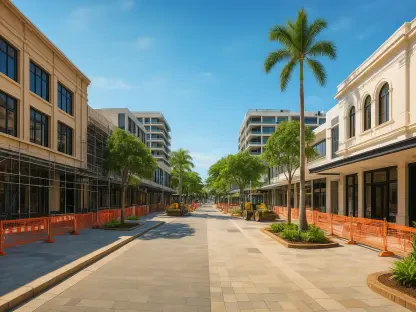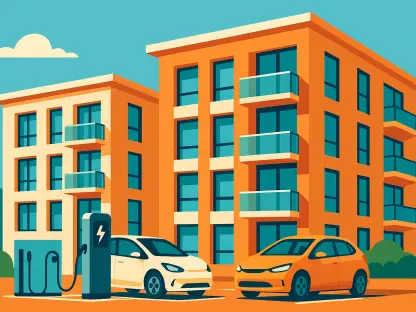

Across the Australian continent, a striking economic paradox is unfolding as the frantic construction of massive server farms accelerates while the national dream of home ownership slips further out of reach for millions. As the nation grapples with a deepening housing shortage and falling building approvals, tech giants are funneling billions into digital infrastructure to support the global artificial intelligence boom. This divergence has created a dual-speed economy, where the high-tech warehouses for servers are receiving more institutional attention and capital than the homes needed for the growing population. Investors are pivoting away from residential projects, which are bogged down by high interest rates and supply chain bottlenecks, to find solace in the reliable returns of the digital cloud. The scale of this investment shift suggests that the physical landscape is being re-engineered to prioritize data storage over human shelter, raising profound questions.
The Evolution: A Transition to Institutional Maturity
In a remarkably short timeframe, data centers have transitioned from a niche industrial sub-sector into a dominant institutional asset class that attracts the world’s largest sovereign wealth funds. Australia has quickly become one of the most active markets globally, currently hosting over 160 operational facilities with nearly 100 more in the pipeline. Unlike traditional office or retail spaces that face high tenant turnover and the constant threat of remote work trends, data centers offer long-term stability. The leases for these high-performance environments often span two decades, making them a preferred choice for pension funds seeking predictable cash flows. This stability is rooted in the “sticky” nature of the tenants, as relocating thousands of servers and petabytes of data is a complex and prohibitively expensive endeavor. Consequently, the sector has seen a massive influx of capital that would have previously been earmarked for large-scale residential developments.
Institutional Dominance: The Rise of Secure Digital Yields
This surge in demand has led to significant yield compression, with returns dropping to some of the lowest levels in the country as competition among institutional buyers intensifies. Because these projects require massive capital and technical expertise, the market is primarily dominated by large-scale institutional investors rather than individual buyers or smaller property syndicates. These assets are now viewed as exceptionally secure investments, providing a level of reliability that is increasingly rare in the volatile commercial property market of the current era. The high barriers to entry, including specialized engineering requirements and complex security protocols, ensure that only the most well-capitalized players can participate. This concentration of wealth in the tech sector further distances the average citizen from property investment opportunities, as the most lucrative parcels of industrial land are snapped up for server farms instead of new apartment complexes.
Infrastructure Requirements: Connectivity and Power Demands
Developing a data center is not as simple as finding a vacant lot; it requires a specific combination of high-speed connectivity, immense power capacity, and access to water for cooling. Because these facilities rely on proximity to high-voltage energy grids and subsea fiber-optic cables, they are concentrated in hyper-specific hotspots that overlap with desirable urban land. This geographic limitation prevents developers from moving to remote areas where land might be more abundant but critical infrastructure is lacking. As a result, the competition for prime urban-fringe land has become fierce, often pitting the needs of tech giants against the expansion of residential suburbs. The technical necessity of being near power substations means that data centers are often built on land that would otherwise be ideal for medium-density housing. This geographic tug-of-war is forcing cities to choose between the speed of the digital economy and the availability of local housing.
Geographic Hubs: The Clustering of High-Voltage Zones
These constraints have led to the clustering of tech infrastructure in key urban and coastal corridors, creating what experts call digital fortresses within the suburban landscape. Sydney’s Macquarie Park and Melbourne’s industrial zones have become primary hubs, while coastal regions in Western Australia and the Sunshine Coast are essential for international connectivity. These locations serve as the backbone of Australia’s digital economy, linking the continent to major tech markets in Asia and Japan through deep-sea cables. The concentration of these assets in specific zones has created localized economic booms, but it has also driven up land prices for any nearby residential development. Furthermore, the immense water requirements for cooling these facilities place additional strain on municipal systems that are already struggling to support growing populations. The symbiotic relationship between digital infrastructure and the urban environment is becoming strained as these facilities expand.
Regulatory Oversight: Sovereignty and Data Management
The growth of this sector is also shaped by strict data sovereignty laws, which favor domestic ownership and oversight of sensitive information to protect national security interests. This regulatory environment ensures that critical infrastructure remains under the control of Australian funds, though it also requires constant reinvestment to keep pace with rapid technological changes. Consequently, the sector remains a closed loop for well-capitalized domestic players who can navigate these complex legal and technical hurdles without the risk of foreign interference. The government has made it clear that data stored within the borders must be managed with the highest level of scrutiny, which has inadvertently created a protected market for local developers. This protectionism provides a safety net for investors, but it also increases the cost of building these facilities, as compliance with stringent local standards requires specialized labor that is currently in very high demand.
Energy Management: Implementing the Triple-Lock Policy
To prevent the potential for a grid collapse, the federal government is introducing a “triple-lock” policy for new data center developments to manage their massive energy footprint. With energy consumption expected to triple by 2030, tech companies must now fund their own renewable energy sources and pay for their own grid connections. Additionally, these facilities must be able to throttle their power usage during peak times, effectively acting as backup assets for the public energy grid during emergencies. This policy shift forces developers to become energy producers as well as landlords, adding another layer of cost and responsibility to every new project. While this helps stabilize the national power supply, it also means that only the most advanced facilities can gain approval. The requirement for on-site renewable generation has turned data centers into testbeds for large-scale battery storage, ensuring that the digital boom does not come at the cost of national neutrality.
Resource Competition: The Clash of Digital and Living Spaces
The competition for land, labor, and resources between data centers and residential construction is reaching a breaking point in the current economic environment. While the digital sector flourishes, housing approvals continue to decline, leaving the nation far short of its residential targets and leaving many families without affordable options. However, this shift also offers new avenues for the broader real estate industry, such as identifying prime sites for edge computing or repurposing underperforming office buildings into localized data hubs. These smaller, decentralized facilities can sometimes coexist with residential or commercial zones more easily than the massive hyper-scale warehouses. By integrating digital infrastructure into the existing urban fabric, developers may find ways to alleviate some of the land-use conflicts that currently dominate the market. The evolution of the sector suggests that a more nuanced approach to zoning could allow for both digital growth and housing.
Strategic Solutions: Integrating Data and Residential Needs
Stakeholders eventually addressed these challenges by implementing integrated urban planning models that prioritized dual-use zoning and sustainable resource management. They recognized that the only way to alleviate the strain on the national grid was to implement decentralized energy storage within the server farms themselves. Policymakers mandated that every new high-tech facility contribute a fixed percentage of its infrastructure budget to local residential revitalization projects. This proactive stance converted the digital expansion from a competitor into a benefactor for the community. Industry leaders also adopted modular cooling technologies that minimized water consumption, preserving vital resources for the surrounding neighborhoods. By aligning technological progress with social necessity, the market created a blueprint for sustainable growth that balanced human and digital needs. These steps ensured that the rise of the digital economy did not come at the cost of human rights. Infrastructure served the people.