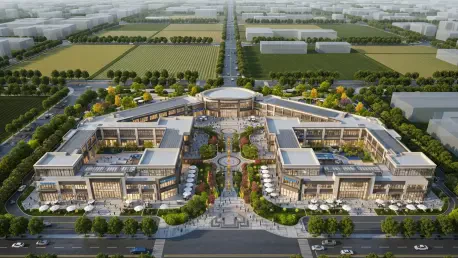

The Clarksville City Council officially greenlit a massive commercial rezoning request that will transform a significant portion of Tiny Town Road into a vibrant retail destination. This development marks a pivotal shift for the northern corridor, which has seen exponential residential growth over the last few years without a corresponding increase in localized services and shopping options. By transitioning approximately thirty acres of land from agricultural and residential use to a general commercial classification, the city aims to capture sales tax revenue that currently leaks into neighboring Kentucky jurisdictions. Residents in this area have long advocated for closer amenities to reduce their daily commute times, though the decision comes after heated debates regarding infrastructure readiness. The project represents a strategic effort to balance the housing boom with sustainable commercial infrastructure that can support thousands of households established recently.
Economic Growth: Diversifying the Local Tax Base
The economic rationale behind the new retail hub focuses on diversifying the local tax base while providing essential employment opportunities for the growing population in the St. Bethlehem and Tiny Town areas. Analysts suggest that the concentration of major national retailers and boutique storefronts will generate millions in annual revenue, funding critical municipal services such as public safety and park maintenance. By centralizing commerce in a high-traffic zone, the city reduces the need for residents to traverse the entire town for basic necessities, which theoretically lowers the overall carbon footprint of local commuters. Developers have already expressed interest in attracting a mix of grocery anchors, casual dining establishments, and specialty service providers to ensure the site remains a multi-purpose destination rather than a single-use complex. This approach aligns with modern urban planning philosophies that emphasize mixed-use accessibility and community-centric development.
Beyond the immediate financial gains, the project serves as a cornerstone for future annexations and infrastructure improvements that the city has planned through the end of the decade. The developer has committed to significant site-specific investments, including professional landscaping, modern lighting fixtures, and pedestrian-friendly walkways that connect the retail hub to adjacent residential subdivisions. Such amenities are designed to create a sense of place, moving away from the traditional strip-mall aesthetic toward a more integrated community environment. Local business leaders anticipate that the influx of corporate investment will act as a catalyst for further upgrades along the Tiny Town Road corridor, potentially attracting high-tech medical clinics in subsequent phases. The approval also sets a precedent for how the city evaluates large-scale commercial applications, prioritizing projects that demonstrate a clear benefit to the surrounding local neighborhoods.
Infrastructure Management: Addressing Traffic and Sustainability
Addressing the inevitable increase in vehicular traffic remains the most contentious aspect of the development, requiring a sophisticated coordination between the city and the state department of transportation. Tiny Town Road is already known for its heavy congestion during peak hours, and adding a major retail hub necessitates substantial road modifications to prevent total gridlock. The approved plan includes the installation of advanced traffic signaling systems and the construction of dedicated turn lanes to streamline the flow of cars entering and exiting the complex. Furthermore, the city has mandated the inclusion of secondary access points to distribute traffic more evenly across the surrounding street network, preventing any single intersection from becoming overwhelmed. These engineering solutions are part of a traffic management strategy intended to maintain acceptable levels of service for existing residents while accommodating the projected surge in shoppers visiting the site daily.
Stakeholders finalized the approval process by establishing a clear timeline for the initial grading and utility installation phases, ensuring that the project remained on track for a phased opening. City officials prioritized the integration of smart-city technologies within the hub, such as electric vehicle charging stations and automated parking sensors, to future-proof the site against evolving consumer habits. This proactive stance allowed the municipality to secure commitments for environmental mitigation, including the preservation of green space at the perimeter of the property. Moving forward, the city council recommended that residents participate in upcoming public forums to provide feedback on the specific types of businesses they wished to see occupy the remaining vacant parcels. These collaborative efforts ensured that the development did not merely exist as a commercial entity but functioned as a responsive component of the local community for the future.