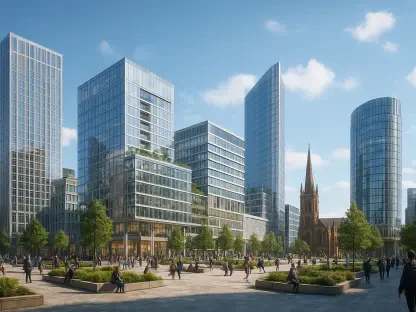

The historical industrial grit of London’s South Bank is currently undergoing an unprecedented metamorphosis as the Vista London initiative recalibrates the relationship between high-density development and the natural world. Spanning a massive 640,000-square-meter footprint, this ambitious redevelopment project is not merely an architectural update but a fundamental reimagining of what a modern metropolis can offer its inhabitants. By weaving complex ecological systems directly into the fabric of commercial and residential infrastructure, the project addresses the urgent dual pressures of climate change and biodiversity loss that define the current global landscape. This site is rapidly evolving into a living laboratory where the traditionally distinct boundaries between human construction and wild habitats are being intentionally blurred to create a resilient urban corridor. As the city navigates the complexities of the mid-decade growth cycle, this initiative serves as a critical benchmark for future-proofing urban centers against environmental volatility while simultaneously revitalizing the economic and cultural heart of one of the world’s most iconic riverfronts.
Architectural Vision and Biophilic Design
Integrating Nature into the Built Environment
The architectural strategy for the South Bank is being spearheaded by the acclaimed firm Grant Associates, which has gained international recognition for its ability to synthesize structural requirements with deep ecological sensitivity. Their approach moves far beyond the traditional concept of “landscaping” as a decorative afterthought; instead, it treats plant life as a core utility of the building’s functional design. By utilizing every conceivable surface—from ground-level plazas to the upper reaches of high-rise structures—the architects are creating a continuous biological skin for the development. This biophilic philosophy is rooted in the understanding that human psychological and physiological well-being is intrinsically linked to regular contact with natural elements. In a dense city like London, where open green space is a premium luxury, the integration of diverse botanical species into the workspace and residential environment represents a necessary evolution in urban planning, ensuring that nature is an accessible daily reality for everyone.
The current implementation of this strategy involves a sophisticated layering of vegetation that mirrors the complexity of a natural forest floor, understory, and canopy. This multi-tiered approach allows for a significantly higher volume of biomass than a typical park, effectively maximizing the environmental output of a limited physical footprint. Designers are selecting specific native species that are resilient to the unique microclimates found at different heights, ensuring that the greenery thrives despite the wind and temperature fluctuations common in elevated urban settings. This careful curation of plant life does more than provide visual beauty; it serves to soften the harsh acoustic environment of the city, absorbing the constant hum of traffic and construction. By creating these tranquil, leaf-filled enclaves, the project is establishing a new standard for sensory comfort in high-density areas, proving that intense commercial activity and serene natural environments can coexist within the same architectural framework.
Maximizing Vertical Space for Biodiversity
Because the available land along the Thames is heavily constrained by existing infrastructure and historical landmarks, the Vista London project has innovatively turned its attention to the “fifth elevation,” commonly known as the roof. This vertical expansion of the ecological footprint is essential for achieving the ambitious sustainability goals set for the area, as it provides thousands of square meters of potential habitat that would otherwise remain dormant as sterile concrete. These rooftops are being transformed into a series of interconnected terraces and private balconies that serve as private gardens for residents and communal breakout spaces for office workers. This clever use of verticality ensures that the benefits of fresh air and greenery are distributed throughout the entire height of the buildings, rather than being concentrated solely at the street level. This transition allows for a more equitable distribution of environmental quality, where access to nature is no longer determined by proximity to a public park.
Furthermore, these elevated green spaces are designed to function as a cohesive network rather than isolated pockets of plant life. By aligning the heights and plant compositions of neighboring terraces, the design creates a vertical corridor that allows pollinators and avian species to move freely across the development. This connectivity is vital for maintaining genetic diversity among local flora and fauna, which is often a challenge in fragmented urban environments. The use of advanced lightweight growing mediums and automated irrigation systems ensures that these high-altitude ecosystems remain healthy with minimal human intervention. As the project progresses toward its final phases, these lush, cascading gardens are becoming a defining visual characteristic of the South Bank skyline. They symbolize a shift away from the era of “glass and steel” dominance toward a more organic, breathing aesthetic that reflects the city’s commitment to ecological health and the long-term vitality of its residents.
Specialized Ecological Infrastructure
Supporting Wildlife and Water Management
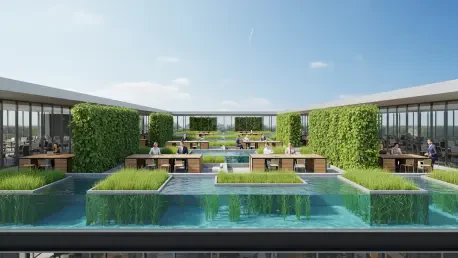
A centerpiece of the technical innovation at the South Bank is the deployment of a highly specialized wetland roof, a feature that significantly exceeds the capabilities of standard green roof technology. While traditional green roofs typically rely on shallow-rooted succulents like sedum, this wetland system is a deep, aquatic ecosystem designed to function as a biological engine for the entire building. It serves as a natural filtration unit for greywater and a highly efficient stormwater management tool, capable of absorbing massive amounts of rainfall during peak weather events. This is particularly critical in the current climate, where sudden, intense downpours can overwhelm traditional sewer systems and lead to localized flooding. By capturing and slowing the flow of water, the wetland roof acts as a buffer, protecting both the building and the surrounding district from water damage. Additionally, the presence of standing water and specialized aquatic plants provides a unique cooling effect, reducing the building’s energy consumption.
In tandem with these water management systems, the development is making significant strides in wildlife conservation by integrating specific nesting habitats for a variety of bird and insect species. Strategically placed nesting boxes and “insect hotels” are being built into the very masonry of the structures, providing safe havens for urban wildlife that has long been displaced by modern construction. These features are not merely symbolic; they are part of a coordinated effort to create “stepping stone” habitats that link the South Bank to larger natural corridors along the River Thames. By providing reliable sources of food, water, and shelter within the heart of the city, the project is actively inviting biodiversity back into the urban core. This multispecies design approach recognizes that a truly sustainable city must cater to more than just the needs of humans. The presence of songbirds and pollinators in these high-density areas serves as a powerful indicator of a healthy, functioning ecosystem that benefits everyone who spends time in the district.
Advanced Hydrological Systems and Resilience
The integration of advanced hydrological systems within the South Bank redevelopment represents a significant leap forward in urban resilience technology. These systems are engineered to mimic the natural water cycle, utilizing porous surfaces and bio-retention cells to filter pollutants before water is recirculated or released. This circular approach to water management reduces the demand on the city’s aging freshwater infrastructure while simultaneously improving the quality of the water that eventually returns to the Thames. The wetland roofs mentioned previously are interconnected with underground cisterns and ground-level rain gardens, forming a comprehensive network that treats water as a valuable resource rather than a waste product. This level of technical sophistication ensures that the development can maintain its lush vegetation even during periods of drought, as captured rainwater is stored and distributed through smart irrigation grids that react to real-time moisture sensors in the soil.
Beyond the practicalities of water storage and filtration, these hydrological features play a crucial role in mitigating the urban heat island effect, which has become a growing concern for London planners. As concrete and asphalt surfaces absorb solar radiation, they can raise local temperatures by several degrees compared to the surrounding countryside. The presence of active water bodies and transpiring plants across the South Bank site provides a natural air-conditioning effect, significantly lowering the ambient temperature of the immediate area. This cooling creates a more comfortable microclimate for pedestrians and reduces the thermal load on buildings, leading to substantial energy savings. By prioritizing these natural cooling mechanisms, the project demonstrates how ecological infrastructure can solve modern engineering challenges more effectively than traditional mechanical systems. This commitment to hydrological health ensures the South Bank remains a viable and pleasant destination regardless of the seasonal extremes.
Urban Connectivity and Public Wellness
Improving Pedestrian Flow and Active Travel
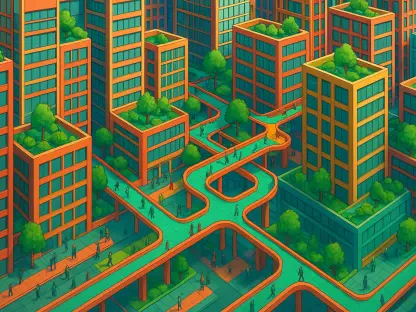
A primary objective of the South Bank redevelopment is the remediation of historically disconnected urban zones through the enhancement of pedestrian permeability. For decades, certain sections of this riverside district were characterized by imposing brutalist structures and a lack of clear, inviting pathways, which often discouraged visitors from exploring beyond the main tourist hubs. The current master plan addresses this by introducing a series of strategic walking routes that seamlessly connect Upper Ground with the Queen’s Walk and the River Thames. These new corridors are designed with a focus on “active travel,” prioritizing the movement of people over the flow of motorized vehicles. By removing physical barriers and creating intuitive, well-lit transitions between different levels of the site, the project encourages walking and cycling as the primary modes of transport within the district. This shift not only reduces the carbon footprint of the area but also fosters a more vibrant and energetic street life.
These pedestrian routes are envisioned as more than just functional shortcuts; they are immersive sensory experiences that celebrate the area’s new ecological identity. Instead of navigating sterile concrete tunnels or narrow sidewalks, users now move through wide, landscaped promenades filled with diverse plant life and public art. These “green veins” act as natural conduits for social interaction, providing ample space for outdoor seating, pop-up markets, and community gatherings. The design ensures that even a simple commute or a casual stroll along the river becomes a restorative journey, offering a necessary respite from the frantic pace of city life. This emphasis on high-quality public space reflects a broader trend in urban design that seeks to reclaim the streets for the people who use them. By making the South Bank more accessible and enjoyable to traverse on foot, the project is strengthening the physical and social connections that bind the city together, creating a more cohesive and welcoming urban environment for all.
Enhancing Community Health through Green Design
The focus on public wellness within the South Bank project is driven by a wealth of data suggesting that exposure to high-quality green spaces significantly reduces stress and improves long-term health outcomes. In response to this, the development has integrated “wellness zones” into the public realm, featuring restorative planting schemes that prioritize aromatic herbs and visually stimulating textures. These spaces are carefully shielded from the noise of the main thoroughfares, creating quiet pockets where office workers and local residents can practice mindfulness or engage in physical exercise. The commitment to a 60% biodiversity net gain directly contributes to this health-centric mission by improving local air quality through the natural filtration of particulate matter. As the extensive biomass grows and matures, it acts as a living air purifier, removing pollutants that are commonly associated with respiratory issues in dense urban centers, thereby creating a cleaner environment.
Moreover, the design of the South Bank’s public spaces encourages a more active lifestyle by making physical movement an attractive and convenient choice. The integration of sculptural play areas for children and fitness stations for adults ensures that the benefits of the redevelopment are shared across all age groups. By fostering a sense of community ownership over these green spaces, the project helps to combat the social isolation that can often occur in large cities. The inclusion of a public-access rooftop restaurant and bar provides a unique vantage point from which visitors can engage with the site’s ecological features, democratizing access to the “fifth elevation” that was once the exclusive domain of building owners. This holistic approach to wellness acknowledges that a healthy city is one that supports the mental, physical, and social needs of its population. The resulting environment is not just a place to work or shop, but a destination that actively contributes to the vitality and happiness of the community.
Economic Growth and Environmental Gains
Redefining Standards for Modern Workspaces
In the competitive landscape of the mid-2020s, the definition of a “premium” workspace has shifted dramatically, with ecological amenities now serving as a primary differentiator for high-value commercial tenants. The South Bank redevelopment capitalizes on this trend by offering some of the most sophisticated green offices in London, where outdoor access and natural ventilation are integrated into every floor. This is not merely a matter of aesthetics; research has consistently shown that employees working in biophilic environments report higher levels of focus, creativity, and overall job satisfaction. For companies looking to attract and retain top talent, the health-conscious design of the Vista London project provides a clear economic advantage. The project successfully demonstrates that environmental stewardship is not a cost center, but a powerful driver of commercial value. By creating a workspace that prioritizes human well-being, the development is setting a new standard for corporate responsibility in the real estate sector.
The achievement of a 60% biodiversity net gain is perhaps the most significant metric of the project’s success, signaling a major departure from the “minimum compliance” approach that long characterized the construction industry. This high target was met through a combination of extensive vertical planting, the creation of diverse micro-habitats, and the use of native species that support a wide range of local fauna. Achieving this level of gain required a high degree of collaboration between ecologists, landscape architects, and structural engineers, proving that large-scale commercial developments can be a net positive for the environment. This massive influx of biomass does more than support wildlife; it also enhances the long-term value of the property by creating a more resilient and attractive district. As environmental regulations become increasingly stringent, the proactive approach taken at the South Bank positions the project as a leader in sustainable development, offering a blueprint for how future urban projects can balance economic growth with ecological restoration.
The Future of Urban Resilience and Implementation
The redevelopment of the South Bank successfully demonstrated that the integration of complex biological systems into high-density urban environments was not only possible but essential for long-term viability. As the project neared its final completion in the second quarter of 2029, it served as a definitive case study for global developers seeking to align their portfolios with the realities of a changing climate. The initiative proved that the “urban heat island” effect could be mitigated through the strategic application of biomass and advanced hydrological engineering, creating a template for other metropolitan areas to follow. By the time the final plantings were established, the district had transitioned from a concrete-heavy corridor into a thriving, biodiverse sanctuary that supported both human productivity and ecological health. The legacy of this project was found in its ability to inspire a shift in the industry, where the “biodiversity net gain” metric became a standard requirement for all new major developments.
The long-term success of the South Bank transformation relied on a commitment to ongoing stewardship and the use of data-driven maintenance strategies. Sensors embedded throughout the site provided real-time feedback on soil health, water levels, and the presence of wildlife, allowing the management team to adjust their care protocols with surgical precision. This proactive approach ensured that the living components of the architecture remained vibrant and functional as they matured. For local residents and visitors, the project delivered a renewed sense of connection to the natural world, proving that even the most built-up environments could harbor rich ecosystems. Ultimately, the South Bank redevelopment showed that the future of the global city lied in its capacity for regeneration. By choosing to invest in the environmental fabric of London, the developers secured a more harmonious and resilient future, ensuring that the South Bank remained a premier destination for generations to come.