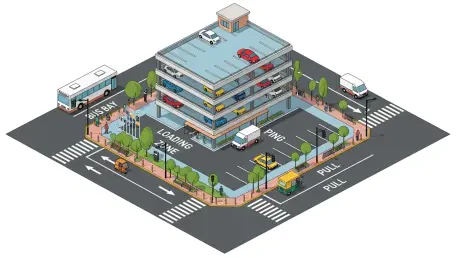

Rush-hour gridlock has turned once-fluid corridors in Ganderbal into bottlenecks where curbside parking, loading, and idling squeeze every meter of roadway until even short trips become tedious and unpredictable, and that daily drag on movement now touches shoppers, students, and small businesses alike. Against that backdrop, a multi-level parking facility has gained administrative approval as a highly visible test of whether structured capacity can relieve pressure on streets, open safer space for pedestrians, and revive the commercial rhythm of a growing town center. The initiative also signaled a policy stance: capital spending targeted at practical, standards-led assets that fix known gaps rather than chase prestige projects. What happens from sanction to commissioning will set expectations for how Kashmir’s towns manage density, traffic, and scarce land in the years ahead.
Project Approval and Governance
Administrative Green Light
Administrative approval for a Rs 9.60 crore multi-level car parking facility in Ganderbal, sanctioned by Chief Minister Omar Abdullah under the Capex Budget 2026–27, positioned organized parking as essential infrastructure rather than a discretionary amenity. The authorization aligned solution to constraint: a compact, vertical structure where street widths and land availability rule out horizontal expansion. Backed by capital allocation, the project moved from concept to a governed mandate with funding cover for construction, materials, and labor. That formal green light matters because it anchors public expectations to a vetted scope and a fiscal envelope, signaling that delivery can be tracked against a plan rather than left to ad hoc fixes or piecemeal encroachments that trade short-term relief for long-term disorder.
Budget and Oversight Architecture
Execution with the Director, Urban Local Bodies, Kashmir, established a single accountability node to manage procurement, contractor performance, and compliance with planning standards. The directorate’s remit connects permitting, urban design, and municipal coordination, reducing handoff risks that often stall civic projects. Prior technical and financial evaluations, noted in the approval process, provided baseline checks on feasibility, cost realism, and adherence to government guidelines. That is more than paperwork; it defines what quality will look like in concrete, steel, ramps, and fire egress. Transparent fund flows under the Capex framework create auditable trails for timelines and milestones, while a structured chain of responsibility clarifies who must resolve site logistics, interface with traffic police, and sequence works to minimize disruption in market areas during peak trading hours.
Urban Challenges and Rationale
Why Ganderbal Needs Structured Parking
Ganderbal’s core roads have been strained by sustained growth in vehicles and modest intersection capacity, where informal curbside parking narrows lanes and forces buses, autos, and two-wheelers into conflict at merge points. Moving static vehicles off the carriageway is the most direct way to restore throughput; a multi-level facility centralizes storage, cuts cruising for open spots, and trims dwell times at drop-off points. Smoother peak-hour flow often hinges on the first 500 meters leading into markets and public offices, and uncluttered curbs there can be decisive. Better separation of functions—loading, pick-up, and long-stay parking—reduces random braking and improves sightlines for pedestrians at crossings. In effect, structured supply replaces a chaotic overlay of private choices with a managed system designed for predictable capacity and safer access.
Efficient Land Use in a Constrained Core
A vertical parking model fits compact-town realities by stacking capacity within a small footprint, freeing ground-level space for sidewalks, bus bays, or landscaping rather than more asphalt. When space is costly in mobility terms, design discipline matters: controlled entry and exit points reduce turning conflicts, while internal circulation and signage can be tuned to speed up park-and-go times. This approach also integrates with curb management policies, such as timed loading windows or geofenced ride-hail pick-up zones, so street edges remain clear for movement. By concentrating access near key destinations, the structure can support short walking links instead of vehicle trips between scattered on-street stalls. Moreover, ramp gradients, stall dimensions, and fire safety systems set by recognized standards give operators a template for reliable operations, maintenance, and future expansions if demand grows.
Expected Impacts and Ripple Effects
Mobility, Environment, and Safety Gains
Less cruising for slots means fewer kilometers driven at low speeds, which typically generate disproportionate emissions and noise. Redirecting that search traffic into a defined facility can stabilize flows on arterial links, reduce random lane changes, and lower intersection conflicts caused by sudden U-turns or double parking. Pedestrian benefits should follow: broader, unobstructed sidewalks improve accessibility for seniors and schoolchildren, while clearer sightlines cut collision risk at crossings near markets and offices. With predictable off-street capacity, traffic police can enforce curb rules more consistently, knowing alternatives exist. The cumulative effect is not flashy but tangible—shorter travel times, steadier bus headways, and calmer streets that invite walking. Over time, those gains often unlock small but meaningful mode shifts for short errands that no longer feel hazardous or time-consuming on foot.
Economic Uplift and Replicability Across Kashmir
Retail depends on dependable access, and reliable parking reduces the uncertainty that deters casual visits or compresses shopping into off-peak windows. For service providers—clinics, banks, repair shops—turnover and punctuality are easier when clients can plan arrivals without gambling on a curbside slot. If delivered on schedule and within budget, Ganderbal’s project could offer a reference path for similarly constrained towns in Kashmir: pair a multi-level facility with curb enforcement, coordinate with transit stops to limit overlap, and price long-stay parking to keep churn high near commerce. Still, outcomes will hinge on siting, capacity, and operations that remain undisclosed. Actionable next steps include publishing the facility’s stall count, integrating digital guidance signs on approach roads, setting clear tariff bands to manage dwell time, and piloting off-peak delivery windows so streets stay free when footfall crests.