
Standing in the dim basement of a mid-century office tower, an electrical contractor often finds themselves attempting to translate the analog language of a 1955 distribution board into the high-speed digital pulse required by the modern utility providers of 2026. This technological gap is not merely a matter of age; it represents a fundamental shift in the philosophy of power management from passive distribution to active, data-driven synchronization. While modern structures are designed with integrated smart meters and fiber-optic backbones, legacy buildings remain tethered to outdated infrastructure that was never intended to function as an intelligent node in a decentralized energy network. The pressure to modernize is mounting as utility companies demand real-time visibility into load timing and peak demand to balance a grid increasingly dependent on intermittent renewable sources. Consequently, the industry is witnessing a complex collision between the physical constraints of the post-war era and the analytical precision required by contemporary energy markets, forcing engineers to find innovative ways to bridge decades of technical evolution.
Evaluating the Physical Infrastructure
Managing Aging Panels and Unmapped Circuitry
The physical degradation of electrical components in structures built between the 1950s and 1970s often presents the most immediate hurdle to smart grid integration. Decades of operation lead to oxidized bus bars, brittle cable insulation, and undersized neutral conductors that were never rated for the high harmonic distortion caused by modern server rooms or LED lighting arrays. When a contractor opens a vintage panelboard, they frequently encounter a crowded, chaotic environment where safety clearances are minimal and the thermal integrity of the equipment is questionable at best. Upgrading these systems to accommodate modern sensing hardware is not as simple as swapping a breaker; it often requires a comprehensive assessment of the panel’s ability to handle the increased heat and data interference generated by new electronic components. Furthermore, the absence of proper grounding or shielded pathways in older buildings can cause significant signal noise, which can corrupt the very data the smart grid relies on for decision-making.
Beyond the visible wear and tear, the most persistent challenge in legacy retrofits is the profound lack of accurate documentation regarding the building’s internal wiring. Original blueprints, often referred to as “as-builts,” are rarely updated to reflect the countless tenant improvements, emergency repairs, and ad-hoc expansions that occur over seventy years of continuous occupancy. Contractors are frequently forced to contend with “phantom loads” or “ghost circuits” that do not appear on any schematic but continue to draw significant power from the main feeders. This lack of a clear electrical roadmap means that any attempt to install sub-metering or automated load-shedding technology must begin with an exhaustive physical audit. Without this foundational work, the installation of high-tech sensors can lead to misleading data or, in the worst-case scenario, the unintentional de-energization of critical life-safety systems that were improperly tapped into a general-purpose lighting circuit decades ago.
Electrical Archaeology: Tracing the Invisible History of Loads
Performing “electrical archaeology” is a labor-intensive but mandatory phase of any successful smart grid conversion in an aging facility. Electricians must utilize advanced circuit tracers and ultrasonic testers to map the actual path of feeders through walls that may have been renovated dozens of times. This process often reveals that what was once a simple office floor now contains heavy-duty industrial refrigeration units or specialized laboratory equipment that was installed without adjusting the primary distribution architecture. Identifying these heavy loads is critical because they can cause voltage sags or spikes that damage sensitive smart grid gateways if they are not properly isolated or monitored. The discovery of these hidden high-demand assets allows engineers to recalibrate the building’s energy profile, ensuring that the new digital management system is based on the reality of 2026 occupancy rather than the theoretical loads of the mid-20th century.
The difficulty of this tracing process is exacerbated by the physical density of older construction, where conduits are often buried deep within reinforced concrete or hidden behind asbestos-containing materials. Every unmapped circuit represents a potential failure point for the smart grid’s predictive algorithms, which rely on a 100% accurate picture of energy flow to manage peak demand. If a major HVAC compressor or a bank of elevators is missing from the data stream, the utility’s demand-response signals will fail to produce the expected reduction in consumption, leading to financial penalties for the property owner. Therefore, the investment in manual circuit identification serves as the primary safeguard for the project’s return on investment. By meticulously documenting the current state of every feeder, contractors provide the “digital twin” necessary for modern software to effectively manage an analog building’s performance within the broader utility ecosystem.
Integrating Monitoring and Communication Technology
Sensing Solutions: Implementing Non-Invasive Data Capture
To minimize the operational downtime and high costs associated with replacing entire switchgear assemblies, the industry has turned toward non-invasive sensing technologies such as split-core current transformers. These sensors can be clamped around existing feeders without the need to disconnect wires or de-energize the building, making them the preferred choice for retrofitting occupied commercial spaces. While solid-core sensors generally offer slightly higher accuracy classes, the logistical nightmare of a complete power shutdown in a 24-hour facility usually makes them a non-starter. Modern split-core variants have bridged this gap, providing the precision necessary for revenue-grade billing and advanced power quality analysis while maintaining the ease of installation required for legacy environments. These devices act as the primary sensory organs for the smart grid, converting the flow of electrons into a manageable data signal that can be processed by localized gateways.
The selection of these sensors must be done with extreme care, as legacy buildings often feature non-standard cable sizes or bus bar configurations that do not align with modern off-the-shelf hardware. Contractors must often source specialized flexible Rogowski coils for tight spaces where traditional rigid transformers cannot fit due to the cramped nature of vintage electrical closets. These flexible sensors allow for the monitoring of large, irregularly shaped conductors that were common in mid-century industrial designs. Once installed, these sensors provide the granular, second-by-second data required to participate in modern energy markets. By capturing high-resolution waveforms, the management system can identify failing motors or inefficient equipment before they cause a total system outage, transforming the maintenance model of the building from reactive to predictive. This shift is essential for maintaining the reliability of the local grid as it transitions to a more dynamic and less predictable power supply.
Transmission Protocols: Navigating Signal Integrity in Concrete
Once the raw electrical data is captured, the challenge shifts to transmitting that information across a building that was likely constructed long before the advent of modern networking. In many older structures, the thick concrete floors and extensive metal ductwork act as a Faraday cage, severely limiting the effectiveness of standard Wi-Fi or cellular signals used in more modern installations. Contractors must decide between the durability of hardwired serial connections, such as Modbus over RS-485, and the flexibility of long-range wireless protocols like LoRaWAN. Modbus remains a staple in the industry due to its resilience against electromagnetic interference, which is prevalent in high-voltage environments, but the labor cost of running new low-voltage cabling through miles of existing conduit can be prohibitive. Each building requires a custom-tailored communication strategy that balances the need for data speed with the physical limitations of the site’s architecture.
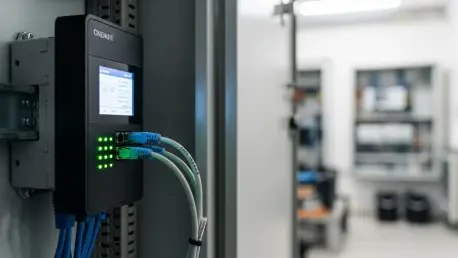
The integration of these communication layers often involves bridging legacy Building Automation Systems, which typically use the BACnet protocol, with modern cloud-based utility platforms. This translation requires the use of sophisticated gateways that can normalize data from multiple sources and present a unified view to the grid operator. However, the introduction of these digital pathways into an analog building creates a new set of technical bottlenecks, as the processing power of older on-site controllers is often insufficient for the high-frequency data packets demanded by the grid. Engineers must frequently bypass these older systems entirely, creating a parallel “data overlay” that feeds directly to the utility. This approach ensures that the smart grid’s responsiveness is not throttled by the slow baud rates of 1990s-era building controls, providing the low-latency communication necessary for participating in fast-acting frequency regulation and other ancillary grid services.
Addressing Technical Synchronization and Security
Cybersecurity Measures: Protecting the Electrical Network Node
As buildings transition from isolated physical assets to interconnected digital nodes, the importance of cybersecurity within the electrical trade has reached an unprecedented level of urgency. Every smart meter, gateway, and connected sensor represents a potential entry point for malicious actors who could attempt to disrupt the power supply or gain access to the broader utility network. In legacy retrofits, the temptation to simplify installation by connecting new smart devices to the building’s existing, often unsecured, guest Wi-Fi or tenant networks is a major risk factor. Professionals now prioritize the creation of isolated Virtual Local Area Networks specifically for energy management, ensuring that the electrical infrastructure is physically and logically separated from other building functions. This “air-gapping” strategy is reinforced by strict encryption standards, such as AES-256, which are now required by most utilities for any hardware that facilitates grid-interactive communication.
Ensuring compliance with these security standards requires a level of IT expertise that was historically absent from the electrical contracting field. Technicians must now be proficient in configuring firewalls and managing secure authentication certificates to prevent unauthorized access to the building’s load-shedding capabilities. A breach in this system could allow an attacker to shut down power to an entire facility or, worse, manipulate data to cause an artificial surge that destabilizes the local grid. To mitigate these threats, the industry has adopted “zero-trust” architectures where every device must continuously verify its identity before transmitting or receiving commands. This move toward high-security networking is a radical departure from the “set it and forget it” mentality that characterized electrical work for the past century. By treating the electrical system as a critical IT asset, contractors ensure that the building’s path to modernization does not inadvertently create a gateway for systemic cyber instability.
Hardware Interoperability: Ensuring Component and Burden Accuracy
The technical success of a smart grid retrofit depends heavily on the precise synchronization of diverse hardware components, a task that is complicated by the wide variety of equipment found in legacy buildings. A common failure point occurs when modern smart meters are paired with existing or incorrectly specified current transformers that do not match the meter’s required “burden rating.” Burden refers to the amount of impedance the sensor can handle while maintaining its stated accuracy; if the burden is exceeded, the data reported to the utility will be skewed, leading to incorrect billing or faulty grid responses. In many older installations, the long wire runs between the sensor in the basement and the meter in the lobby add significant resistance, which can easily exceed the limits of low-cost modern hardware. Engineers must meticulously calculate these electrical loads during the procurement phase to ensure the entire measurement chain remains within its calibrated tolerance.
Beyond electrical specifications, the physical compatibility of modern hardware with vintage enclosures often requires creative engineering solutions. Many legacy panels lack the mounting rails or space required for modern DIN-rail mounted gateways and power supplies, forcing contractors to install external NEMA-rated enclosures and run additional conduit. This mismatch can also extend to the communication interfaces themselves, where older serial-based sensors must be converted to modern Ethernet or fiber-optic signals. These conversion points are often the most fragile links in the system, susceptible to both mechanical failure and data latency issues. To avoid these problems, forward-thinking contractors utilize pre-configured, modular “retrofit kits” that have been pre-tested for compatibility across a wide range of legacy equipment. This standardized approach reduces the likelihood of onsite troubleshooting and ensures that the final installation meets the rigorous accuracy and reliability standards required by the 2026 energy landscape.
Navigating Regulatory and Economic Challenges
Administrative Requirements: Managing Compliance and Documentation
Navigating the bureaucratic landscape of a smart grid retrofit often proves more daunting than the technical installation itself. Utility providers in 2026 have implemented strict interconnection requirements that demand updated load calculations signed by a licensed professional engineer, regardless of the building’s age. These requirements are designed to ensure that adding new automated controls or heavy electric vehicle charging infrastructure will not overwhelm the local distribution transformer. However, for a building with seventy years of unrecorded changes, producing an accurate load calculation requires a level of forensic engineering that can add weeks to the project timeline. Furthermore, many jurisdictions have updated their building codes to require separate permits for the electrical work and the low-voltage communication systems, leading to a complex web of inspections that must be perfectly synchronized to avoid costly delays.
The administrative burden also extends to the financial incentives and grants that often make these projects viable. To qualify for federal energy efficiency credits or utility-sponsored demand-response programs, property owners must provide extensive baseline data and prove that the new systems meet specific performance benchmarks. This documentation process requires the continuous tracking of energy savings over months or even years, placing a long-term administrative responsibility on the building management team. Contractors who specialize in this field have increasingly evolved into consultants who manage these complex applications from inception to completion. By handling the red tape on behalf of the owner, these firms ensure that the technical improvements are matched by the necessary legal and financial framework. This holistic approach is essential for overcoming the inertia of legacy property management, where the “if it isn’t broken, don’t fix it” mentality often conflicts with the modern necessity for grid-interactive buildings.
Economic Strategy: Leveraging Existing Infrastructure for Retrofits
While the challenges of legacy buildings are numerous, they sometimes offer a “vintage advantage” that can significantly reduce the costs of a smart grid upgrade. Structures built in the mid-20th century were often over-engineered, featuring oversized conduits and generous mechanical spaces that provide ample room for new fiber-optic cables and digital gateways. During an era when material costs were lower relative to labor, it was common practice to install “spare” pipes for future expansion—a luxury rarely found in modern “value-engineered” buildings where every inch of space is accounted for. Contractors who take the time to explore these forgotten pathways can often avoid the need for invasive wall demolition or expensive surface-mounted raceways. This ability to repurpose existing infrastructure not only saves money but also preserves the architectural integrity of historic or culturally significant buildings while bringing them into the digital age.
Ultimately, the economic feasibility of a smart grid retrofit is determined by the balance between the high initial labor costs of circuit mapping and the long-term operational savings of automated energy management. In 2026, the rise of “as-a-service” business models has allowed building owners to spread the cost of these upgrades over several years, with the savings from reduced peak demand charges covering the monthly fees. This financial shift has made it possible for even modest mid-century properties to compete with modern Class A office spaces in terms of energy performance and tenant comfort. The key to a successful project lies in the contractor’s ability to view the building as a living, evolving entity rather than a static box. By blending traditional electrical craftsmanship with sophisticated data management, firms are successfully transforming the aging infrastructure of the past into the resilient, intelligent power hubs of the future.
Strategic Integration: Shaping the Future of Retrofit Engineering
The transition of legacy structures into active participants of the modern smart grid was ultimately defined by a shift from simple hardware replacement to sophisticated system integration. The investigation revealed that the primary obstacles were not the inherent limitations of the physical components, but the historical lack of transparency in how energy moved through these aging structures. Contractors found that by prioritizing early-stage circuit mapping and adopting rigorous network isolation protocols, they avoided the most common technical failures associated with legacy retrofits. This experience demonstrated that the modernization process required a unique blend of forensic engineering and modern IT security, a combination that became the new standard for the electrical trade in recent years.
The analysis of successfully completed projects highlighted that property managers who maintained digitized, live-updating electrical records significantly reduced the long-term costs of grid participation. Industry leaders concluded that the most effective strategy involved a hybrid approach, combining high-precision sensing with robust administrative planning to ensure long-term compliance with utility standards. Moving forward, the focus was placed on developing modular, pre-configured hardware kits that could adapt to the unpredictable environments of mid-century electrical rooms. These steps ensured that legacy buildings did not become obsolete in a rapidly decarbonizing economy, but instead served as a resilient foundation for the distributed energy networks of the future. This evolution was essentially a masterclass in bridging the gap between an analog past and a digital-first reality.