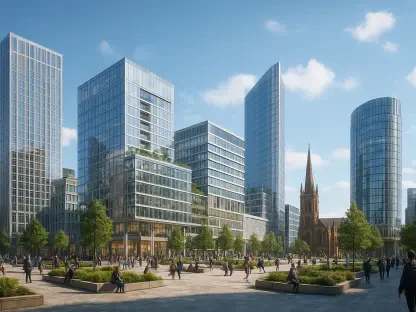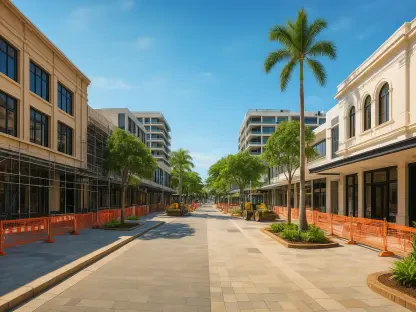

Flagship Companies is spearheading the transformation of the 2.83-million-square-meter Geneva Steel site in Vineyard into a dense, high-rise urban hub modeled after Seoul’s financial district. This ambitious undertaking, known as Utah City, represents a radical pivot from the traditional suburban development patterns that have long defined the American West. By focusing on a scale comparable to Seoul’s Yeouido district, the project aims to integrate residential housing, commercial office space, and retail environments into a cohesive, walkable ecosystem. The transition from industrial steel production to a modern mixed-use city requires a level of urban planning and technical precision rarely seen in domestic residential construction. Consequently, developers have actively sought partnerships with South Korean construction firms, whose mastery of high-density living offers a blueprint for this transformation. This move signals a significant cultural and architectural shift toward more efficient, vertical urbanism in Utah.
A Strategic Partnership: Achieving High-Density Living
Technical Leadership: The Mastery of K-Apartment Design
South Korean builders are uniquely positioned to address the specific needs of the Utah City project because they have spent decades perfecting the K-apartment model. Unlike American firms that typically prioritize low-density suburban tracts or isolated supertall luxury towers, Korean contractors excel at creating massive, multi-unit residential complexes that function as self-contained communities. These developments are characterized by their efficient use of vertical space, integrating high-quality residential units with expansive communal amenities, sophisticated internal parks, and retail podiums. In Vineyard, this expertise is being leveraged to ensure that high-density living does not come at the expense of quality of life. The focus remains on creating a livable urban fabric where residents can access work, recreation, and essential services within a few minutes of their front doors. This technical mastery of compact city design is the primary reason why Flagship Companies identified these international partners.
Beyond the architectural layout, the collaboration emphasizes a rigorous approach to construction management and engineering efficiency. South Korean firms are globally recognized for their ability to deliver complex, large-scale projects within tight schedules and strictly controlled budgets. This reputation is particularly valuable in the current American market, where labor shortages and fluctuating material costs often lead to significant project delays. By importing Korean construction management protocols, the Utah City development aims to streamline the assembly of high-rise structures while maintaining rigorous safety and quality standards. This includes the use of advanced modular construction techniques and pre-integrated building systems that reduce onsite waste and accelerate the overall timeline. The partnership essentially seeks to merge American regional knowledge with Korean industrial discipline, creating a hybrid model of development that can withstand the economic pressures currently facing the United States real estate industry.
Smart Technology: Integrating Digital Infrastructure and Equity
A critical component of this urban experiment is the integration of advanced smart city technologies that are already standard in major Korean metropolitan areas. These systems go far beyond simple home automation, encompassing entire district-level grids that optimize energy consumption, waste management, and traffic flow through real-time data analytics. In the context of Utah City, Korean firms are providing the technological backbone for smart apartments that feature integrated environmental controls, high-speed fiber connectivity, and automated security systems. These features are designed to appeal to the tech-savvy demographic of the Silicon Slopes region, offering a level of digital convenience that traditional suburban homes cannot match. Furthermore, the use of sustainable energy solutions, such as district heating and localized solar arrays, aligns with the project’s goal of reducing the environmental footprint of high-density living. This technological export represents a significant step in moving the U.S. toward more intelligent and resilient urban infrastructure.
The strategic collaboration also marks an evolution in the business relationship between international contractors and domestic developers. Rather than serving as mere third-party builders, several South Korean firms are exploring the role of developer-partners by taking direct equity stakes in specific districts within Utah City. This model, which has been successfully deployed in other global markets like Australia, allows the construction firms to share in the long-term rental income and appreciation of the assets they create. By moving into the build-to-rent sector, these companies ensure that they have a vested interest in the long-term maintenance and operational success of the buildings. For the local developers at Flagship Companies, this arrangement provides a stable source of capital and a commitment to quality that transcends a simple fee-for-service contract. This shift toward a partnership-based investment model is expected to provide a more stable financial foundation for the project’s multi-phase rollout over the next several years.
Global Trends: Adapting to the Shifting American Market
Transit and Regulations: Navigating the Hurdles of Development
The move toward high-density urbanism in Vineyard is heavily influenced by the growing demand for Transit-Oriented Development, or TOD, across the United States. Traditional suburban sprawl is increasingly viewed as an unsustainable model due to rising land costs, environmental degradation, and the economic burden of car-dependent infrastructure. Utah City addresses these challenges by centering its highest-density residential and commercial towers around the FrontRunner commuter rail station. This strategic placement allows residents to commute to Salt Lake City or Provo without relying on personal vehicles, mirroring the transit-centric lifestyles common in Seoul. The local regulatory environment has been specifically adapted to support this vision, with Vineyard’s urban planning guidelines removing traditional height limits for buildings located near the transit hub. This level of regulatory flexibility is rare in the American West and provides the necessary legal framework for Korean firms to apply their domestic expertise in vertical city-building to a new geographic context.
Despite the clear advantages of this partnership, entering the American residential market remains a complex challenge for international firms. South Korean builders must navigate a dense thicket of state-specific building codes, licensing requirements, and local labor regulations that vary significantly from their home market. Historically, many foreign-led residential projects in the U.S. have struggled due to these legal intricacies or community-led opposition to high-density development. However, Utah presents a unique competitive advantage by offering a more streamlined permitting process that can be completed in approximately six months, which is significantly faster than in coastal markets like California or New York. This efficiency reduces the financial risks associated with land carry costs and allows for a more predictable development cycle. By partnering with a local entity like Flagship Companies, Korean firms are able to mitigate these risks, leveraging local political capital and legal expertise to ensure that the project moves from the planning stage to groundbreaking.
Regional Growth: The Olympic Catalyst and Future Blueprints
Utah’s status as a high-growth strategic hub makes it the ideal environment for the successful implementation of the K-apartment model. The state is currently experiencing one of the fastest population surges in the country, particularly within the younger, tech-oriented demographic that is increasingly looking for modern, amenitized living options. This population is generally more receptive to the density and digital integration offered by the Utah City project, viewing it as a lifestyle upgrade rather than a compromise. Furthermore, the economic momentum generated by the Silicon Slopes tech sector provides a stable base of high-income renters and buyers who value the proximity to transit and workplace hubs. The upcoming 2034 Salt Lake City Winter Olympics serves as a massive secondary catalyst, driving state-level support for major infrastructure improvements and housing expansion. The Olympics effect ensures that the project remains a top priority for government planners, providing a guaranteed timeline for public investment in the roads, rail links, and utilities.
In the final analysis, the strategic alliance between Flagship Companies and South Korean builders established a transformative precedent for American urban development. This partnership successfully integrated the high-efficiency K-apartment model into a domestic context, proving that dense, transit-oriented communities could flourish in a market previously dominated by suburban sprawl. By navigating the complexities of local regulations and leveraging the state’s rapid growth, the project provided a clear blueprint for future developments across the Western United States. Moving forward, developers and city planners identified several actionable strategies based on this success, such as the adoption of more flexible zoning laws and the use of international equity partnerships to stabilize large-scale housing projects. The collaboration ultimately shifted the narrative of urban living, showing that smart technology and high-rise density were essential tools for creating sustainable, vibrant cities. As the 2034 Olympics approached, Utah City stood as a landmark achievement in globalized urban engineering.