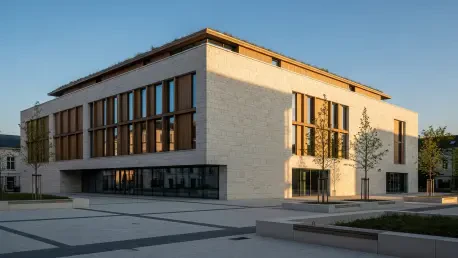

Urban landscapes across Northern Europe are currently undergoing a profound transformation as architects and engineers struggle to reconcile historic aesthetic preservation with the brutal reality of escalating summer temperatures. For decades, the structural design philosophy of these regions centered on maximizing heat retention to combat freezing winters, yet this traditional approach has unintentionally created millions of thermal sieves that trap stagnant hot air during modern heatwaves. As energy grids face unprecedented strain from the sudden surge in mechanical cooling demands, the construction industry is pivoting toward an ancient yet innovative methodology known as eco-construction. By prioritizing bio-based and geo-sourced materials, urban planners are attempting to redefine how buildings interact with their environment, moving away from high-emission cooling technologies toward systems that are inherently resilient. This shift represents more than just a change in materials; it is a fundamental reimagining of urban space.
Harnessing Natural Thermal Regulation
Bio-Sourced Materials and the Science of Passive Cooling
Eco-construction leverages the inherent properties of natural materials such as raw earth, timber, hemp, and stone to regulate indoor climates through physical principles that air conditioning cannot replicate. A cornerstone of this approach is the concept of thermal time lag, which describes a material’s ability to absorb heat during the day and release it slowly hours later, rather than letting it penetrate immediately. This delay prevents indoor spaces from peaking in temperature at the same time as the outdoors, allowing buildings to stay naturally cool during the peak sun hours and discharge accumulated warmth at night when the external air is cooler. By selecting materials with high thermal mass and low conductivity, architects can design envelopes that effectively dampen the amplitude of external temperature fluctuations. This method is particularly effective in temperate zones where night purging can reset the building’s thermal state.
Real-World Performance: Resilient Public Spaces
The practical efficacy of these natural materials was clearly demonstrated at the Simone Veil Library in France during a severe heatwave that tested the limits of modern urban infrastructure. While exterior temperatures reached as high as 42 degrees Celsius, the library’s interior remained ten degrees cooler despite the total absence of traditional air conditioning systems or mechanical chillers. This performance highlights the potential for eco-friendly public buildings to serve as essential cooling centers for local communities during extreme weather events, aligning sustainable architecture with urgent public health needs. Such buildings prove that bio-based construction is not merely an experimental niche but a viable solution for large-scale public facilities that must remain functional during climate emergencies. These structures utilize wood frames and straw-bale insulation to maintain a steady environment and reduce the urban heat island effect.
Navigating the Financial Realities of Green Building
Economic Barriers: The Renovation Wave Challenge
Despite the clear performance benefits, widespread adoption of eco-construction is hindered by the current state of the European building stock and various initial financial barriers that deter developers. Approximately 75 percent of buildings in the European Union are currently classified as energy-inefficient, yet renovation rates remain significantly lower than what is required to meet modern climate resilience targets. While using sustainable materials can increase construction costs by 15 to 20 percent compared to conventional concrete and glass, these expenses must be viewed through the lens of life-cycle value. Developers often prioritize short-term profit margins over the durability and thermal comfort of the end-users, leading to a market saturation of buildings that will require expensive retrofitting within a few years. Bridging this gap requires a fundamental shift in how the financial sector evaluates assets, moving toward a carbon-conscious model.
Operational Savings: The Return on Investment
In some instances, residents of bio-sourced housing have reported that their homes are so well-insulated that they have not needed to activate heating or cooling systems for several consecutive years. This long-term operational efficiency eventually offsets the higher upfront costs, providing a level of energy independence that protects households from the volatility of global energy markets. For instance, hempcrete walls provide both insulation and thermal mass, reducing the need for the complex HVAC systems that typically account for a large portion of a building’s maintenance budget. Furthermore, the longevity of geo-sourced materials like stone and raw earth means that the physical structure requires fewer repairs over its lifespan compared to synthetic cladding or industrial polymers. As utility prices continue to rise, the financial argument for passive cooling becomes increasingly persuasive, turning eco-construction into a sound long-term investment.
Overcoming Structural and Political Inertia
Legislative Reform: Breaking the Bottleneck in Private Housing
Political and social hurdles remain a significant challenge, particularly in high-density urban areas like Paris where a large percentage of housing is comprised of vacant or second homes. These owners often lack the personal incentive to invest in thermal renovations, frequently voting against essential upgrades in communal housing blocks because they do not personally experience the discomfort of heatwaves. This creates a bottleneck in the private sector that hinders the broad implementation of green building standards, even as the public sector moves to mandate the use of bio-based insulation in social housing. To overcome these barriers, policymakers are advocating for targeted financial incentives that make sustainable materials more competitive with traditional, carbon-intensive options. Proposed measures include reducing the VAT rate on geo-sourced materials and implementing eco-conditionality for state subsidies, ensuring that public support is tied to usage.
Strategic Implementation: Lessons From the Green Transition
The transition toward a climate-resilient urban landscape required a multifaceted strategy that integrated technological innovation with robust legislative frameworks and community engagement. Urban planners identified that the most effective path forward involved the synchronization of public mandates with private sector incentives to ensure that no part of the building stock was left behind. By implementing strict thermal performance standards for all new developments and providing low-interest loans for deep renovations, cities successfully began to lower their overall energy consumption while improving the quality of life for residents. The focus shifted from reactive mechanical cooling to proactive architectural design, where the building itself functioned as the primary regulator of heat. This systemic change allowed municipalities to reduce the burden on electrical grids, effectively demonstrating that ecological responsibility and urban habitability were two sides of the same coin.