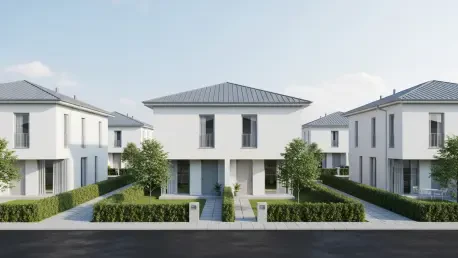

The American housing market is currently undergoing a structural transformation, moving away from the traditional binary choice between high-density apartments and single-family homeownership. This evolution is most visible in the emergence of the Build-to-Rent sector, which combines the spatial advantages of a standalone house with the service-oriented convenience of a professional rental. The recent introduction of the Sagecrest community in Antioch, California, serves as a definitive case study for this shift. This 216-unit townhome project represents more than a local development; it is a strategic response to shifting demographic preferences and economic pressures within the Bay Area’s suburban corridors. For decades, the goal of suburban living was synonymous with property ownership. However, a growing segment of the population, often categorized as renters-by-choice, is opting out of the traditional path to equity. By offering large floor plans, BTR communities provide the space of a starter home without the liability of maintenance.
The Rise of the Renter-by-Choice Demographic
The appeal of projects like Sagecrest lies in their ability to solve the space versus service dilemma that has plagued growing families in urban environments for years. Residents who have outgrown the confines of a standard apartment but are wary of the financial leverage and tax implications of homeownership find a middle ground here that was previously unavailable. The “lock-and-leave” lifestyle, which emphasizes flexibility and a total lack of yard work, is becoming a highly marketable commodity in the high-stress, high-cost environment of Northern California. This shift highlights a fundamental change in consumer behavior where the desire for a private backyard and additional square footage is no longer strictly tied to the obligation of a thirty-year mortgage. Moreover, the mobility afforded by these rental agreements allows professionals to pivot their living situations in alignment with a fast-paced labor market, providing a level of agility that traditional homeownership simply cannot match in today’s economy.
To justify premium rents and ensure long-term tenant retention, developers are integrating luxury-tier features and smart home technology directly into these suburban units. At Sagecrest, the inclusion of quartz countertops, custom cabinetry, and stainless steel appliances mirrors the finishes of a luxury condominium in downtown San Francisco. Beyond individual units, the community infrastructure functions much like an exclusive private club, featuring resort-style pools and clubhouses designed for remote work. These amenities serve as a protective moat for the business, creating a high barrier to entry for local competitors and fostering a genuine sense of community that significantly reduces tenant turnover. By treating the rental experience as a hospitality product rather than a utility, developers are successfully capturing a segment of the market that values convenience and aesthetics over the pride of owning a title deed that comes with a laundry list of chores.
Strategic Regional Market Dynamics: Navigating the Gateway
BrightSky’s decision to develop in East Contra Costa County represents a calculated move based on specific regional economic indicators that favor long-term rental growth. Antioch acts as a critical gateway for those who have been priced out of core Bay Area markets like San Jose or the Peninsula but still require access to major employment hubs. While there is a massive and persistent demand for housing across this entire region, a significant and widening gap exists between median household incomes and the actual cost of new for-sale construction. Sagecrest is strategically positioned to exploit this vacuum by standing as the first large-scale, dedicated Build-to-Rent townhome community in its specific submarket. This targeted approach addresses the housing shortage by providing high-density housing that retains the feel of a suburban neighborhood, offering a necessary alternative for households that require more space than a traditional apartment but cannot bridge the gap to a million-dollar mortgage.
This first-mover advantage allows the developer to set the regional standard for premium rental living while capturing the highest tier of the local tenant pool. By targeting higher-income households who value a managed environment, the project seeks to bypass the inconsistencies of the traditional local rental market, which is often comprised of older, unmanaged properties. This strategy demonstrates how institutional developers use the Build-to-Rent model to create a defensive market position, offering a product distinct from aging apartment stock and for-sale housing. Furthermore, the concentration of units in a single managed community allows for operational efficiencies that smaller landlords cannot replicate. This scale enables the deployment of dedicated on-site management teams, ensuring that the property remains in peak condition and maintains its value over a multi-decade investment horizon, providing a level of reliability that scattered-site owners often fail to deliver to their residents.
Institutional Investment: The Shift Toward Professional Stewardship
The involvement of institutional investment managers marks the formal maturation of Build-to-Rent as a serious and stable asset class within the broader real estate portfolio. Historically, the single-family rental market was dominated by mom-and-pop landlords who often lacked the capital to maintain properties to modern standards, but the professionalization of this sector marks a major turning point. From an investment perspective, these assets are now viewed as more stable than for-sale developments during periods of economic volatility or rising interest rates. When the mortgage market tightens and borrowing costs increase, the demand for high-quality rentals typically surges, providing stable and predictable cash flows for institutional investors. This influx of sophisticated capital has accelerated the pace of development, allowing for the creation of master-planned rental communities that offer a level of consistency and security that individual rental houses scattered across various neighborhoods simply cannot provide to modern tenants.
Beyond the financial stability offered to investors, the institutional nature of these projects allows for a more integrated approach to suburban development and management. Large-scale operators can implement property management software and sustainable building practices often too expensive for smaller investors. For instance, smart-lock systems and energy-efficient HVAC units contribute to lower operational costs and a smaller environmental footprint. This oversight ensures that the community remains a cohesive entity rather than a collection of disparate properties, which helps in maintaining property values for the surrounding neighborhood. As institutional capital continues to flow into the sector from 2026 to 2030, the focus is shifting toward long-term stewardship rather than short-term gains. This shift incentivizes developers to build with higher-quality materials and more durable designs, as they are ultimately responsible for the ongoing performance of the asset over a much longer period than a traditional homebuilder.
Infrastructure Integration: Lessons for Future Urban Planning
Despite the economic promise of the Build-to-Rent model, its integration into the existing suburban fabric required careful navigation of local concerns and regulatory hurdles. The arrival of hundreds of new households in a concentrated area placed significant pressure on local infrastructure, including increased traffic on arterial roads and the potential for overcrowding in local school districts. Developers worked closely with city planners in Antioch to ensure that projects like Sagecrest contributed their fair share to regional improvements through substantial impact fees and infrastructure contributions. These negotiations often centered on how a high-density rental project could maintain the character of a single-family neighborhood while providing the density required to meet state housing mandates. By demonstrating that professional management prevents the deterioration often associated with absentee landlords, developers successfully argued that these communities could actually enhance local property values and provide a stable tax base.
City officials and urban planners ultimately recognized that the professionally managed model was a necessary valve for the housing crisis. To ensure success, stakeholders prioritized the inclusion of multi-modal transportation and green spaces that benefited the public. Future strategies focused on creating walkable connections between these hubs and local centers, reducing car reliance and fostering an integrated urban environment. Planners advised that cities should continue to update their zoning codes to allow for a diversity of housing types, ensuring that the transition from ownership to rental models remained a viable path for all income levels. By treating these communities as integral parts of the civic landscape, local governments managed to balance the need for rapid growth with the preservation of community standards. This approach paved the way for a resilient and flexible housing market that addressed the needs of a modern workforce.