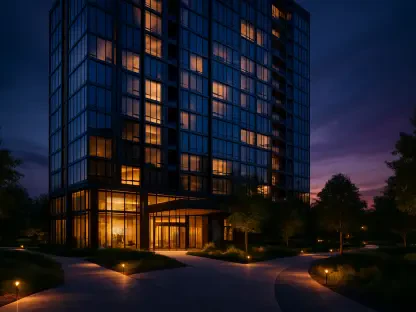

The rapid transformation of Brisbane’s skyline has reached a critical milestone with the completion of a massive residential project that redefines the intersection of luxury living and affordable housing for essential workers. Situated in the heart of Fortitude Valley, the WeAreLiving Brunswick tower stands as a twenty-seven-story testament to the evolving Build-to-Rent sector, shifting the focus from short-term speculative investment toward long-term residential stability. This landmark development addresses the chronic housing shortage by introducing three hundred and sixty-six new apartments into a market traditionally dominated by individual strata-titled sales. Unlike the standard property model, where single owners control individual units, this institutional approach ensures the entire building remains under professional management, offering tenants a sense of security rarely found in the private rental market. By prioritizing the needs of the community over immediate capital gains, the project serves as a blueprint for urban densification.
Institutional Models and Economic Subsidies
Collaborative Project Delivery: A New Standard
The project represents a sophisticated collaboration between the Queensland Government, Frasers Property Australia, and institutional investors such as Aware Super and Barings, creating a robust financial foundation for high-density living. This partnership was instrumental in accelerating the construction timeline, allowing the tower to open its doors at a time when urban vacancy rates have reached record lows across the region. During the official opening ceremony, nearly one hundred units were leased immediately, signaling an overwhelming demand for professionally managed housing within the city’s inner ring. This high level of institutional involvement allows for greater economies of scale, ensuring that the building’s operations are streamlined and that maintenance is handled with a level of efficiency that individual landlords often struggle to provide. Such a framework attracts significant capital into the housing market, providing a steady supply of dwellings that are specifically designed for long-term rental rather than rapid resale.
Economic Subsidies: Access for Essential Workers
Central to the financial viability of this development is a unique subsidy framework designed specifically to protect the accessibility of the inner city for low-to-middle-income earners. Out of the total apartment count, one hundred and forty-four units are designated as subsidized dwellings, offering significant rent reductions for eligible tenants such as nurses, teachers, and emergency service personnel. For instance, a modern studio apartment that would typically command a weekly rent of six hundred and forty-five dollars is made available for four hundred and eighty dollars under this government-backed initiative. This tiered pricing structure ensures that the building hosts a diverse socioeconomic population, preventing the displacement of essential workers to distant suburbs. By bridging the gap between luxury high-rise living and affordable housing, the project demonstrates how public policy can effectively leverage private development to achieve social outcomes without compromising on the quality of the residential experience.
Community Integration and Market Stability
Urban Lifestyle: Beyond Basic Shelter
The architectural philosophy behind the Brunswick tower emphasizes that modern housing must function as a holistic community hub rather than just a collection of isolated living spaces. Residents enjoy access to premium amenities including a rooftop swimming pool, a fully equipped fitness center, and a dedicated dog park, fostering a lifestyle that mirrors the convenience of a high-end hotel. The ground floor contributes directly to the vibrancy of the surrounding neighborhood by incorporating a public cafe and bar, which encourages social interaction between residents and the local community. This focus on lifestyle-oriented living is a hallmark of the Build-to-Rent model, where tenant satisfaction is directly linked to the long-term profitability of the asset. When residents feel connected to their environment and have access to on-site professional management, they are more likely to commit to multi-year leases, which provides the building owners with more predictable revenue streams compared to the traditional market.
Market Stability: The Rise of Institutional Assets
This successful launch in Brisbane is a pivotal component of a broader nationwide strategy, as institutional investors and developers look to replicate this subsidized model across other Australian metropolitan centers. With several similar large-scale projects already gaining momentum in Melbourne and Sydney through 2026 and 2027, the sector is poised for exponential growth. The success of the Brunswick pilot will likely dictate the terms for future government-led housing initiatives, providing the empirical data needed to refine policy and attract further international capital. Despite persistent challenges such as fluctuating construction costs and general market volatility, the continued expansion of institutional residential assets suggests that this model will remain a permanent fixture in the property landscape. By balancing commercial interests with social responsibility, the industry is creating a more resilient housing market that can better withstand economic shifts while providing high-quality, stable homes for a growing population.
Strategic Outlook: Future Industry Considerations
Stakeholders recognized that the integration of subsidized housing within premium developments required a delicate balance of financial incentives and operational excellence to remain sustainable. Property developers learned that high-quality amenities and professional management were the primary drivers for tenant retention in a competitive urban market. Moving forward, policymakers focused on expanding these public-private partnerships to ensure that essential workers maintained a presence in city centers, thereby supporting the broader local economy. Investors emphasized the importance of diversification, shifting focus toward assets that offered stable yields over long durations rather than seeking rapid turnover profits. This shift necessitated a reevaluation of zoning laws and tax structures to encourage more institutional involvement in the residential sector. Ultimately, the industry moved toward a model where social impact and financial performance were no longer viewed as mutually exclusive but as complementary goals for future urban development.