
The stark contrast between Australia’s rapidly expanding demographic profile and its critically undersupplied residential market has culminated in a production slump that echoes the economic conditions of the early 1990s. While the nation has witnessed a population increase of roughly ten million individuals over the previous three decades, the actual delivery of new residential dwellings has remained shockingly stagnant. This disconnect suggests a systemic paralysis within the construction sector, where the ability to scale infrastructure to meet modern demand appears to have vanished. Recent statistical evidence highlights a troubling reality where the output of new homes has plummeted to its lowest point in over a decade, creating a widening chasm between the needs of the people and the available housing stock. As the country navigates the complexities of a mid-decade economic landscape, the inability to resolve these long-standing supply-side constraints has become a defining crisis for policymakers and citizens alike.
Structural Stagnation: The Disconnect Between Growth and Infrastructure
The historical data reveals a profound lack of innovation and scalability within the domestic construction industry over the last thirty years of growth. Despite the massive influx of residents and the evolution of urban centers, the current rate of home building reflects an era when the population was significantly smaller and less urbanized. This persistent stagnation means that for every new person added to the census, the proportional increase in housing capacity has consistently lagged behind, leading to the current state of market exhaustion. Experts observe that the industry is essentially operating at the same speed it did during the 1990s, failing to leverage modern technology or more efficient planning processes to break the cycle of under-production. Consequently, the Australian housing market is no longer just facing a temporary shortage but a structural failure that threatens the long-term economic stability and social cohesion of the entire nation in this decade.
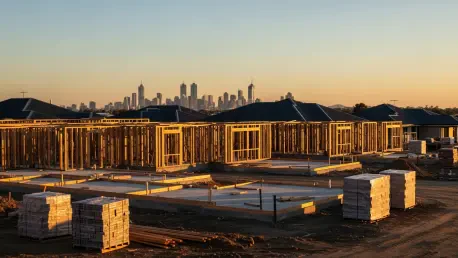
In the reporting cycle for 2025, the total number of completed dwellings barely cleared the 172,000 mark, a figure that represents a twelve-year low for the national construction industry. This level of output resulted in a negligible expansion of the total housing supply, moving the needle by a mere 0.04 percent at a time when demand was peaking. When these numbers are adjusted for the current population size, it becomes clear that the per capita delivery of housing is falling significantly below historical norms. This failure to innovate or expand industry capacity has left many prospective homeowners and renters in a precarious position, as the scarcity of new units continues to drive up prices and limit residential mobility. The data serves as a sobering reminder that without a fundamental shift in how dwellings are approved, financed, and built, the dream of affordable housing will remain out of reach for a substantial portion of the Australian workforce across all states.
Policy Shortfalls: Assessing the Failure of National Benchmarks
The ambitious targets set by the National Housing Accord are rapidly slipping out of reach as the construction sector continues to struggle with production benchmarks. Aiming for a total of 1.2 million new homes by mid-2029, the policy requires a consistent annual output of 240,000 completions to remain on track with its long-term objectives. However, for two consecutive years, the nation has failed to hit this crucial milestone, creating a deficit that grows more difficult to rectify with each passing month. This shortfall is not merely a bureaucratic concern; it represents a tangible lack of shelter for hundreds of thousands of people and puts immense pressure on existing infrastructure. The inability to meet these national goals underscores the severity of the supply crisis and suggests that current governmental frameworks are insufficient to catalyze the necessary volume of residential development required to stabilize the broader domestic economy.
Regional disparities further complicate the national housing landscape, with different states facing unique sets of challenges that impede construction progress. Victoria, formerly a powerhouse of residential development, experienced a sharp ten percent decline in dwelling completions, which significantly depressed the national average and signaled a cooling of once-active markets. In contrast, states such as Western Australia and Queensland were overwhelmed by sudden surges in migration, struggling to provide enough infrastructure to house new arrivals from both interstate and overseas. Meanwhile, in New South Wales, the market remained severely constrained as high land costs and regulatory hurdles prevented many approved projects from ever breaking ground. These localized bottlenecks meant that even when demand was clearly identified, the physical realization of housing projects was often delayed by years, leaving major metropolitan hubs and regional centers in a state of perpetual residential shortage.
Economic Realities: Higher Costs and Strategic Shift to Density
Economic obstacles have fundamentally altered the landscape of residential construction, forcing a shift in the types of dwellings that are currently being brought to market. Rising material costs and labor shortages have made the development of traditional standalone houses increasingly less viable for many firms, leading to a pivot toward high-density apartment complexes. While these larger projects are intended to maximize land usage in urban centers, they inherently involve much longer lead times and higher levels of financial risk compared to traditional builds. This transition resulted in a lag between project commencement and final completion, meaning that even when investment was secured, the actual supply of housing did not reach the market for several years. Furthermore, the record levels of net overseas migration, which recently exceeded 311,000 people, placed an immediate demand on the rental and sales markets that the slower-moving high-density sector was simply unable to accommodate in real time.
The resolution of the housing crisis required a decisive departure from the ineffective budgetary measures and marginal tax adjustments that characterized early interventions. Stakeholders recognized that the existing reliance on government promises was insufficient and instead prioritized the creation of a more favorable environment for private capital investment. By streamlining the approval processes and offering meaningful incentives for developers, the industry successfully began to align its construction pipeline with the country’s actual demographic requirements. This pro-enterprise approach fostered a more resilient market where supply could finally keep pace with the needs of a growing population. Ultimately, the lessons learned from this period of stagnation prompted a complete overhaul of urban planning and infrastructure funding, ensuring that future residential growth was no longer hamstrung by the inefficiencies of the past. These strategic shifts paved the way for a more stable and accessible housing market that better served the diverse needs of all Australians.