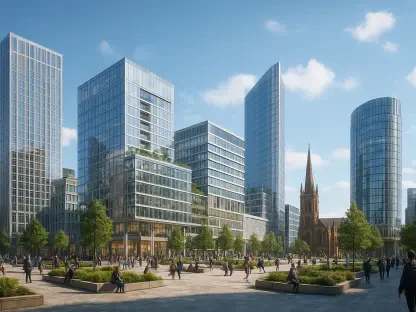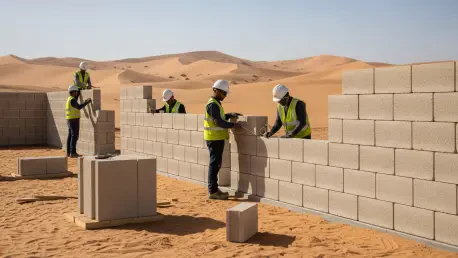

As global urbanization accelerates at an unprecedented pace, the construction industry faces a paradoxical crisis where the world is running out of useable sand despite being surrounded by vast deserts. While high-rise developments and infrastructure projects demand billions of tons of jagged river sand annually to ensure structural integrity, the smooth, wind-eroded grains found in the Sahara or the Arabian Peninsula have historically been discarded as useless for concrete production. This supply chain imbalance has led to illegal sand mining and ecological destruction in riverbeds across the globe. However, a significant shift occurred recently when architects and material scientists developed a revolutionary method to bind these fine desert particles into high-strength building blocks. By utilizing a specific blend of bio-based resins and pressurized molding, these innovators successfully bypassed traditional cement. This advancement significantly mitigates the depletion of river ecosystems.
Engineering: Arid Material Solutions
Challenges: Wind-Eroded Grains
The fundamental obstacle in utilizing desert sand lies in its physical geometry, which differs significantly from the sharp and angular quartz found in marine or fluvial environments. Over millennia, desert winds tumble sand grains against one another, polishing their surfaces until they become almost perfectly spherical and uniform in size. In traditional concrete chemistry, these rounded shapes fail to provide the mechanical interlocking required to support heavy structural loads, often resulting in brittle materials that crumble under pressure. To address this, architectural engineers in 2026 have moved toward a philosophy of chemical adhesion rather than mechanical friction. By coating each individual grain with a microscopic layer of specialized polymers, researchers created a composite material that mimics the strength of sandstone while maintaining flexibility. This breakthrough effectively turns a previously discarded geological nuisance into a premium resource for the housing sector.
Innovation: Sustainable Binders
Central to this transformation is the departure from traditional Portland cement, which is a notorious contributor to global greenhouse gas emissions due to the high-heat kilns required for its manufacture. Instead of relying on carbon-intensive thermal processes, architects are now utilizing cold-pressed technology and biological binders derived from agricultural waste streams. These binders function at room temperature, significantly reducing the energy footprint of the manufacturing process from 2026 onward. Some of the most successful implementations utilize a bio-resin made from cellulose fibers, which creates a carbon-neutral bond that strengthens as it cures over a 24-hour period. By eliminating the need for fossil-fuel-powered furnaces, the production of desert sand bricks effectively cuts the carbon intensity of building materials by nearly eighty percent compared to traditional methods. This shift represents a movement toward circular construction where every brick is sustainable.
Integrity: Global Adoption Paths
Testing: Extreme Environments
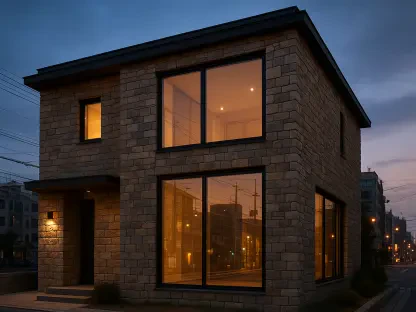
To prove the viability of sand-based construction, architects have subjected these new materials to rigorous stress tests in some of the most unforgiving climates on Earth. In the scorching heat of the Mojave Desert and the humid coastal areas of the Persian Gulf, test structures built with desert sand bricks have demonstrated remarkable resilience against thermal expansion and salt-air corrosion. Traditional concrete often suffers from “concrete cancer” when steel reinforcements rust due to salt penetration, but the polymer-bound sand bricks are inherently non-porous and resistant to chemical degradation. Laboratory data indicates that these bricks can withstand extreme temperature fluctuations ranging from freezing nights to triple-digit daytime highs without cracking or losing structural stability. These findings have encouraged urban planners to consider sand-based materials for primary structural elements in residential skyscrapers. The durability ensures that maintenance costs are kept low.
Scaling: Economic Implementation
The transition toward sand-based architecture offered a scalable solution for regions previously dependent on expensive material imports and carbon-heavy logistics. Developers successfully integrated these sustainable bricks into large-scale urban master plans, significantly reducing the overall environmental footprint of new cities across the Middle East and Africa. To ensure long-term success, architectural firms focused on establishing local production facilities that utilize on-site desert resources, thereby eliminating the need for long-distance transport. Policy makers expanded building codes to include bio-polymer composites, which facilitated a faster rollout of resilient infrastructure in seismic zones. The industry shifted its focus toward modular designs that allowed for easy assembly and disassembly, promoting a circular economy within the built environment. These efforts collectively provided a practical roadmap for reducing industrial carbon emissions while addressing the housing shortage.