
The energy landscape is currently undergoing a seismic shift, moving away from a decade of stagnant growth toward an era of unprecedented demand. At the heart of this transformation is the rapid expansion of artificial intelligence and the massive data centers required to power it. For years, efficiency gains and the rise of distributed solar kept electricity consumption relatively flat, but that period has come to an abrupt end. We are now facing a reality where the digital hunger for power is outstripping the physical capacity of our utilities to provide it. This creates a fascinating yet high-stakes environment for market analysts and utility providers who must bridge a massive gap between what is needed and what can realistically be built. The following discussion explores the critical themes of this energy crunch, including the staggering 100 GW supply gap, the surprising resurgence of fossil fuel assets, and the innovative ways developers are generating their own power behind the meter to keep the lights on in the AI age.
With electricity demand projected to grow at a 4.1% compound annual rate through 2030, how does this shift rewrite the narrative for an industry that has seen almost no growth for over a decade?
For years, the utility sector operated under the comfortable assumption that efficiency improvements like LED lighting and better building insulation would keep demand growth near zero. This 4.1% compound annual growth rate, which we expect to see from 2026 through 2030, effectively shatters that long-standing status quo. We are talking about an industry that has essentially been in a defensive, cost-cutting posture suddenly having to pivot to a massive, aggressive expansion mode. It is a jarring transition for many regulators and utility executives who haven’t had to plan for this level of load growth in their entire careers. This isn’t just a minor uptick; it’s a fundamental structural change driven by the sheer scale of AI computing infrastructure that is materializing much faster than anyone anticipated even three years ago.
Analysts are warning of a supply gap exceeding 100 GW by the end of the decade. What are the most immediate risks when the planned accredited supply only reaches about 93 GW against a need for 230 GW of new capacity?
The math here is frankly sobering because it reveals a massive chasm between our digital ambitions and our physical reality. When we look at the five-year horizon, the U.S. is going to need more than 230 GW of new generating capacity to maintain a healthy system, yet regulated utilities are only on track to add about 93 GW of accredited supply. That creates a deficit of over 100 GW, and that gap is where the real danger lies for grid reliability. It is important to distinguish between nameplate rating and accredited capacity; while a wind farm might have a high nameplate rating, it only provides a fraction of that as accredited capacity during peak demand. This reality is forcing us to realize that intermittent resources alone cannot bridge this 100 GW divide, making firm, dispatchable power more valuable than it has been in decades.
As large gas turbines are essentially sold out through 2030, how are data center developers and manufacturers adapting to the equipment shortage?
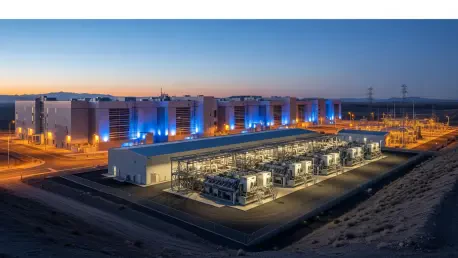
The supply chain for traditional power generation is currently under immense strain, and the fact that large gas turbines are largely committed through 2030 has sent a shockwave through the development community. Since you can’t simply wait six or seven years for a turbine to arrive if you want to launch an AI cluster today, we are seeing a massive pivot toward natural gas reciprocating engines. Companies like Caterpillar, INNIO, Rolls-Royce, and Wärtsilä are stepping into the breach, ramping up production of these smaller, more flexible engines that can be deployed much faster. These engines are particularly attractive because they can respond rapidly to the highly variable loads of a data center, providing a modular solution when the traditional “big iron” of the utility world is unavailable. It’s a sensory shift on the ground, too—instead of one massive humming turbine building, you see rows of these reciprocating engines providing the heartbeat for new server farms.
Why are we seeing such a significant trend in data center developers moving toward “behind-the-meter” generation rather than relying on the traditional grid?
The move toward onsite generation is a direct response to the frustration of waiting for grid connections that can take years to materialize. Currently, we are tracking more than 7.5 GW of data center projects with onsite generation already under construction, and the pipeline for pre-construction is even more massive, exceeding 60 GW. These developers aren’t necessarily looking to go completely off-grid; rather, they are using self-generation as a way to jumpstart their timelines while maintaining a grid connection for added redundancy. By generating power behind the meter, they bypass many of the transmission bottlenecks that are currently paralyzing the industry. It’s a pragmatic, almost desperate move to ensure that the billions of dollars invested in AI chips aren’t sitting idle in dark warehouses waiting for a utility to flip the switch.
With the pressure to keep the grid stable, how is the surge in AI demand affecting the retirement schedules of older coal-fired power plants across the country?
We are witnessing a major policy reversal where reliability concerns are now trumping previous environmental retirement goals in several key regions. Regulators and utilities in states like Maryland, Wisconsin, Indiana, Utah, Kansas, Nebraska, and Mississippi have had to make the difficult decision to delay or even cancel the retirement dates for coal plants. These facilities are being kept online because they provide that essential “firm” capacity that can be dispatched at a moment’s notice, which is exactly what a grid under pressure from data centers needs. It is a bittersweet reality for the industry; while everyone wants to move toward cleaner energy, no one is willing to risk the rolling blackouts that could occur if these 24/7 assets are taken offline before a viable replacement is ready. The physical necessity of keeping the lights on is effectively forcing a stay of execution for some of the oldest parts of our national fleet.
Given that projects like the Champlain Hudson Power Express can take 16 years to complete, what role do transmission and regulatory hurdles play in this current capacity crisis?
Transmission is perhaps the most significant “silent” bottleneck in the entire energy ecosystem because it operates on a completely different timescale than the technology it serves. While an AI server can be upgraded in months and a data center built in a couple of years, as we saw with the Champlain Hudson project, it can take 16 years to move a major transmission line from planning to energization. This massive mismatch in speed means that even if we had all the generation capacity we needed, we often can’t move that power to where the data centers are actually being built. This has fundamentally changed the market; it is no longer just about who can generate the cheapest power, but about who has the infrastructure to actually deliver it. The “delivery constraint” is now the primary factor determining where economic growth happens in the United States.
How do you anticipate rising power prices will affect the behavior of both residential and industrial energy consumers in the coming years?
There is a common misconception that high prices will immediately lead to massive demand destruction, but the data suggests that electricity demand is actually quite inelastic in the short term. Research indicates that even a 10% increase in real electricity prices typically only results in a 1% to 2% decline in total consumption. This means that as utilities pass on the costs of these massive infrastructure upgrades and new generation assets, most customers will simply have to absorb those higher costs. For energy-intensive industries, this could eventually lead to some “demand destruction” where they are forced to scale back, but for the most part, the digital economy is so dependent on power that it will continue to pay a premium. This creates a challenging social and political dynamic where the costs of the AI revolution are reflected in everyone’s monthly utility bill.
What is your forecast for the U.S. power market?
I expect that the next decade will be defined by a “hybrid-energy” reality where the lines between utilities and private developers become increasingly blurred. We will likely see a massive surge in the deployment of natural gas reciprocating engines and battery storage as the primary “bridge” technologies to fill the 100 GW gap. While renewables will continue to grow, the necessity for 24/7 reliability will keep gas and even coal as essential pillars of the American grid for much longer than originally planned. Ultimately, the market is moving toward a decentralized model where large power users will take ownership of their own energy security, creating a more fragmented but perhaps more resilient infrastructure that is tailored to the high-speed demands of the artificial intelligence era.