
The contemporary engineering landscape has undergone a radical transformation where the traditional boundaries between local computational power and global cloud connectivity have almost entirely vanished in favor of integrated design ecosystems. This shift has redefined how products move from conceptual sketches to physical reality, placing a premium on software platforms that can manage the immense complexity of modern manufacturing. As the industry settles into the mid-portion of this decade, the demand for precision, real-time collaboration, and generative AI capabilities has forced long-standing software giants to rethink their underlying architectures. Markets are no longer dominated by single-purpose tools but by multifaceted environments that cater to everything from individual prototyping to the massive scale of international aerospace projects. Assessing the current state of 3D CAD software requires a deep dive into technical performance metrics, economic feasibility for diverse business models, and the overall user experience within increasingly sophisticated digital workspaces. Organizations must now navigate a marketplace that offers both high-end enterprise solutions and agile, cloud-native platforms, each promising to shorten the development cycle while maintaining rigorous engineering standards. The following analysis explores the dominant players and emerging trends that are currently defining the professional design world in 2026.
Mechanical Giants: Evaluating Professional Benchmarks
Dassault Systèmes SOLIDWORKS remains the primary benchmark for the industry, particularly within the realms of product design and heavy manufacturing where reliability is paramount. Its massive ecosystem of plugins and secondary tools allows for a customized workflow that few other platforms can match, especially when dealing with the intricacies of large mechanical assemblies. However, the software is frequently criticized for its somewhat rigid architecture, a legacy of its long history, which can occasionally lead to stability issues or rebuilding errors during particularly complex parametric updates. For professional engineers, choosing this platform involves a significant financial commitment and a steep learning curve, making it a high-stakes investment for firms that require deep technical depth. Despite these challenges, its dominance in the job market ensures that finding skilled operators is easier than for almost any other tool, cementing its place as the standard-bearer for traditional mechanical engineering departments across the globe.
Autodesk Inventor serves as a compelling alternative and a natural progression for organizations already heavily invested in the broader Autodesk ecosystem. Its strengths lie in its robust capability for creating detailed manufacturing documentation and managing the logic of expansive mechanical assemblies with high precision. While it might lack some of the flashy, modern accessibility features found in newer, web-based tools, its proven reliability in rigorous professional environments keeps it at the very top of the manufacturing sector. The platform excels at bridging the gap between digital design and physical fabrication, providing integrated tools for stress analysis and material optimization. For companies that require a seamless flow between building information modeling and industrial machine design, Inventor provides a stable, feature-rich environment that handles the data-heavy requirements of modern factory automation without the volatility often associated with less mature cloud-only applications.
Cloud-Native Solutions: The Shift Toward Distributed Teamwork
Autodesk Fusion 360 has successfully disrupted the traditional market by effectively connecting professional engineering requirements with the agility of the global maker community. By combining CAD, CAM, CAE, and PCB design into a single, unified environment, it has created an affordable entry point for startups and independent designers who require high-level functionality without the enterprise-level price tag. The software’s subscription model provides constant updates and access to powerful cloud-based rendering and simulation services, which offload heavy computational tasks from local hardware. This versatility has made it the default choice for general product design, where the ability to rapidly iterate on a concept is more important than managing the gargantuan data sets found in specialized aerospace projects. Its cross-platform compatibility further enhances its appeal, allowing diverse teams to contribute regardless of their specific operating system or hardware limitations.
Onshape represents perhaps the most significant paradigm shift in how modern design teams actually interact and collaborate on a day-to-day basis. Developed by a team of industry veterans, it was built from the ground up as a cloud-native platform, completely eliminating the need for local file management, manual saving, and complex version control systems. It allows multiple designers to work on the exact same model at the same time, providing a level of transparency and synchronization that was previously impossible in the CAD world. This approach removes the frequent bottleneck of file check-outs and “locked” assemblies, making it the premier choice for distributed teams who prioritize real-time feedback and rapid development. By treating design data as a living database rather than a collection of static files, Onshape has solved many of the data corruption and synchronization issues that have plagued traditional engineering workflows for decades, proving that the cloud is no longer just a storage medium but a powerful collaborative engine.
Advanced Systems: Mastering Aerospace and Automotive Complexity
Siemens NX and CATIA occupy the highest tier of the software hierarchy, serving as the undisputed leaders for the most demanding and sophisticated engineering projects currently in production. Siemens NX is frequently praised for its innovative “Synchronous Technology,” which provides designers with the unique ability to mix different modeling styles, such as parametric and direct modeling, in a fluid and intuitive manner. This flexibility is essential when working with legacy data or when performing rapid design changes on complex geometric shapes that would break traditional history-based models. The platform is a massive, comprehensive suite that can scale from a single specialist to thousands of employees working across a global corporation, offering deep integration with product lifecycle management systems. It is particularly valued in high-tech industries where the intersection of mechanical, electrical, and thermal engineering requires a unified and extremely powerful simulation environment to ensure safety and performance.
CATIA remains the gold standard for high-end surface modeling and complex 3D geometry, particularly within the aerospace and automotive sectors where aerodynamic efficiency is a critical design requirement. In 2026, the software has further separated itself from the competition by integrating advanced AI assistants designed to optimize structural shapes and run real-time manufacturing simulations. These tools allow engineers to explore thousands of design variations that meet specific weight and strength criteria, a process that would be humanly impossible within typical project timelines. While the cost of entry and the complexity of the interface are significant hurdles, they are justified by the software’s ability to manage every single aspect of a product’s lifecycle, from the very first conceptual sketch to the final decommissioning of the assembly line. For companies building the next generation of electric aircraft or autonomous vehicles, the depth of CATIA’s toolset is not just an advantage but a fundamental necessity for managing modern technical risk.
Artistic and Architectural Perspectives: Beyond Mechanical Rules
SketchUp continues to be a staple in the toolkits of architects and interior designers who prioritize the ability to visualize and communicate ideas with extreme speed. Its interface is famously intuitive, relying on a “push-pull” methodology that allows for the fast creation of three-dimensional spaces without the overhead of complex engineering constraints. While it is not the ideal tool for high-precision mechanical engineering or direct 3D printing of intricate parts, its role in the early conceptual phases of construction and design is unmatched. The software stays firmly within the visualization category because it focuses more on the aesthetic and spatial experience of a design rather than the mechanical accuracy required for industrial production. For professionals who need to walk a client through a virtual room or a proposed building site, the ease of use and the vast library of pre-made components make it an indispensable tool for the creative phases of a project.
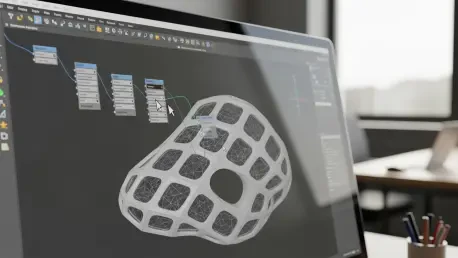
Rhinoceros 3D, commonly referred to as Rhino, occupies a unique niche in the market by offering a traditional one-time license fee in an era increasingly dominated by recurring subscriptions. It is widely recognized as the premier tool for creating organic shapes and free-form surfaces that would be prohibitively difficult to model in traditional parametric CAD software. When paired with its powerful visual scripting plugin, Grasshopper, Rhino becomes a computational design powerhouse, allowing architects and jewelry designers to generate complex patterns and structures through algorithmic logic. This capability has made it a favorite for experimental designers who push the boundaries of geometry and material science. Unlike many of its competitors, Rhino provides a high degree of interoperability, acting as a “universal translator” between different file formats, which ensures that complex organic designs can eventually be moved into more rigid engineering environments for final production and analysis.
Open-Source Progress: Professionalism Without Proprietary Constraints
A major development observed throughout 2026 is the significant professional maturity of FreeCAD, which has finally emerged as a credible competitor to commercial software suites. For many years, the platform was held back by technical limitations, specifically the “topological naming problem,” which often caused models to break when simple edits were made to the underlying sketches. With the successful resolution of these long-standing issues in recent updates, the software has become a legitimate, zero-cost alternative for individuals and small firms that want professional-grade parametric modeling without being tied to a specific vendor or an internet connection. This progress represents a major win for data sovereignty, as users can maintain full control over their files and workflows without the risk of future price hikes or service discontinuations. The growth of the FreeCAD community has also led to an explosion of specialized workbenches for everything from architecture to sheet metal design, rivaling the feature sets of expensive proprietary packages.
The rise of open-source CAD is not just about cost savings; it is also about the democratization of engineering tools for a global audience. By providing a high-performance modeling kernel that is accessible to anyone with a computer, FreeCAD and similar projects are fostering innovation in regions and industries where the high cost of traditional software has historically been a barrier to entry. This shift has also forced commercial developers to be more transparent about their data formats and more competitive with their feature releases. In 2026, the gap between a free tool and a thousand-dollar subscription has narrowed to the point where the choice often depends on the specific needs of the workflow rather than a lack of capability in the open-source option. As more professionals contribute to the code and documentation, the reliability of these tools continues to improve, making them a viable part of the modern engineering software stack for both hobbyists and serious industrial users.
Strategic Directions for Engineering Teams
The evolution of the CAD market through the mid-2020s demonstrated that software flexibility was the ultimate competitive advantage for modern manufacturing firms. Organizations that successfully transitioned from isolated workstations to collaborative cloud environments reported significantly shorter development cycles and fewer prototype iterations. It became evident that the successful implementation of 3D tools required more than just technical proficiency; it demanded a cultural shift toward data transparency and automated simulation. By prioritizing platforms that integrated artificial intelligence directly into the modeling kernel, engineers were able to delegate mundane tasks to software assistants while focusing their energy on high-level system architecture and sustainable materials. The industry eventually reached a consensus that the total cost of ownership was no longer measured by license fees alone, but by the software’s ability to interact seamlessly within a global, digital-first supply chain.
Moving forward, the primary challenge for design leads will be balancing the need for specialized power with the necessity of cross-platform accessibility. The distinction between mobile, web-based, and desktop applications has blurred to the point where the most successful projects are those that leverage the strengths of each. Companies should evaluate their software needs based on the specific complexity of their products, ensuring that they do not over-invest in enterprise tools for simple tasks while avoiding the limitations of entry-level software for high-precision components. Investing in training that focuses on the logic of parametric design rather than the buttons of a specific interface will provide the most long-term value. As AI continues to automate the “how” of modeling, the human role will increasingly center on the “why,” necessitating a focus on systems thinking and ethical design considerations in an increasingly automated world. Navigating this landscape requires a commitment to continuous learning and an openness to adopting new tools that break the traditional silos of the engineering department.