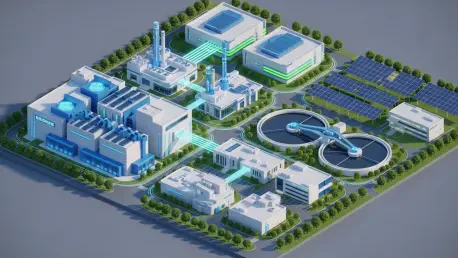

The relentless acceleration of machine intelligence has moved beyond the digital abstract to demand a massive physical footprint, placing firms like Jacobs at the center of a global infrastructure race. While software often captures the headlines, the reality of the silicon age is built on concrete, steel, and sophisticated cooling systems. Jacobs is currently navigating a pivotal transition, repositioning its legacy of civil excellence to meet the rigid demands of high-tech facilities. By aligning its massive engineering capacity with the needs of the computing world, the firm is moving from being a generalist builder to a specialized architect of the digital age.
From Traditional Infrastructure to High-Tech Industrial Support
Historically, the company built its reputation on essential civil projects like water treatment plants and transportation networks. However, the modern economy requires a different kind of support structure, one defined by high-speed connectivity and immense processing power. This shift represents more than just a change in clientele; it is a move toward higher-margin, technically complex projects that demand a unique set of skills. Jacobs has successfully cultivated expertise in power redundancy and thermal management, creating a competitive moat that separates it from traditional construction firms that lack the technical depth required for advanced industrial environments.
Analyzing the Mechanics of Jacobs’ Growth Strategy
The Explosive Expansion: Data Center Ecosystems
The most striking evidence of this strategic pivot is the triple-digit growth observed in the data center division, which has expanded by over 100% year-over-year. Although direct data center construction currently comprises a small slice of the total portfolio, the momentum suggests a rapid scaling phase is just beginning. As hyperscale technology providers race to build out capacity for advanced workloads, they require partners who can manage the intense energy and cooling requirements that traditional cloud storage never demanded. This trend has established the firm as a critical partner for the world’s largest tech entities.
Financial Performance: Structural Realignment
Recent fiscal results demonstrate the financial weight of this transition, with revenue climbing 27% to reach $3.69 billion. This growth is supported by a massive backlog of nearly $27 billion, ensuring a steady stream of projects through the end of the decade. While a net loss was reported for the recent period, the shortfall was linked to the strategic acquisition of PA Consulting rather than operational weakness. This indicates a willingness to absorb short-term costs to secure high-level consulting capabilities, which are essential for managing the intricate consulting-to-construction pipeline that high-tech clients now demand.
The Integrated Infrastructure Nexus: Power, Water, and Chips
Beyond the server rooms, the firm is capturing value across the entire semiconductor supply chain, a sector growing at an impressive 40% rate. Modern chip fabrication plants require immense amounts of ultra-pure water and highly stable energy grids, areas where the company already possesses deep historical knowledge. By integrating these services, the firm provides an end-to-end solution for the physical requirements of the digital economy. This holistic approach ensures that the business remains indispensable even as individual technology cycles fluctuate, as the foundational needs for power and water remain constant.
Navigating the Impending Inflection Point in AI Demand
Industry analysts suggest the market is approaching a critical inflection point where the pace of digital innovation threatens to outstrip physical capacity. Moving forward, the convergence of energy sustainability and processing power will likely define the next era of growth. As facilities consume a larger share of global electricity, the firm is expected to lead in the integration of microgrids and renewable energy sources. Future success will depend on the ability to deliver sustainable, large-scale industrial projects that satisfy both the hunger for data and the increasing regulatory pressure for environmental responsibility.
Strategic Blueprints for a Tech-Driven Industrial Landscape
For market participants and stakeholders, the current trajectory highlights a fundamental truth: physical constraints are the new bottlenecks for digital expansion. Business leaders should recognize that the value in the construction sector is migrating toward firms capable of bridging the gap between high-level technology and heavy engineering. The primary recommendation for professionals in this space is to prioritize cross-disciplinary expertise, particularly where water management and energy efficiency intersect with advanced manufacturing. These specialized skill sets will likely remain the most significant value drivers for the foreseeable future.
Pioneering the Physical Backbone of the Artificial Intelligence Era
The transformation of the firm served as a blueprint for how legacy engineering powerhouses adapted to a world dominated by machine intelligence. By aligning a massive backlog with the specialized needs of the semiconductor and data center industries, the organization secured a dominant position in the global economy. This strategic focus proved that while digital assets are intangible, their survival depends entirely on the physical structures that house them. Ultimately, the pivot toward high-tech infrastructure ensured that the firm remained a vital architect of the 21st century, turning the challenges of energy and space into durable competitive advantages.