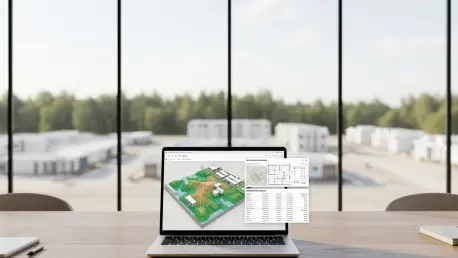

The global homebuilding sector is currently undergoing a massive structural transformation as builders realize that fragmented data systems are no longer sustainable in a high-cost market. This shift represents a transition from treating Artificial Intelligence as a standalone novelty to embedding it as a fundamental operational requirement that bridges the gap between digital design and physical execution. As firms move away from siloed data structures, they are embracing a centralized framework known as connected data, which integrates home plans, lot configurations, and material specifications into a single, unified ecosystem. By embedding intelligence into the core business infrastructure rather than treating it as an external add-on, construction companies are finally addressing the long-standing bottlenecks that have historically hindered large-scale productivity and precision. This technological evolution is not merely about adopting new software but about redefining the very nature of operational efficiency and construction management.
Strategic Integration and Market Adoption
The Rise of Focused AI Investment
Current economic headwinds have created a treacherous environment where high material costs and persistent labor shortages are the primary drivers of industry stagnation. Builder confidence has recently hovered at 34 points, reflecting a significant downturn that has forced nearly 40% of developers to implement price cuts to maintain sales volume. In this climate, operational efficiency has transitioned from a secondary goal to a primary survival strategy, as traditional growth management methods fail under the weight of shrinking margins. Consequently, the push for digital transformation is no longer a luxury but a necessity for firms looking to mitigate waste and protect their bottom lines from the volatility of the present market. When profit margins are under siege, the cost of material overages or scheduling delays becomes an unacceptable burden that many legacy systems simply cannot track or prevent effectively.
Despite these financial pressures, the commitment to advanced technology is surging across the board, with 82% of large construction firms planning to increase their AI investment budgets. Mid-sized companies are showing even more urgency, with 94% either currently implementing or actively exploring integrated data strategies to stay competitive. This widespread adoption signals a collective belief that technology will fundamentally transform the industry by 2028, moving past the experimental phase into deep operational integration. However, the success of these investments hinges on the ability to bridge the communication gap between design, sales, estimating, and field execution. Without a cohesive operational asset, AI tools remain isolated, failing to provide the comprehensive visibility required to manage complex housing projects at scale. Builders are now focusing on unifying these disparate workflows to turn fragmented information into a powerful competitive advantage.
Demand for Construction-Ready Precision
In the professional homebuilding sector, the tolerance for technical error is virtually nonexistent, making high-precision AI a critical requirement for any modern developer. Unlike general-purpose tools that offer impressive demonstrations but fail under the rigors of the job site, construction-ready AI must deliver accuracy that meets the specific demands of permitting and physical execution. A minor discrepancy in a digital plan set, such as a misaligned load-bearing wall or a ten percent error in material quantities, can trigger a catastrophic domino effect of rework and financial risk. The industry is rapidly moving away from “black box” solutions in favor of integrated systems that provide a single source of truth for every stakeholder. This transition ensures that the digital models utilized during the design phase are perfectly aligned with the real-world construction needs of the field team, reducing the likelihood of expensive site-level corrections.
The emerging consensus among industry leaders is that intelligence must be built into the core design of a project rather than being bolted on as an afterthought or a separate layer of software. By consolidating home plans and lot configurations into a single, connected system, builders are able to identify potential conflicts before the first shovel hits the dirt. This level of precision is essential for maintaining the integrity of the project lifecycle, as it prevents the “disconnected workflows” that often lead to mismanaged resources and timeline delays. When a system understands the relationship between a specific lot and the architectural requirements of a home, it can automatically adjust specifications to ensure compliance and feasibility. This shift toward “built-in” intelligence allows firms to operate with a level of confidence that was previously impossible, transforming the drafting and estimating process into a streamlined, error-free component of the business.
Operational Excellence and Growth Projections
Measurable Gains Through Centralized Intelligence
Builders who have successfully implemented a unified data foundation are already reporting significant improvements in their overall project lifecycles and speed-to-market metrics. Centralized intelligence allows for drastically reduced timelines between initial plan production and final permit approval, effectively removing the administrative friction that often stalls development. By minimizing the drafting rework that typically plagues disconnected systems, firms can redirect their resources toward higher-value tasks, such as market expansion or product innovation. This operational maturity ensures that every project starts with a robust, verified data set, which serves as the foundation for all subsequent construction activities. The ability to verify the accuracy of a plan in real-time not only saves hours of manual labor but also provides the transparency needed to manage multiple active sites without increasing overhead costs.
Furthermore, these integrated platforms are fundamentally changing the way homes are sold and configured by ensuring that every option presented to a customer is physically and financially feasible. By utilizing real-time lot data and specification intelligence, sales teams can provide accurate pricing and availability, eliminating the risk of selling a home configuration that cannot be built on a specific site. This level of visibility protects profit margins by ensuring that estimating is based on exact material needs rather than general projections or outdated spreadsheets. When the sales office and the field crew are operating from the exact same data set, the likelihood of disputes or change orders is significantly diminished. This synchronization not only improves the customer experience but also enables firms to scale their operations with greater confidence, knowing that their digital infrastructure can support rapid growth without sacrificing quality or profitability.
The Future of the Digital Homebuilding Market
The financial trajectory of the AI construction market reflects a massive shift in industry priorities, with its valuation expected to grow from $13 billion to nearly $28 billion by 2031. This growth is being spearheaded by platforms that consolidate plans, specifications, and lot configurations into a single, connected environment where data flows seamlessly between departments. As the industry progresses through the late 2020s, the most successful builders will be those who prioritize data connectivity over the sheer number of software tools in their arsenal. By building a professionalized operational foundation, these firms are positioning themselves to navigate market volatility and maintain long-term profitability regardless of external economic conditions. The move toward centralized homebuilding intelligence represents the final step in the industry’s digital evolution, turning data into a primary engine for sustainable growth and operational precision.
Strategic leaders recognized that the path to long-term stability required a fundamental departure from the fragmented workflows of the past. By adopting a unified operational foundation, organizations successfully mitigated the risks associated with material waste and drafting errors, which had previously eroded their margins. The integration of connected data allowed teams to synchronize their efforts, ensuring that every architectural detail was backed by real-time feasibility data and precise material estimates. Forward-thinking firms moved to consolidate their digital assets into single-source-of-truth platforms, effectively professionalizing their use of artificial intelligence for daily operations. This proactive approach provided the visibility necessary to scale efficiently while maintaining a high standard of construction quality across diverse markets. As the industry moved forward, the focus remained on refining these integrated systems to ensure they continued to provide a competitive edge in an increasingly complex and data-driven landscape.