
The bustling corner of 1704 North Milwaukee Avenue currently serves as a vivid illustration of the growing pains experienced by Chicago neighborhoods as they transition from mid-century low-density layouts to modern urban hubs. This specific location, currently occupied by a traditional single-story strip mall, has become the center of a high-stakes debate regarding the future of Bucktown and the broader implications of transit-oriented development. While the site is a familiar fixture for residents who frequent the local liquor store or yoga studio, its proposed transformation into a seven-story mixed-use apartment building represents a departure from the historical aesthetic of the immediate corridor. The conflict highlights a recurring tension in urban planning where the necessity for increased housing density and sustainable transit use clashes with the practical daily concerns of established residents. This debate is not merely about a single building but serves as a broader inquiry into how a major city balances the demands of growth against the preservation of community quality of life.
Transitioning From Strip Malls To Modern Mixed-Use Developments
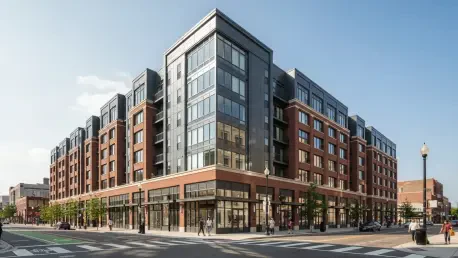
The ambitious proposal spearheaded by developer Bill Senne envisions a comprehensive overhaul of the existing property to maximize its residential and commercial potential within the 32nd Ward. By replacing the suburban-style shopping center with a seven-story structure, the project aims to introduce 68 modern apartment units and approximately 11,000 square feet of ground-floor retail space. This shift is designed to better utilize the valuable land located directly across from the Bucktown-Wicker Park branch of the Chicago Public Library, a central node of neighborhood activity. The architectural plans include a public-private parking garage with 46 spaces, a feature that has been repeatedly modified in response to feedback regarding the local parking shortage. For the developer, this project represents a long-term commitment to a site he has owned for decades, reflecting a belief that the current low-rise model is an underutilization of a prime urban corridor that is well-positioned for higher residential density.
Despite the developer’s extensive history with the site, the project recently encountered a significant hurdle when the City Council’s zoning committee decided to defer the matter at the request of Alderman Scott Waguespack. This tactical pause was implemented to allow for greater transparency and to ensure that residents who were not part of the initial community meetings could voice their opinions on the latest design revisions. The deferral underscores the enduring influence of aldermanic prerogative in Chicago, where local representatives often act as gatekeepers for major developments to ensure they align with the perceived needs of their constituents. While the delay has temporarily halted the project’s momentum, the developer remains optimistic about moving forward during the upcoming committee hearings. This phase of the project is characterized by a push for refinement, as stakeholders attempt to reconcile the developer’s vision for a high-density complex with the community’s desire for a project that feels integrated into the neighborhood fabric.
Confronting The Impact Of Traffic And Environmental Acoustics
A primary point of contention for local residents involves the logistical challenges posed by the building’s proposed parking and service entrance on Wabansia Avenue. This narrow side street is already heavily utilized by patrons and delivery drivers associated with nearby popular dining destinations, leading to frequent congestion and safety concerns. Critics of the development, led by local condo association leaders and a coalition of nearly 700 petition signers, argue that adding residential traffic and public parking access to this specific block will exacerbate existing gridlock. They contend that the infrastructure of the surrounding streets was never intended to support the volume of vehicles that a seven-story residential tower would naturally attract. For these residents, the prospect of increased vehicle turnover on a street that already struggles with delivery double-parking represents a tangible threat to pedestrian safety and the overall functionality of the local street network.
Beyond the immediate concerns regarding vehicle traffic, the opposition has raised unique environmental arguments related to the proximity of the Chicago Transit Authority’s Blue Line. Because the elevated tracks run directly behind the property, residents are concerned that the seven-story masonry wall of the new building will serve as an unintended acoustic reflector. They fear that the noise and vibrations generated by passing trains will ricochet off the building’s surface and amplify the sound levels for homes located across the street or in adjacent alleys. This specific concern highlights a complex intersection of urban design and environmental health, as the current low-rise strip mall allows sound to dissipate more freely than a taller structure would. Opponents argue that without a more comprehensive acoustic study or significant design changes to mitigate sound reflection, the project could permanently degrade the living conditions for those who have resided in the area long before the current redevelopment trend.
Evaluating The Economic And Environmental Benefits Of Density
In direct opposition to the critics, a vocal group of transit advocates and urbanists maintains that 1704 North Milwaukee Avenue is the ideal candidate for aggressive transit-oriented development. Organizations such as Strong Towns Chicago argue that the site’s location near the Damen and Western Blue Line stations makes it a critical piece of the city’s broader strategy to reduce car dependency. By providing 68 new residential units in an area with high transit accessibility, the project encourages a car-lite lifestyle that aligns with modern environmental goals and urban sustainability. Proponents suggest that the perceived traffic issues are often overestimated and that adding residents who primarily use public transportation or cycling will ultimately benefit the neighborhood by reducing the total number of vehicle trips compared to a car-dependent suburban model. From this perspective, density is not a burden but a necessary evolution for a thriving and climate-resilient metropolitan area.
The economic arguments in favor of the development focus on the urgent need for a more robust housing supply to address the rising costs of living in the Bucktown and Wicker Park neighborhoods. Supporters believe that increasing the number of available apartments is the most effective way to stabilize rent prices and provide housing opportunities for a broader demographic of residents. Furthermore, the inclusion of significant ground-floor retail space ensures that the site remains a contributor to the local tax base and a provider of neighborhood services. By keeping long-standing tenants like Garfield’s and adding dozens of new consumers to the immediate block, the project is expected to create a more vibrant and economically sustainable retail ecosystem. This influx of foot traffic is viewed by many business advocates as a boon that will support the diversity of shops and restaurants that define the character of the Milwaukee Avenue corridor, ensuring its continued vitality.
Navigating A Collaborative Path Toward Urban Evolution
As the debate continues, organizations like the Wicker Park Committee have sought to bridge the gap between the developer’s ambitions and the community’s anxieties through a call for more rigorous design vetting. There is a growing consensus among moderate voices that the project should not be rejected outright, but rather refined to address specific grievances through collaborative engineering and architectural solutions. This might include repositioning the garage entrance to minimize the impact on Wabansia Avenue or utilizing sound-absorbent materials on the building’s rear facade to address the acoustic concerns regarding the Blue Line. Such a middle-ground approach suggests that the community is seeking a higher level of transparency and a willingness from the developer to prioritize the long-term well-being of current residents. This ongoing dialogue serves as a reminder that the most successful urban developments are often the result of compromise rather than unilateral decision-making.
The main findings from this ongoing struggle showed that successful urban densification required a delicate balance between high-level transit goals and the micro-level realities of neighborhood life. While the project at 1704 North Milwaukee Avenue successfully integrated the principles of transit-oriented development, it also demonstrated that such designs must be sensitive to the existing infrastructure of narrow urban streets and unique environmental factors like train noise. The temporary deferral provided a necessary window for the developer to conduct additional traffic studies and acoustic modeling to prove the project’s viability to skeptical neighbors. Moving forward, the most effective path involves implementing specific architectural modifications that could alleviate traffic bottlenecks on Wabansia Avenue while ensuring that the new structure does not become a source of noise pollution. Ultimately, the resolution of this dispute provided a blueprint for how developers and community leaders could work together to foster growth that is both dense and respectful of the existing urban fabric.