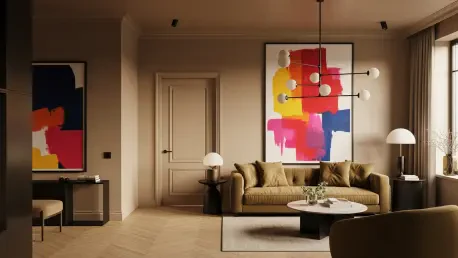

The traditional boundaries of British interior design have undergone a profound transformation as contemporary creators prioritize cultural narrative over rigid minimalism. In this evolving landscape, Ayisha Onuorah has emerged as a formidable force, recently earning accolades as a standout winner in the “Next in Design” category by Homes & Gardens. Operating from the vibrant, coastal atmosphere of Brighton, Onuorah has managed to carve out a distinct niche that bridges the gap between structured architectural discipline and the free-flowing energy of global art. Her eponymous studio, founded shortly after her rigorous training at the KLC School of Design, has quickly become synonymous with spaces that possess both substance and a daring creative ambition. Rather than adhering to fleeting trends, her work champions a personality-driven philosophy that treats residential and commercial environments as living canvases for the inhabitant’s history and future aspirations, reflecting a unique and modern global perspective.
A Journey Through Creative Disciplines
The professional trajectory of Ayisha Onuorah is a testament to the power of cross-disciplinary experience, where the aesthetics of high fashion meet the structural demands of interior architecture. Before establishing her presence in the design world, she spent years immersing herself in the fast-paced environments of global style hubs, developing an eye for detail that remains central to her current work. This transition was not merely a change in career but a sophisticated evolution of her ability to curate visual stories. By blending the ephemeral beauty of fashion with the permanence of built environments, she has developed a signature style that feels both curated and comfortable. Her approach suggests that a well-designed room should function much like a well-tailored garment, providing both a structural foundation and an expressive exterior. This unique fusion of backgrounds allows her to approach spatial challenges with a level of creativity and technical insight that distinguishes her studio from more traditional practices in the industry.
The Fashion Influence: Transitioning from Stylist to Interior Architect
A decade spent navigating the high-stakes world of the international fashion industry provided Onuorah with a sophisticated understanding of visual composition that few traditional designers possess. Having started as a child model, she spent her formative years in the major fashion capitals of London, New York, and Milan, absorbing the nuances of texture, silhouette, and presentation. This background eventually translated into a successful career in set design and wardrobe coordination for various musicians, where she learned to manipulate physical space to reflect a specific artistic identity. These experiences were pivotal in shaping her current perspective, allowing her to view a room not merely as a functional area, but as a cinematic stage where the personality of the occupant is the central focus. Her ability to translate the tactile nature of high-fashion textiles into the permanence of interior architecture remains one of her most compelling professional strengths, enabling her to create rooms that feel inherently stylish.
Academic Foundations: Bridging Artistic Instinct and Technical Rigor
Despite an initial academic detour into the complex field of international politics, Onuorah eventually recognized that her true vocation lay in the physical manifestation of creative concepts through interior design. She sought out formal training to provide a structural foundation for her intuitive aesthetic sense, enrolling in the prestigious KLC School of Design to refine her technical capabilities. This academic rigor has allowed her to balance expressive artistry with the precision required for detailed architectural planning and professional drawings. Today, her projects are characterized by a seamless integration of technical competence and visionary flair, ensuring that every design is as intentional and structurally sound as it is visually arresting. By bridging the gap between artistic instinct and the practical demands of construction and spatial planning, she has established a methodology that respects the rules of architecture while knowing exactly when to break them to achieve a truly unique result.
The Influence of Global Heritage
The richness of Onuorah’s work is deeply rooted in her ability to synthesize diverse cultural influences into a cohesive and contemporary design language. Her aesthetic is often described as a global melting pot, drawing on her Nigerian descent and her strong familial ties to Jamaica to create spaces that feel both soulful and vibrant. This heritage provides a deep well of inspiration, allowing her to move beyond the beige-centric palettes that have dominated the industry for years. Instead, she embraces a more courageous approach to color and texture, resulting in interiors that possess a sense of history and lived-in warmth. By integrating these global pillars with her British upbringing, she creates environments that are reflective of a modern, multicultural society. Her work demonstrates that cultural heritage is not just a collection of artifacts, but a living influence that can shape the way we experience and interact with our private sanctuaries, providing a template for a more inclusive and expressive approach to home design.
Cultural Synthesis: Integrating Nigerian and Caribbean Design Pillars
Her Nigerian heritage manifests in a bold and fearless use of color, accompanied by rich, layered textures that infuse every project with a sense of soulful history and cultural weight. This is complemented by the unapologetic warmth and vibrancy of her Caribbean influences, which often appear in her preference for sunbaked earth tones such as ochre, khaki, and deep red. These elements serve as the primary pillars of her work, moving beyond simple decoration to create environments that feel grounded in a specific sense of place and ancestry. The result is a design language that celebrates diversity without becoming fragmented, offering a sophisticated interpretation of heritage that resonates with modern sensibilities and provides a warm, inviting atmosphere for all occupants. By honoring these roots, she ensures that each space tells a story of identity and belonging, effectively turning cultural background into a fundamental design tool that enhances the beauty and the depth of the final interior composition.
Regional Inspiration: The Fusion of London Energy and Brighton Spirit
The creative energy of London, where she was raised, and the bohemian, open-minded spirit of Brighton, where she now resides, contribute significantly to the eclectic nature of her signature style. Onuorah expertly navigates the fine line between high-end luxury and the charm of “found” objects, curating spaces that feel both highly sophisticated and deeply individualistic. This careful balancing act prevents her interiors from feeling cold or overly curated, leaning instead toward a romantic and grounded atmosphere that invites exploration and comfort. Her work often evokes the tactile richness of high-fashion textiles or the tranquil, immersive luxury of high-end resorts, reflecting a lifestyle that values both beauty and ease. By integrating these varied geographic and cultural influences, she creates a unique visual narrative that feels timeless yet contemporary, proving that a well-designed space can be a reflection of a global journey rather than a single, static point in time, bridging regional and global ideas.
Methodology and Future Growth
At the heart of every project undertaken by Onuorah is a commitment to the human experience, where the psychological needs of the client drive the creative process. Her methodology moves beyond mere aesthetics to consider how a space impacts the emotional well-being and daily rhythms of those who inhabit it. This focus on human connection is paired with a rigorous approach to materiality and technical execution, ensuring that her visions are realized with the highest level of craftsmanship. As her studio continues to grow, she is expanding her influence through new ventures that bring her unique aesthetic to a wider audience. The future of her brand is defined by a move toward grounded maximalism, a style that celebrates abundance while remaining rooted in natural textures and intentionality. This strategic growth reflects a broader ambition to redefine luxury living as something that is both deeply personal and culturally significant, marking her as a leader in the next generation of global interior design professionals.
Psychological Mapping: Prioritizing Human Connection and Flow
Every project begins with a comprehensive analysis of the daily rhythms, habits, and psychological needs of the inhabitants to ensure the final design supports their lifestyle in a meaningful way. She frequently encourages homeowners to step slightly beyond their established comfort zones, fostering an environment where innovation and true authenticity can flourish without restriction. By breaking traditional design rules and rejecting the safety of generic trends, she helps clients discover a bespoke aesthetic that truly reflects their inner selves and personal histories. This human-centric approach ensures that each room serves as a functional sanctuary that enhances the occupant’s quality of life, proving that the most successful designs are those that facilitate a profound connection between the person and the physical space. By prioritizing emotional flow alongside spatial efficiency, she creates homes that are not just visually impressive, but are also deeply supportive of the diverse mental and physical needs of the modern family.
The Akaraka Legacy: Expanding Into Global Fabric Design
The industry benefited from a shift toward interiors that balanced high-tech integration with the raw, artisanal quality of hand-crafted materials. Professionals in the field recognized that the next logical step involved prioritizing long-term sustainability through the use of regenerative resources and heritage-based manufacturing techniques. It became clear that successful design necessitated a move away from the “fast furniture” culture toward pieces that offered both longevity and a narrative purpose within the home. Developers adopted strategies that focused on the emotional resilience of spaces, ensuring that environments could adapt to changing family dynamics and technological advancements. This period marked a definitive turn toward the “global home,” where individual heritage was no longer a niche preference but a central requirement for luxury and authenticity. These actions established a new standard for excellence that honored the past while embracing a more inclusive future, where the launch of brands like Akaraka signaled a return to destiny-driven, soulful craftsmanship.