
Every room serves as a silent witness to the historical shifts of its era, revealing far more about the dwellers’ psychological states and cultural priorities than mere furniture choices ever could. The landscape of interior design is far more than a simple collection of aesthetic preferences; it serves as a living record of cultural shifts, technological breakthroughs, and the changing psychological needs of society. Over the last hundred years, the way we arrange our living spaces has transitioned from displays of rigid formality to expressions of personal storytelling and comfort. By examining the characteristic elements of each decade, we can see how past innovations continue to shape modern environments and why specific design principles remain relevant across generations. Experts suggest that the most successful contemporary homes avoid strict mimicry of a single era, opting instead to pull refined details from various periods to create a sense of functional warmth. This cyclical nature of design means that while trends often reappear, they are typically repackaged with modern sensibilities and materials.
The evolution of these spaces reflects a broader narrative of human progress and adaptation. In the early 20th century, interiors were often cluttered and segmented, reflecting a societal adherence to tradition and class distinction. However, as the world moved through various global conflicts and industrial booms, the home became a laboratory for testing new materials and social concepts. The overarching goal of tracing this evolution is to understand how the livability of a space is built through a balance of historical DNA and current practical requirements. By recognizing the patterns of the past, designers today can craft environments that feel both grounded and forward-looking, ensuring that functionality never comes at the expense of beauty. This historical perspective allows for a more nuanced approach to decorating, where the focus shifts from following fleeting fads to building a home that resonates with the unique identity of its inhabitants while honoring the legacy of those who came before.
The Early 20th Century: From Opulence to Streamlined Utility
The Roaring Twenties and Art Deco Glamour
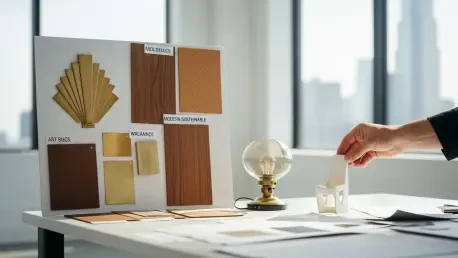
The 1920s were defined by an era of unbridled optimism and luxury, manifesting in the Art Deco movement which sought to break entirely from the heavy, dark styles of the Victorian age. This style embraced bold geometric shapes, sharp contrasts, and a lavish use of high-end materials such as marble, brass, and plush velvet, reflecting the booming economy and the rise of the Jazz Age. Designers of the time paired restraint with rich ornamentation, creating spaces that felt like jewelry boxes through the use of exotic woods and lacquered finishes. The aesthetic was deeply influenced by the discovery of Tutankhamun’s tomb and the burgeoning industrial sector, leading to motifs like sunbursts, zigzags, and stepped forms. These elements were not merely decorative; they were symbols of a modern world that was fast, exciting, and inherently glamorous. Today, this influence is seen in custom craftsmanship, such as sculptural hardware and wood parquet flooring, which adds a sense of sophistication without making a home feel like a museum piece.
Incorporating Art Deco into a modern home requires a delicate balance to avoid the kitsch of a themed hotel. Instead of replicating the 1920s literally, contemporary designers use the period’s commitment to high-quality materials as a foundation for modern luxury. For instance, a velvet-upholstered sofa in a deep emerald or sapphire tone can provide the necessary weight and texture, while brass inlay in cabinetry offers a nod to the metallic obsession of the era. The focus remains on the “jewelry” of the home—those small, meticulously crafted details like hand-forged door handles or geometric light fixtures that draw the eye. By layering these opulent touches against more minimalist modern backdrops, the space gains a sense of history and permanence. This approach ensures that the glamour of the Roaring Twenties is translated into a language of timeless elegance, suitable for the high-functioning needs of a house in the present day.
The 1930s Shift Toward Practicality and Softness
As the world moved into the 1930s, the sharp edges of the previous decade began to soften into the “Streamline Moderne” style, influenced heavily by the economic constraints of the Great Depression. This period prioritized curves and the rise of functional, built-in elements that focused more on organized utility than pure glamour, reflecting a society that needed to make the most of limited resources. The aesthetic moved away from the verticality of Art Deco toward horizontal lines, rounded corners, and smooth surfaces that suggested aerodynamic efficiency. Materials like glass block, chrome, and light-colored woods became popular, providing a sense of cleanliness and order during a chaotic time. The influence of the 1930s is most visible in modern interior architecture through streamlined cabinetry and integrated media units that emphasize a design philosophy where elegance serves a practical purpose.
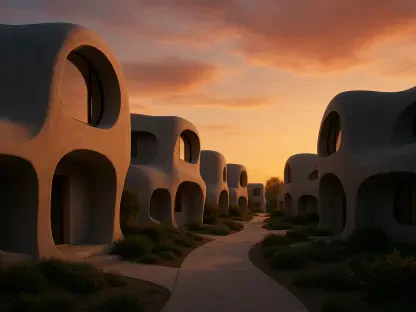
This transition toward utility marked the beginning of the “machine age” in the home, where architecture and furniture began to work in tandem to simplify daily life. Designers started incorporating built-in shelving and hidden storage solutions, a trend that has only grown in popularity as urban living spaces have become more compact and multifunctional. In a contemporary setting, the 1930s influence is felt in the preference for “quiet” luxury—designs that look simple but are executed with extreme precision. The use of curved walls or rounded furniture pieces today helps to break up the rigid boxiness of modern construction, providing a softer, more organic feel to a room. By focusing on the integration of form and function, the 1930s established the blueprint for the organized, efficient homes we value now, proving that beauty does not have to be sacrificed for the sake of practicality and order.
Mid-Century Revolutions: War and Modernism
The Polarized Styles of the 1940s
The 1940s presented a study in contrast, heavily influenced by the constraints and emotional toll of World War II, which forced designers to be resourceful and imaginative. On one side, there was a shift toward modest, traditional interiors that prioritized family comfort and wartime survival, using warm woods and familiar, cozy fabrics to create a sense of security. Conversely, some designers pushed for “theatrical optimism,” using oversized floral patterns and high-contrast color palettes to act as an antidote to the surrounding austerity. This duality reflected a world caught between the grim reality of global conflict and the desperate hope for a brighter, more colorful future. Modern applications of this era involve balancing traditional forms with spirited accents, such as large-scale classical motifs reimagined for today’s homes, allowing for a space that feels both nostalgic and vibrant.
The impact of the 1940s is particularly evident in the way color was used to manipulate the mood of a room, a technique that remains highly relevant in psychological design today. When resources were scarce, paint and wallpaper became the primary tools for transformation, leading to the rise of bold, high-contrast combinations like navy and white or deep reds paired with cream. This period also saw the emergence of the “American Colonial” revival, as people looked toward historical stability in an uncertain time. For a modern homeowner, the lesson of the 1940s is the power of personality; using a single, dramatic wallpaper or a collection of heirloom-style furniture can ground a room and give it a soul. This decade taught us that even in times of great hardship, the home remains a sanctuary where creativity can flourish, providing a much-needed escape from the pressures of the outside world through thoughtful curation and bold aesthetic choices.
The Birth of Mid-Century Modernism in the 1950s
The 1950s marked the emergence of Mid-Century Modern design, a style that remains a staple of contemporary aesthetics due to its focus on clean lines, democratic design, and honest materials. This era introduced iconic elements like tapered furniture legs, warm walnut woods, and the integration of indoor and outdoor living through open floor plans and large expanses of glass. Following the war, there was a massive demand for housing, leading to the development of suburban tracts that required furniture that was mass-producible yet stylish. Designers like Charles and Ray Eames or Eero Saarinen utilized new technologies, such as molded plywood and fiberglass, to create ergonomic shapes that fit the human body perfectly. To prevent this style from feeling like a theme today, designers recommend layering natural textures like wool and linen over neutral palettes, while using large sliding doors to maintain that classic connection to the landscape.
The enduring popularity of this movement stems from its inherent livability and its rejection of unnecessary fluff, making it the perfect foundation for a modern lifestyle. The 1950s house was designed to be easy to clean, easy to move through, and deeply connected to nature, which aligns with current desires for wellness-oriented environments. By focusing on the “integrity” of the material—allowing wood to look like wood and metal to look like metal—the 1950s established a standard of authenticity that continues to resonate. In a contemporary context, the Mid-Century aesthetic serves as a bridge between the old and the new, offering furniture pieces that are sculptural enough to stand alone as art while being functional enough for daily use. The focus on “flow” from this era has become the gold standard for residential architecture, ensuring that the home feels expansive and filled with light, regardless of its actual square footage or geographical location.
The Late Century: Experimentation and Minimalist Resets
Creativity and Organic Retreats in the 1960s and 1970s
The 1960s brought a sense of playful experimentation, using saturated palettes and futuristic materials like acrylic and lacquer to break traditional rules and reflect the space-age optimism of the time. This was a decade of “Pop Art” influence, where primary colors and graphic patterns turned living rooms into vibrant, high-energy social hubs. However, as the 1970s arrived, the cultural mood shifted toward a desire for grounding and a rejection of the synthetic, leading to an “organic retreat” aesthetic. This decade embraced earth tones like rust, ochre, and avocado green, alongside natural materials such as rattan, stone, and heavy-grain wood. Modern designers draw from these decades by pairing bold, sculptural seating from the ’60s with the high-quality organic materials of the ’70s, such as travertine tables or plush rugs, to create a sophisticated yet relaxed lounge environment that feels both adventurous and deeply comfortable.
The transition from the neon-lit 1960s to the earthy 1970s mirrors a larger societal move toward environmental consciousness and a rejection of the corporate-industrial complex. During this period, the “open-concept” kitchen began to take shape as social barriers continued to fall, and the home became a place for communal living and relaxation. The 1970s also introduced the concept of “sunken” living rooms and conversation pits, emphasizing a more horizontal, informal way of interacting. Today, this influence is seen in the resurgence of “low-slung” furniture and the use of tactile, artisanal fabrics like bouclé and corduroy. By combining the daring silhouettes of the ’60s with the textural depth of the ’70s, modern interiors can achieve a balance of visual interest and physical warmth. This approach avoids the kitschy pitfalls of retro design by focusing on the “feeling” of the era—one of creative freedom and a deep, tactile connection to the natural world.
1980s Maximalism and the 1990s Palate Cleanser
The 1980s was a decade of “more is more,” characterized by glossy black finishes, neon mood lighting, and dramatic silhouettes that mirrored the era’s focus on corporate success and individual expression. This was the time of Memphis Group patterns, mirrored walls, and oversized leather sofas, where every room was designed to make a statement. However, this period of excess eventually led to a necessary minimalist reset in the 1990s, which favored casual livability and a monochromatic palette of beige, white, and sage green. The ’90s were about “unplugging” and creating a serene, almost monastic environment as a counter to the increasingly digital and fast-paced world. While the ’80s influence survives through restrained drama and single statement light fixtures, the ’90s emphasis on comfort remains a foundation for modern homes, though today’s interiors add more depth and intentional shapes to avoid the blandness of the original era.
This swing from maximalism to minimalism highlights the cyclical nature of human desire, moving between the need for external validation and the need for internal peace. The 1990s introduced the “shabby chic” movement and the rise of the oversized “overstuffed” armchair, prioritizing the physical sensation of softness above all else. In a modern setting, we take the best of both: the structural bravery of the ’80s and the calming, neutral foundation of the ’90s. The result is a home that feels substantial and curated but remains a comfortable place to decompress. Modern designers often use the ’80s penchant for dramatic lighting—such as neon accents or sculptural sconces—to add an edge to the “beige” ’90s aesthetic. This combination ensures that the home does not feel like a stagnant time capsule but rather a dynamic space that can handle the complexities of contemporary life while providing a visual “palate cleanser” from the constant noise of the outside world.
The New Millennium: Digital Influence and Authenticity
Polished Living and the Open-Concept 2000s
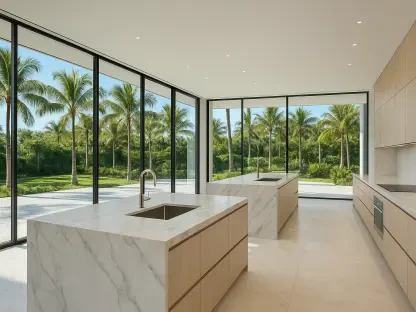
The 2000s refined the minimalism of the previous decade, moving toward a more substantial and finished aesthetic often called the “Great Room” concept. This era was defined by the transformation of the kitchen into the social and functional hub of the home, typically featuring dark wood cabinetry, heavy granite countertops, and stainless steel appliances. There was a strong move toward “builder-grade” luxury, where high-end materials became more accessible to the middle class, leading to a standardized look across suburban developments. Proportions grew larger, and the “McMansion” era brought with it a need for furniture that could fill cavernous spaces without feeling lost. Contemporary open-concept spaces still follow this standard of layout but use lighter materials and more tailored furniture proportions to keep the flow from feeling as “heavy” or cluttered as it did at the turn of the millennium.
As digital technology began to permeate every aspect of the home, the 2000s also saw the rise of dedicated “home theaters” and built-in desks for the first personal computers. This decade was about the “total package”—a home that was ready for entertaining and professional work simultaneously. Today, we have moved away from the dark, imposing woods and the “brown-on-brown” color schemes of that time, favoring lighter oaks and honed marbles that feel more airy and natural. However, the fundamental layout of the 2000s—the kitchen overlooking the living area—remains the blueprint for modern residential life. The focus has shifted from the “prestige” of the materials to the “experience” they provide, with a greater emphasis on how the acoustics and lighting of these large, open spaces affect the daily wellbeing of the residents. This refinement ensures that the open-concept home remains functional for a modern family while losing the dated, heavy aesthetic of its early iterations.
The Instagram Aesthetic and Fast Trends of the 2010s
The 2010s were the first years shaped entirely by the speed of social media, leading to highly curated and photogenic trends like the “Modern Farmhouse” or “Global Nomad” look. Characterized by all-white kitchens, sliding barn doors, and open shelving filled with perfectly arranged ceramics, these spaces were designed to look perfect in photographs but sometimes lacked individual warmth. The influence of platforms like Pinterest and Instagram meant that a trend could go global in a matter of weeks, leading to a homogenization of style where homes in London, New York, and Sydney all began to look remarkably similar. Current design perspectives have begun to move away from these “cookie-cutter” styles, favoring unique, collected pieces over the mass-produced furniture that dominated the last decade. The lesson learned from this era is that while a room can be “picture-perfect,” it needs layers of personal history and tactile variety to truly feel like a home.
This decade also saw the rise of “fast furniture,” which allowed people to update their interiors as quickly as they updated their wardrobes, but at a significant environmental and aesthetic cost. As the 2010s progressed, a counter-movement began to emerge, focusing on “craft” and “slow design,” which has now become a pillar of contemporary style. People started to realize that the all-white, high-contrast look could feel cold and sterile in reality, leading to a resurgence of warm wood tones and textured wall finishes like lime wash. The “open shelving” trend, while visually appealing, proved to be impractical for many, leading to a return to smart, hidden storage. Today, we take the clean, bright foundations of the 2010s but “dirty them up” with vintage rugs, mismatched chairs, and plenty of greenery. This transition from the “curated” to the “lived-in” marks a significant shift in how we value our spaces, moving from a desire for external approval to a focus on internal satisfaction.
Modern Design: Individualism and Enduring Principles
The 2020s Focus on Sustainability and Storytelling
In the current decade, the focus has shifted toward authenticity and biophilic design, which seeks to bring nature into the home through sustainable materials, organic shapes, and an abundance of indoor plants. There is a growing desire for homes that feel “evolved” rather than decorated, achieved by mixing vintage finds from different eras with contemporary lighting and custom-made furniture. This “quietly assembled” look prioritizes personal storytelling, ensuring that the living space feels like a reflection of the individual rather than an adherence to a specific rulebook. Sustainability has moved from a buzzword to a fundamental requirement, with homeowners choosing materials like cork, recycled stone, and low-VOC finishes to ensure their environment is as healthy as it is beautiful. The result is a space that feels grounded, intentional, and deeply connected to the broader world through responsible consumption and aesthetic longevity.
This shift toward the “collected” home is a direct response to the fast-paced, digital exhaustion of the previous years, offering a sanctuary that feels timeless and slow. Design in the mid-2020s is about creating layers of meaning—where a 19th-century antique can sit comfortably next to a 1970s Italian sofa and a cutting-edge 3D-printed light fixture. This eclecticism is not random; it is guided by a commitment to quality and a personal narrative that spans generations. By focusing on “biophilia,” designers are recognizing that humans have an innate need to be near nature, leading to the use of large windows, natural ventilation, and materials that patina over time. This approach ensures that the home is not just a place to store belongings, but a living ecosystem that supports the mental and physical health of its inhabitants. It is a design philosophy that values the “imperfections” of natural materials—the grain in the wood, the veining in the marble—as the very things that make a space feel alive and authentic.
Universal Themes in a Century of Change
Looking back at a century of evolution, several core principles emerge as timeless requirements for a successful home, providing actionable insights for any modern renovation or decoration project. Regardless of the prevailing trend, the most enduring interiors were those that prioritized comfort, function, and a deep connection to natural textures like wood and stone. History showed that while colors and patterns may fluctuate, the human need for a sense of scale and light remains constant. To achieve a home that feels both current and classic, it was necessary to invest in “foundational” pieces—well-made sofas, solid tables, and quality flooring—that could act as a canvas for more experimental accessories. The most effective way to honor design history was through subtlety, using a specific material or silhouette to nod to the past while maintaining a space grounded in the practical and emotional needs of modern life.
The final takeaway from a hundred years of design history was the importance of avoiding the literal “period piece” in favor of a layered, multi-generational approach. Those who successfully navigated these trends were the ones who understood that a home is a living entity that should grow and change with its occupants. Moving forward, the focus must remain on sustainability and the ethical sourcing of materials, ensuring that our desire for beautiful homes does not come at the cost of the environment. By embracing the “slow design” movement and choosing pieces with a clear provenance, homeowners created spaces that felt rich in history and future-proofed against the whims of fashion. Ultimately, the evolution of interior design proved that the most beautiful rooms were not those that followed the rules, but those that broke them in favor of comfort, warmth, and the unique stories of the people who lived within their walls. In the end, the home remained the ultimate expression of the human spirit, a place where the past and the present were woven together into a singular, enduring narrative.