
The enduring appeal of cinematic legends often transcends the silver screen, influencing how residential landscapes are perceived and curated in the current era of high-end design. Modern outdoor aesthetics are currently undergoing a significant transformation by looking back at the mid-century sensibilities popularized by Harrison Ford during his tenure in his iconic Hollywood Hills residence. Historically, exterior spaces were treated as utilitarian zones, often disconnected from the refined atmosphere of the home’s interior. However, Ford’s pioneering residential layout challenged this divide, introducing a concept where the patio serves as a direct extension of the living room. By prioritizing high-comfort textiles and sophisticated furniture over traditional rugged outdoor gear, this philosophy has paved the way for current trends that emphasize a seamless domestic flow. As homeowners seek to maximize their square footage, they are adopting this legacy to create environments that prioritize relaxation and style.
Reimagining the Patio: A Domestic Sanctuary
The Foundation: Ford’s Indoor-Outdoor Philosophy
The shift toward a domestic sanctuary begins with the fundamental realization that outdoor furniture should provide the same level of comfort as a primary sofa. Harrison Ford’s poolside arrangement was revolutionary because it bypassed the flimsy, collapsible chairs of the era in favor of substantial, pillowed loungers that invited long-term habitation. This approach treats the backyard as a secondary pavilion rather than a separate garden, ensuring that the transition between glass doors feels entirely natural to the inhabitant. Current design schemes emphasize the use of deep-seated frames and thick, high-density foam cushions that offer ergonomic support comparable to interior seating. By selecting pieces that prioritize weight and material quality, the garden is elevated from a transitional path to a destination for leisure. This legacy continues to drive the market toward durable yet soft-to-the-touch fabrics that withstand the elements while maintaining a luxury feel in the backyard.
Practical Blueprints: Seamless Spatial Transitions
Implementing a successful spatial transition requires a strategic approach to furniture arrangement that mirrors the psychological comfort of interior layouts. Design experts suggest that using L-shaped sectionals or anchoring a space with central coffee and side tables immediately signals that an area is intended for social gathering rather than just passage. Furthermore, the use of architectural greenery, such as linear hedge walls or large trough planters, can function as “outside hallways” that guide movement through the property with a sense of order. This structured organization mimics the home’s existing floor plan, allowing guests to navigate the outdoor rooms with the same ease they would find inside. By defining these zones clearly, homeowners reinforce the perception of a curated environment that honors the original architecture while expanding the livable footprint. Such planning ensures that every corner of the property is utilized effectively and maintains a cohesive aesthetic.
Visual Cohesion: Material Trends and Integration
Echoing Finishes: Interior Textures in the Garden
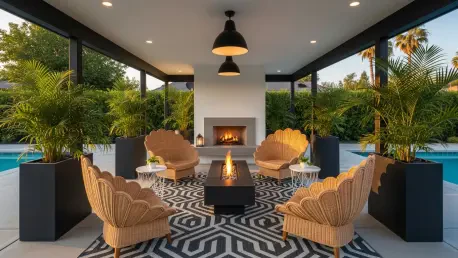
Achieving true visual integration involves a meticulous focus on matching the hardware and decorative finishes used both inside and outside the home. For instance, if the interior kitchen features matte black industrial fixtures, extending that same finish to outdoor furniture legs or lighting sconces creates a powerful sense of unity. Strategic use of all-weather rugs that replicate the color palette of the adjoining indoor room further bridges the gap between disparate spaces, making the floor plan appear continuous. Textural warmth is introduced through the use of diamond-patterned pillows and reversible covers that look like traditional wool or linen but are engineered for UV resistance. These visual cues trick the eye into seeing the garden as a finished room rather than an afterthought, reinforcing the idea that the entire property is a singular, harmonious living unit. This focus on finish consistency ensures that the transition feels intentional rather than coincidental or abrupt.
Sculptural Shapes: Retro-Modern Aesthetics
The prevailing aesthetic for the 2026-2028 cycle blended innovative, fluid curves with nostalgic elements that paid homage to the golden age of poolside glamour. Furniture collections moved away from sharp, cold angles in favor of curved wicker surfaces and scalloped edges that added a layer of organic movement to the backyard. While some individuals were drawn to the retro-modern appeal of sunshine stripes and scrolled iron arms, others found resonance in the sharp, geometric precision of European-influenced metal frames. Homeowners took these insights to heart, prioritizing sculptural furniture that balanced artistic form with functional durability. To capitalize on these shifts, experts recommended investing in modular pieces that could be easily reconfigured as social needs changed over time. Designers encouraged the integration of smart irrigation hidden within planters to maintain lush backdrops without manual labor. These forward-thinking adjustments ensured that the garden remained a vibrant retreat.