
The sudden shift from a quiet, private estate to a vibrant national horticultural destination requires more than just regular maintenance; it demands a visionary who can bridge the gap between centuries of tradition and modern botanical innovation. Over the course of a seventeen-year tenure that began in 2009, Martin Duncan has served as the architect of such a transformation at Arundel Castle, meticulously redefining forty acres of West Sussex soil. By the time his retirement arrives at the end of July 2026, the grounds will have evolved from a dignified backdrop into a living masterpiece of landscape design. This evolution was not merely a matter of planting new flowers but involved a complete reimagining of how a historic garden interacts with its environment and its visitors. Duncan’s ability to command the trust of the Duke and Duchess while implementing bold, experimental schemes has created a legacy that balances the weight of history with the freshness of contemporary artistry.
Success in such a high-profile role requires a rare combination of technical mastery and an intuitive understanding of the landscape’s natural rhythm. Duncan achieved this by treating the castle grounds as a narrative, where each section tells a distinct story of climate, color, and heritage. Throughout his time as Head Gardener, he has navigated the complexities of managing a large-scale heritage site while pushing the boundaries of what is expected from a traditional English garden. His arrival signaled a departure from safe, predictable arrangements, favoring instead a more dynamic approach that invites exploration and emotional response. By integrating rare species with familiar flora, he has ensured that Arundel Castle remains at the forefront of the global horticultural conversation. As the transition to a new leadership phase begins, the groundwork laid over nearly two decades stands as a testament to his dedication. This professional journey reflects a deep-seated commitment to excellence that has effectively set a new standard for estate management across the United Kingdom.
A Foundation of International Expertise and Global Vision
The unique character of the Arundel transformation finds its roots in Martin Duncan’s diverse professional history, which spans continents and varied ecological zones. Growing up in Zimbabwe, he developed a profound connection to the natural world during his service with the National Parks, an experience that provided him with a foundational understanding of large-scale environmental management. This early exposure was later refined through formal education at Greenmount College in Northern Ireland and the Welsh College of Horticulture, where he combined practical field experience with academic rigor. Before making his mark in West Sussex, Duncan’s career path included prestigious roles such as Head Gardener to King Hussein of Jordan and Landscape Designer for the Royal Hashemite Court. These positions required a high level of diplomatic and design skill, as he managed gardens in challenging climates. This global perspective proved invaluable when he eventually turned his attention to the historic English landscape.
Working across such diverse environments as the arid Middle East and the humid Caribbean provided Duncan with a versatile horticultural vocabulary that he would eventually apply to Arundel. In Bermuda, his role within the Department of Parks allowed him to experiment with tropical aesthetics, a theme that would later resurface in his bold designs for the castle’s gardens. When he returned to the United Kingdom to manage the gardens at Audley End House, he refined his ability to work within the constraints of heritage sites, learning to respect historical integrity while introducing necessary modernizations. His career achievements were formally recognized in 2018 with the Kew Guild Medal, an honor that underscores his standing within the international horticultural community. This vast reservoir of experience enabled him to approach Arundel not as a static relic, but as a dynamic space capable of continuous evolution. His international background allowed him to see possibilities that a more localized perspective might have overlooked, leading to a richer botanical experience.
Structural Innovation and the Art of Seasonal Displays
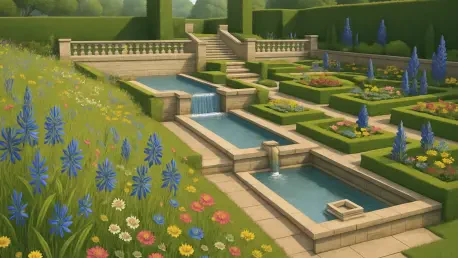
One of the most striking aspects of Duncan’s tenure was his willingness to overhaul established structures in favor of more visually compelling and ecologically sound designs. Upon his arrival, he identified that many of the existing borders and hedges were underperforming, leading him to replace aging box hedging with vibrant, tropical-inspired schemes. This was particularly evident in The Earl’s Garden, where the introduction of lush, exotic planting created an unexpected sense of drama within the castle walls. Furthermore, his creation of two distinct stumperies—artful arrangements of upturned tree roots—provided a unique habitat for shade-loving ferns and mosses, turning forgotten corners into points of botanical interest. These structural interventions were not merely cosmetic; they represented a strategic effort to diversify the garden’s microclimates and provide visitors with a variety of sensory experiences. His ability to draft detailed architectural plans for the restoration of the monastic fishponds demonstrated a technical proficiency that ensured every project was both beautiful and functional.
The implementation of the Arundel Castle Tulip Festival stands as perhaps the most visible and commercially successful component of Duncan’s long-term strategy for the estate. Established twelve years ago to revitalize the garden during the early spring months, the festival has grown into a massive operation involving the planting of over 1.5 million bulbs. Unlike the rigid, formal rows often seen in traditional displays, Duncan opted for an organic, artistic approach that sees 170 varieties of tulips woven seamlessly into the existing landscape. This event has become a cornerstone of the estate’s calendar, accounting for approximately twenty-five percent of its annual visitors and establishing the castle as a premier destination for spring photography and tourism. Following the tulip season, the garden transitions into a display of 100,000 camassias and meticulously restored wildflower meadows, showcasing a commitment to naturalization. This sequential approach to planting ensures that the grounds remain engaging throughout the year, reflecting a masterclass in seasonal management and visitor engagement strategies.
Leadership Dynamics and the Future of Estate Management
Beyond the physical changes to the landscape, Martin Duncan’s impact is deeply felt through his leadership and the professional culture he cultivated among his staff and volunteers. Managing a team of eight permanent gardeners, four seasonal workers, and over twenty volunteers required a balance of clear vision and collaborative empowerment. He consistently advocated for the professional development of his team, encouraging career changers and horticultural students to find their place within the industry. By fostering an environment of creative autonomy, he allowed his staff to take ownership of specific projects, which in turn enhanced the overall quality of the estate’s maintenance. Duncan’s relationship with the Duke and Duchess was also pivotal; by presenting detailed sketches and successfully executing complex designs, he earned the freedom to experiment. This level of trust is rare in estate management and served as the engine for the many innovations seen over the last seventeen years. He understood that the most beautiful garden is unsustainable without a dedicated and skilled team to maintain it.
The transformation of the Arundel Castle gardens was finalized through a series of award-winning projects that cemented the estate’s reputation as a leader in British horticulture. Under Duncan’s guidance, the grounds received numerous accolades, culminating in the prestigious Historic Houses Garden of the Year award for 2025. As he moved toward his retirement in Ireland, he ensured that the transition process remained as structured as his planting schemes. Future managers at similar estates should look to Duncan’s focus on the human element as a primary takeaway, recognizing that technical skills must be paired with team-building and public engagement. Successful estate evolution required a willingness to embrace change while honoring the specific history of the site. Incoming professionals should prioritize the mentorship of new talent to ensure that traditional skills are not lost to time. By maintaining the high standards of water management, seasonal diversity, and architectural integrity established during this era, Arundel Castle is well-positioned to remain a horticultural benchmark for many years to come.