
By focusing on secondary markets through an Opportunity Zone framework, the developers aim to provide both high-quality housing and long-term economic benefits to the local community. As the demand for versatile living spaces continues to surge across the Southwest, Albuquerque has become a focal point for innovative residential solutions that challenge the traditional binary choice between homeownership and apartment living. The Charlie ABQ emerges as a pivotal response to this shift, introducing a 344-home community that meticulously blends the professional management of a luxury complex with the sanctuary of a detached residence. Developed through a strategic partnership between LaTerra Development and Revitate, this project utilizes the build-to-rent model to address a significant gap in the housing inventory. By offering a sophisticated alternative to standard rentals, the development caters to those who prioritize space and privacy without the immediate financial burdens associated with mortgage rates and personal property debt.
Strategic Growth: Investment Framework for New Mexico
The selection of a 37-acre site at the intersection of Paseo del Norte and Woodmont Avenue was a calculated move designed to maximize regional economic revitalization. By anchoring the project within a designated New Mexico Opportunity Zone, the developers have successfully channeled institutional capital into a secondary market that has long been overlooked by major national firms. This approach does more than just provide shelter; it serves as a catalyst for local job creation and architectural improvements that benefit the surrounding neighborhoods for years to come. The Revitate Opportunity Zone strategy leverages federal tax incentives to ensure that long-term value remains within the community, fostering a stable economic environment as progress continues through the current decade. As large-scale residential construction continues to evolve, this landmark project demonstrates that mission-driven investment can yield high-quality urban environments that serve both the investors and the public interest in a sustainable and meaningful way.
Beyond immediate fiscal gains, the project addresses the tightening housing supply by offering a high-density solution that does not compromise on the quality of life for inhabitants. In a market where traditional single-family home prices have remained high, this build-to-rent community offers a middle ground for those transitioning between life stages. The developers have identified Albuquerque as a prime location for institutional growth, citing the city’s expanding tech sector and its need for professional-grade housing. By creating a vibrant, long-term asset, the partnership between LaTerra and Revitate proves that secondary markets can support complex, large-scale developments. This investment provides a blueprint for how cities can utilize private-public frameworks to stabilize their rental markets while attracting new residents from higher-cost regions. The result is a more resilient local economy that maintains a steady supply of premium residential options for a growing and diverse urban population that values flexibility and community over ownership.
Architectural Innovation: Designing for Lifestyle Integration
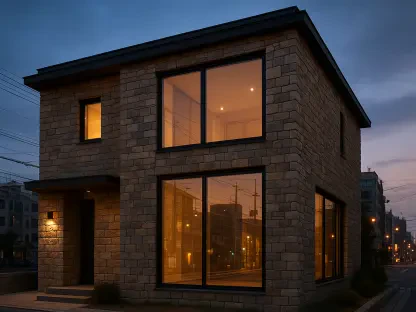
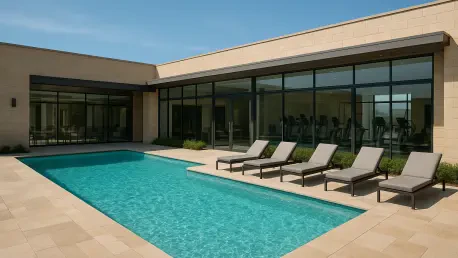
Architectural variety is a cornerstone of this development, featuring a diverse mix of 202 townhomes and 142 detached single-family houses that break the monotony of typical rental blocks. These units offer an unprecedented level of choice for residents who require more than what a standard apartment provides, with floor plans ranging from two to four bedrooms and spanning up to 2,130 square feet. By integrating features such as attached two-car garages and private fenced yards, the project delivers the autonomy and comfort usually reserved for property owners. Shared infrastructure plays an equally important role, with the community anchored by massive amenity centers featuring resort-style pools, fitness centers, and co-working lounges. This transition toward larger, more private rental options reflects a deeper understanding of the modern resident’s desire for a home that feels both permanent and personal. Proximity to the Bosque trail system and Petroglyph National Monument further enhances the appeal for those seeking an outdoor-centric life.
The successful implementation of this build-to-rent model demonstrated that renting could be a deliberate lifestyle choice rather than a temporary financial fix for a changing population. It was observed that retirees sought maintenance-free living while families prioritized safe, amenity-rich environments that felt like traditional neighborhoods. Moving forward, stakeholders should consider similar developments as a primary solution for urban sprawl, focusing on densification that maintains the aesthetic value of single-family homes. Future residential strategies will likely emphasize the inclusion of advanced smart-home technologies and sustainable energy systems to meet the rising expectations of a tech-savvy population. The project’s ability to bridge the gap between institutional investment and community-oriented design offered a sustainable path for growth in secondary markets. Ultimately, the lessons suggested that flexibility and a sense of community were the most critical factors in redefining the future of rental living across the American Southwest.