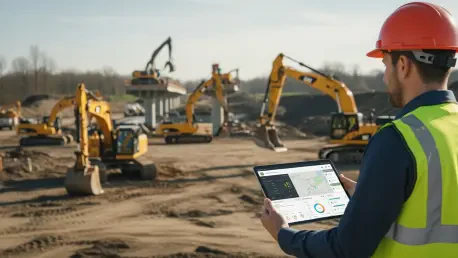

Heavy civil construction projects have reached a level of complexity where traditiona ladministrative workflows can no longer keep pace with the frantic reality of daily job site operations. Historically, software implementation in this sector was a top-down affair, typically initiated by accounting or estimating departments to satisfy back-office reporting requirements. This legacy approach frequently left field crews struggling with tools that were never designed for the mud and noise of the jobsite, creating a persistent data gap between the office and the field. However, as the demand for infrastructure modernization intensifies in 2026, contractors are fundamentally flipping the script. The industry is witnessing a decisive move toward an operations-first mindset, where digital tools are selected based on their utility to foremen and project managers rather than just the finance team. This transition marks a critical maturation of the construction industry as it seeks to eliminate the inefficiencies that have long hindered real productivity and project visibility.
Minimizing Friction: The Battle for Operational Efficiency
A primary driver behind this change is the urgent need to reduce what industry analysts call operational weight, which encompasses the wasted energy expended on redundant communication. When a project manager spends hours every week chasing down equipment status or labor hours via phone calls and fragmented spreadsheets, the resulting friction slows every decision-making process. Modern operations-first software addresses this by serving as a live coordination hub that captures data as it happens, rather than acting as a static repository for historical records. This real-time visibility allows site leaders to pivot quickly when site conditions change or resources are delayed, preventing minor disruptions from cascading into major project delays. By centralizing field information in a way that is accessible to all stakeholders, firms can finally move beyond the reactive management styles of the past. The goal is to provide immediate, actionable answers to frontline questions, turning software into a productivity multiplier.
Many large-scale contractors are also re-evaluating the utility of legacy all-in-one platforms that often fail the critical test of field adoption. If a system is too cumbersome for a busy foreman to navigate in the heat of a high-pressure project, the high-quality data it was meant to capture simply never enters the system. Furthermore, many organizations have become increasingly frustrated with restrictive licensing models that charge per user, effectively creating artificial silos that prevent total project visibility. In an era where every team member needs access to project updates, these cost barriers are seen as a significant hindrance to true digital collaboration. Instead, the focus has shifted toward platforms that offer unlimited seat counts or more flexible access, ensuring that information flows freely across the entire project hierarchy. This evolution highlights a growing realization that the value of software is directly proportional to its level of use on the jobsite, leading firms to prioritize user experience.
Digital Maturity: Professionalizing Field Communication
Simultaneously, a significant segment of the industry is moving to formalize what have traditionally been informal, manual processes like texting and paper logs. As projects grow in scale and the associated risks become more pronounced, relying on non-standardized communication methods becomes a liability that few firms can afford. These contractors are not necessarily looking for the most complex technology available but are instead seeking professional-grade tools that mirror their existing workflows. The objective is to bring clarity and accountability to the chaotic exchange of information that defines heavy civil work without overwhelming the workforce with unnecessary complexity. By digitizing these informal channels, firms can capture a clean audit trail and ensure that critical project data is preserved rather than lost in a private text thread. This professionalization of field operations is a necessary step for companies that wish to scale their operations safely and maintain control over their margins in an increasingly competitive market.
The industry is now converging on a unified set of requirements for modern software that emphasizes four key pillars: adoption, democratization, speed, and jobsite fit. The focus has moved away from deep, unused feature lists toward a more practical assessment of whether a tool will actually be embraced by the crews on the ground. Implementation must be rapid to demonstrate an immediate return on investment, as construction firms have little patience for multi-year rollouts that do not show early results. Furthermore, the software must exhibit a true jobsite fit, meaning it must perform reliably in the rugged, disconnected, and fast-paced environments where actual work is performed. This means offline capabilities and intuitive mobile interfaces are no longer optional extras but are instead core requirements for any serious operational tool. When software feels like a natural extension of the work being done, rather than a separate chore, the quality of the data collected improves dramatically, providing a solid foundation for strategic planning.
Strategic Integration: Modular Solutions and Jobsite Utility
This shift has cleared a distinct path for specialized, field-first solutions that handle specific, high-value tasks such as equipment maintenance and crew scheduling. Rather than pursuing massive, risky suite replacements that disrupt every department at once, many firms are opting for a modular approach that solves immediate pain points first. These platforms are designed to integrate seamlessly with existing accounting systems through modern APIs, allowing for a more organic and less disruptive digital transformation. This allows a company to modernize its fleet management or labor tracking without needing to migrate its entire financial history into a new, untested system. Such specialized tools often provide deeper functionality than the general modules found in broad enterprise resource planning software, giving field teams the precise capabilities they need. This best-of-breed strategy acknowledges that the jobsite has unique requirements that a generic, one-size-fits-all solution often fails to address adequately.
To ensure long-term resilience, firms prioritized the removal of data silos by implementing open API architectures that connected field data to core financial systems. By adopting a modular strategy, contractors successfully addressed immediate operational bottlenecks like equipment maintenance and labor scheduling before attempting wider enterprise shifts. Leaders in the field moved away from per-user licensing models that restricted information flow, instead favoring platforms that democratized access for every worker on the site. These organizations focused on training programs that emphasized jobsite fit and rapid feedback loops to maintain high levels of software adoption among veteran crews. The transition to operations-first software provided the necessary visibility to mitigate rising labor costs and material volatility effectively. Ultimately, the industry demonstrated that digital transformation was most effective when it empowered those performing the actual work. Decision-makers invested in technologies that offered immediate tangible value.