
The traditional path to American homeownership has encountered a significant roadblock as soaring interest rates and limited inventory create a historic affordability gap for middle-income families. In Sioux Falls, this economic friction has catalyzed a rapid shift toward the build-to-rent (BTR) model, a hybrid real estate strategy that offers the architectural privacy of a single-family home without the financial or logistical burdens of a traditional mortgage. Unlike previous eras where rentals were primarily confined to dense apartment complexes or aging individual houses, these purpose-built neighborhoods are designed from the ground up to accommodate long-term tenants. This development surge reflects a fundamental change in how residents perceive housing, prioritizing flexibility and professional management over equity accumulation in an increasingly volatile market. By providing detached homes with private yards and garages under a rental agreement, developers are successfully capturing a demographic that feels priced out of buying but remains unsatisfied with the constraints of high-density living.
The Evolution of Purpose-Built Neighborhoods
Redefining the Tenant Experience Through Design
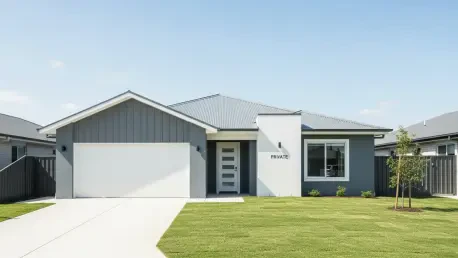
The architecture of build-to-rent communities deviates sharply from the standard apartment blueprint by emphasizing the physical characteristics of a classic residential street. Projects like Willowbrook Village demonstrate this shift, featuring detached two- and three-bedroom units that provide residents with a sense of ownership through personal entryways and private outdoor spaces. These homes are equipped with attached two-stall garages, a feature highly coveted in the South Dakota climate, which immediately distinguishes them from traditional multi-family housing options. The layout of these communities focuses on creating a cohesive neighborhood feel, where the physical separation between structures offers acoustic privacy that cannot be achieved in shared-wall environments. This design philosophy caters to a growing segment of the population that values the “quietude” of the suburbs but lacks the desire or the capital to manage the specialized maintenance tasks that usually accompany such a lifestyle.
Beyond the physical structure, the operational model of these developments integrates professional management into the fabric of the neighborhood. Residents are relieved of seasonal chores such as snow removal, lawn care, and exterior repairs, which are all handled by a dedicated onsite team. This “maintenance-free” lifestyle has become a major selling point for aging baby boomers who are looking to downsize from larger family homes but are not yet ready to transition into assisted living or cramped senior apartments. By combining the aesthetic of a private residence with the convenience of a managed property, BTR communities are effectively bridging a gap in the housing market that was previously underserved. The rapid absorption rates of these units indicate that the market has a high appetite for this specific blend of privacy and service, suggesting that the “renter-by-choice” demographic is expanding well beyond the traditional young professional base.
Economic Advantages of Scale and Efficiency
The financial viability of the build-to-rent sector in Sioux Falls is driven by a “wholesale” approach to residential development that significantly lowers the cost of entry for the end user. When a developer acquires a large land parcel and builds dozens of homes simultaneously, they achieve economies of scale that are impossible for individual homebuyers to replicate. These projects benefit from bulk purchasing of construction materials and streamlined labor schedules, which reduces the per-unit cost of development. Consequently, these savings allow developers to offer rental rates that are often substantially lower than the monthly carrying costs of a new mortgage for a comparable home. In many cases, the monthly rent in a BTR community can be nearly $1,000 less than the combined total of a mortgage payment, property taxes, and insurance in the current high-interest environment, making it a pragmatic financial decision for many households.
Furthermore, the stability of these institutional-grade developments provides a hedge against the unpredictability of the private rental market. In a typical single-family rental scenario, a tenant might face eviction if an individual landlord decides to sell the property or move back in. In contrast, BTR neighborhoods are owned by investment groups with long-term horizons, offering tenants a level of security and professional oversight that mimics the stability of a traditional neighborhood. This institutional backing also ensures that the physical assets are maintained to a high standard, as the owners have a vested interest in preserving the long-term value of the entire community. For the city of Sioux Falls, this model adds a predictable and high-quality layer to the housing inventory, addressing the urgent need for diverse living options without placing additional strain on the existing stock of homes available for purchase.
Navigating Regulatory and Market Challenges
Distinguishing New Supply from Existing Inventory
As the build-to-rent sector grows, it has faced increased scrutiny regarding its impact on the broader housing market, particularly concerning the role of institutional investors. There is a critical distinction that developers must navigate between “buying up” existing homes and “building up” new communities from scratch. Critics often point to the negative effects of large corporations purchasing established single-family homes, which can deplete the inventory available for first-time buyers and drive up prices. However, the BTR model serves as a constructive counter-narrative because it adds brand-new units to the overall housing supply. By developing previously vacant land into high-quality rental neighborhoods, these projects alleviate some of the pressure on the housing market rather than competing directly for the limited stock of existing homes. This distinction is essential for gaining local government support and ensuring that the growth of the sector is viewed as a solution rather than a hindrance.
Regulatory clarity remains a significant factor in the future trajectory of these developments, as federal and local policies continue to evolve. Developers are closely monitoring discussions regarding potential limits on institutional ownership, which could inadvertently impact the financing of new BTR projects if the legislation is not carefully worded. To mitigate these risks, industry leaders are focusing on the “supply-side” benefits of their work, emphasizing that they are creating a new asset class that provides affordable alternatives in a tight market. The ability to articulate this value proposition to city planners and policymakers is vital for securing the necessary zoning and infrastructure support. As long as these projects are recognized as a vital tool for expanding the housing bucket, they will likely remain a centerpiece of urban expansion strategies in rapidly growing mid-sized cities like Sioux Falls.
Strategic Considerations for Future Development
The long-term success of the build-to-rent model will depend on the ability of developers to remain responsive to changing economic signals and tenant preferences. While the current demand is bolstered by high interest rates, the model must prove its resilience if and when borrowing costs for homebuyers eventually decrease. This requires a focus on creating “stickiness” within the community, where the lifestyle benefits—such as social events, walking trails, and modern tech-integrated interiors—outweigh the desire for traditional ownership. Developers are increasingly looking toward 2027 and 2028 to integrate more sustainable building practices and smart-home technologies that reduce utility costs for tenants, further enhancing the value proposition. By staying ahead of these trends, the BTR sector can maintain its status as a premium housing option that competes on quality and convenience rather than just price point.
The transition from early-stage adoption to market maturity will likely see a diversification of BTR products, including townhomes and cottage-style clusters that cater to different price tiers. Investors are already looking at new sites across the region, assessing how to replicate the success of initial projects while adapting to unique local demographics. The focus is shifting toward long-term asset management and community building, ensuring that these neighborhoods remain vibrant and well-kept over the coming decades. For prospective tenants and the community at large, the continued expansion of this model offers a flexible path forward in an era where the definition of “home” is increasingly tied to the quality of the living experience rather than the deed to the land. This evolution ensures that Sioux Falls remains a competitive and accessible city for residents at every stage of their lives.