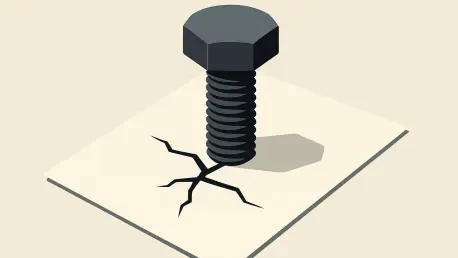

The phenomenon of accountability displacement ensures that even when a task is officially performed, no single entity remains answerable for the ultimate outcome. This concept serves as a critical lens through which one must examine the catastrophic failure of modern building regulations during the 2023 earthquakes in southern Türkiye. For decades, the Turkish government sought to align its construction standards with international best practices, yet when the ground finally shook, the results were devastatingly similar to those of the pre-reform era. The disaster claimed over 50,000 lives and decimated entire cities, leaving a landscape of pancaked concrete that defied modern engineering logic. These were not just older, vulnerable structures; many were high-end residential complexes built under the supposedly rigorous oversight of updated laws. The failure was not merely one of concrete and rebar, but an institutional collapse where the mechanisms of oversight existed only as bureaucratic shadows. The divergence between the legal code and the physical reality of the buildings highlights a fundamental flaw in how reform was implemented, suggesting that the appearance of safety was prioritized over the substantive enforcement of life-saving engineering standards.
The Illusion of Reform: Distinguishing Task from Accountability
The focal point of this institutional breakdown was the significant 2018 reform of the building inspection regime in Türkiye. Historically, the responsibility for construction oversight fell upon municipal authorities, a system that was frequently criticized for being under-resourced and vulnerable to local political and economic pressures. To address these vulnerabilities, the government transitioned this responsibility to licensed private building inspection firms. The theoretical logic behind this modernization was sound: by outsourcing technical oversight to accredited professionals, the state aimed to create a more robust and independent chain of accountability. This move was intended to ensure that every structural beam and every pour of concrete met the high standards required in a seismically active zone. On paper, it appeared that the technical task of ensuring safety had been successfully shifted to experts who possessed the necessary skills to prevent the failures of the past.
However, a profound distinction exists between the transfer of a technical task and the transfer of genuine accountability. While the physical responsibility for inspecting a site moved to private firms, the underlying incentives and legal liabilities did not follow in a way that guaranteed public safety. This led to a state of accountability displacement, where the sense of responsibility drifted into the gaps between different actors. Municipalities felt they were no longer responsible because the task was outsourced, while private inspectors often lacked the actual independence to challenge the developers who essentially controlled the local construction market. The reform was implemented as a procedural ritual rather than a systemic change, resulting in a governance model where compliance was measured by paperwork rather than structural integrity. This hollow administrative exercise created a dangerous facade of safety, leaving residents to believe they were living in earthquake-proof homes that were, in reality, no better than those built decades earlier.
Empirical Realities: Dissecting the Performance of Modern Structures
Data collected by the Earthquake Engineering Field Investigation Team (EEFIT) provided a sobering look at how these modern regulations held up under extreme pressure. In the aftermath of the Kahramanmaraş earthquakes, reconnaissance teams observed that buildings constructed after the 2018 reforms performed no better than older structures in many areas subjected to high seismic stress. This empirical reality served as a direct indictment of the inspection regime, as there should have been a measurable difference in the survival rates of newer, supposedly compliant buildings. Instead, the investigations revealed a haunting repetition of the same structural deficiencies that have plagued the region for generations. Insufficient reinforcement, poor concrete quality, and architectural flaws like soft stories were found in buildings that carried the formal stamp of approval from the modernized inspection system.
The structural reasons for this failure are deeply rooted in the mechanics of the Turkish construction industry and its regulatory loopholes. A primary driver was the economic dependency between the inspectors and the developers. When a small inspection firm is economically reliant on the very companies it is supposed to police, the incentive to overlook minor flaws or compromise on material quality becomes overwhelming. Furthermore, structural safety is often determined by critical decisions made during the earliest stages of a project, such as geotechnical assessments and foundation design, which are often not subjected to the same level of continuous scrutiny as the visible framing of a building. Without a legal framework that binds designers, contractors, and inspectors to shared, enforceable liability, a chain of plausible deniability emerges. Each party can point to the others or blame the unprecedented magnitude of the earthquake, ensuring that no single entity is held responsible for the structural collapse.
Global Comparative Frameworks: Learning from International Models
To understand why the Turkish model failed, it is helpful to look at countries that have successfully integrated private inspection into a resilient safety framework. Chile provides a compelling counterpoint, as it has managed to maintain high seismic resilience despite using a system that involves private actors. The Chilean model emphasizes a tight coupling between design authority, construction oversight, and legal liability. In this system, the lead designer maintains a high degree of responsibility for the execution of the project, and the legal consequences for structural failure are severe and clearly defined. This creates a professional culture where the incentive to ensure safety significantly outweighs the pressure to cut costs or speed up construction. The contrast with the Turkish experience highlights that for any accountability transfer to work, the professional incentives and legal exposure must move in perfect tandem with the technical task.
This pattern of accountability displacement is not unique to Türkiye or to the field of earthquake engineering, as it shares striking parallels with other global safety failures. For instance, the 2017 Grenfell Tower fire in London was exacerbated by a fragmented regulatory environment where various private and public entities could deflect responsibility for the installation of dangerous cladding. In both cases, the existence of a complex regulatory system gave the public a false sense of security while the actual mechanisms of answerability were being hollowed out. This phenomenon represents a significant risk in any governance reform that devolves public safety tasks to private or quasi-independent entities without maintaining a rigorous, overarching state mechanism for enforcement. These events suggest that the presence of modern regulations can sometimes act as a smokescreen, obscuring the fact that the underlying culture of safety and liability has not truly evolved.
Path Forward: Engineering Institutional Resilience
The path toward rebuilding the earthquake zone and preparing for future events in areas like Istanbul required a shift from engineering solutions to institutional design. Analysts identified that the most urgent investment was not just in better materials or more sophisticated computer models, but in the creation of a governance system that could withstand the pressures of the construction market. From 2026 to 2028, the proposed strategies focused on decoupling the financial relationship between developers and inspectors to ensure true professional independence. By establishing a centralized, state-managed fund for inspector payments, the government could eliminate the direct economic leverage that developers held over those responsible for safety. This structural change was seen as essential for transforming the inspection process from a negotiated settlement into a rigorous technical audit that prioritized human life over profit margins.
The historical lessons of the 2023 disaster demonstrated that technical codes are only as effective as the people who enforce them. In the years following the tragedy, it was recognized that legal frameworks had to be updated to ensure that personal and corporate liability for structural failure was unavoidable. This meant moving away from a model of intermittent check-ins and toward a system of continuous professional responsibility that spanned the entire lifecycle of a building. The tragic collapse of supposedly compliant buildings was a final reminder that the integrity of our cities depended on the integrity of our accountability chains. The researchers concluded that without a genuine transfer of liability and a robust state oversight mechanism with real power to audit and penalize, any reform would remain a mere invitation to future urban disaster. The focus shifted toward ensuring that the person who signed the safety certificate was the person who would truly answer for the building’s survival when the next earthquake occurred.