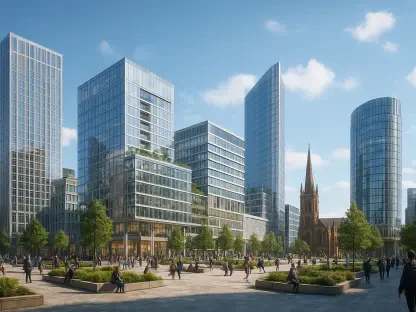

The traditional concept of property value has shifted significantly as the global climate crisis demands that modern skyscrapers serve as both shelter and sustainable infrastructure for a changing world while actively reducing their ecological footprint. For years, the real estate industry viewed Environmental, Social, and Governance (ESG) criteria as a secondary compliance checklist rather than a strategic asset. However, Robinsons Land Corporation (RLC) is turning this old-school perspective on its head by proving that a building’s worth is now measured as much by its carbon footprint as by its square footage.
Redefining the Blueprint for Sustainable Real Estate
The corporation transitioned from a traditional development model to becoming a primary architect of urban resilience. By embedding sustainability into the core operational framework, the organization demonstrated that the future of the Philippine skyline depends on a balance between profitability and planetary health. This shift represents a broader movement toward ethical investment where environmental stewardship becomes a competitive advantage.
Integrating these values allowed the company to redefine excellence in the built environment. Instead of focusing solely on architectural aesthetics, the focus moved toward creating structures that actively contribute to the health of their surroundings. This holistic approach ensured that every new project served a dual purpose: providing high-quality commercial space while mitigating the effects of urban heat islands and resource scarcity.
The Urgency of ESG in the Modern Urban Landscape
As urban centers face increasing pressure from climate change and rapid density growth, the role of large-scale developers has transitioned from simple construction to long-term stewardship. In the Philippines, where environmental vulnerability remains high, the need for disaster-resilient infrastructure is no longer a luxury but a fundamental requirement for business continuity. Recognizing this reality created a pathway for long-term value that ensures developments remain viable and attractive to international investors.
Modern investors now prioritize ethical governance and environmental impact over short-term financial gains. By moving beyond mere compliance, the organization established a resilient portfolio that can withstand market fluctuations and environmental shocks. This proactive stance helped mitigate risks associated with resource volatility and regulatory changes, positioning the company as a stable leader in an increasingly unpredictable global market.
Strategic Integration of Environmental and Social Pillars
The strategy focused on transforming a massive physical footprint into a network of sustainable hubs. This initiative became most visible through the aggressive rollout of rooftop solar installations across an extensive portfolio of shopping malls and the integration of renewable energy sources within office towers. Beyond energy, the company secured rigorous green building certifications while overhauling waste and water management systems to minimize resource depletion.
Simultaneously, the social pillar was fortified through the Robinsons Land Foundation, known as RLove. This entity managed reforestation projects, educational scholarships, and disaster relief efforts, ensuring that growth directly supported the well-being of local communities. By aligning corporate success with community resilience, the company fostered a symbiotic relationship that enhanced the social fabric of the regions where it operated.
Global Recognition for Transparent Governance
The commitment to these high standards resulted in significant international acclaim, as the firm recently secured two major honors at the 11th Global Good Governance Awards in Singapore. This achievement marked the fourth consecutive year of recognition for transparency and social responsibility. Kerwin Max S. Tan, the Chief Financial, Risk and Compliance Officer, highlighted that these accolades served as a testament to a mission of building communities that were both progressive and responsible.
External validation reinforced the idea that ethical governance was a fundamental component of modern business success. These awards provided a credible benchmark for other developers in the region to follow, proving that transparency in reporting and accountability in operations were essential for building trust. Such recognition also improved the company’s standing in global ESG indices, attracting a more diverse and ethically minded shareholder base.
Implementing a Framework for Future-Ready Urban Development
To achieve a resilient urban future, developers adopted a multi-faceted framework that synthesized green technology with robust social programs. This process involved prioritizing renewable energy investments to reduce operational costs and carbon emissions while simultaneously pursuing international certifications to ensure high efficiency. This systematic approach established a new standard for how private entities could lead the charge toward a low-carbon economy.
The establishment of dedicated charitable arms like RLove allowed for structured community engagement that moved beyond simple donations. This strategy integrated environmental and social goals with a culture of transparency, providing a practical roadmap for creating urban spaces capable of withstanding 21st-century challenges. These efforts proved that long-term resilience was achieved when companies looked beyond the horizon of immediate profit to the welfare of future generations.