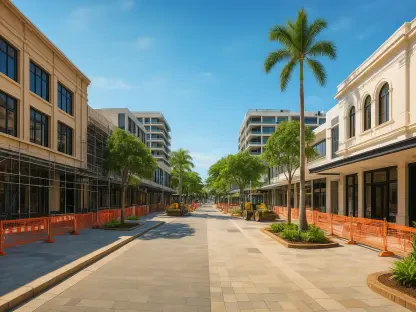

The use of lightweight materials in civil engineering projects not only accelerates delivery but also provides a sustainable solution to the acute shortage of skilled construction labor currently affecting the Hong Kong region. Traditional construction methods are increasingly viewed as outdated in a landscape where speed and precision are paramount for maintaining global competitiveness. The city’s transition into a modern era of building is defined by the strategic implementation of Low Density Engineered Cementitious Composites, which offer a unique blend of structural integrity and significantly reduced weight. By focusing on these high-performance materials, the local government aims to circumvent the delays caused by an aging workforce and the logistical complexities of working within narrow urban corridors. The Building Technology Research Institute has become the primary driver for these changes, ensuring every new material undergoes rigorous testing before it is integrated.
Shap Pat Heung Interchange: a Blueprint for Cost-Efficient Infrastructure
The practical application of these new materials is best seen at the Shap Pat Heung Interchange, where LD-ECC was first used in a roadwork context. Instead of relying on traditional, labor-intensive reinforced concrete, the project utilized precast LD-ECC panels that serve as permanent formwork. This method significantly reduces the need for heavy machinery and scaffolding, making the construction process safer for an aging workforce while overcoming the physical constraints of Hong Kong’s dense urban landscape. The panels themselves are designed to be handled by smaller cranes, which is a critical advantage when working above existing traffic or in areas with limited ground space. Because the material is engineered to be lighter yet stronger than its traditional counterparts, it allows engineers to design structures that impose less stress on foundations. This pilot project has demonstrated that high-tech composites are ready for immediate use in the city’s infrastructure.
The shift to advanced composites has yielded impressive results in terms of both speed and financial efficiency. By bypassing traditional phases like steel reinforcement fixing and complex formwork installation, the pilot project achieved a 50% reduction in construction time. Furthermore, direct building costs dropped by 20%, suggesting that a wider adoption of these materials could save the regional construction industry over $3 billion annually while maintaining high quality standards. These savings represent a fundamental change in the economic viability of large-scale public works. When projects are completed faster, the disruption to the surrounding community is minimized, which carries its own set of indirect economic benefits. The reduction in labor hours also translates to lower insurance premiums and reduced safety risks on-site. As the industry moves forward, the focus remains on scaling these successes to include tunnels, bridges, and residential towers in the urban core.
Building Technology Research Institute: Standardizing the Future of Civil Engineering
Acting as a vital link between academic research and practical application, the BTRi oversees dozens of innovation projects while managing product accreditation. The institute is particularly focused on Modular Integrated Construction and ensuring that high-tech materials meet rigorous quality controls. By providing oversight and specialized expertise, the BTRi ensures that modern construction methods are scalable and reliable enough for major public works. To support the long-term adoption of lightweight composites, the institute is developing a formal regulatory framework scheduled for completion by 2027. This set of guidelines will establish clear performance specifications, testing protocols, and structural design standards for materials like LD-ECC. By formalizing these technical requirements, the government aims to mitigate safety risks and provide a consistent blueprint for engineers and contractors across the territory. This move marks a transition into a systematic, policy-driven approach.
The successful integration of these technologies required a significant shift in how stakeholders approached infrastructure life cycles. Engineers determined that the adoption of lightweight materials and automated AI benchmarks was the most effective path toward long-term sustainability. The industry eventually moved toward a model where data-driven decisions replaced traditional methods, leading to predictable project outcomes. Decision-makers prioritized the development of a unified regional supply chain within the Greater Bay Area, which stabilized material costs and optimized delivery schedules. To maintain this momentum, stakeholders focused on establishing a permanent talent pipeline for specialized material scientists and AI technicians. They also implemented real-time monitoring to track the structural health of new composites. These actions ensured that the infrastructure remained resilient against climate challenges. The city’s experience demonstrated that technological agility was essential for survival.