
The decaying remains of a 19th-century industrial site in New Britain Township are currently the center of a pivotal debate regarding the balance between historical preservation and modern urban density. Granite Creek Properties has introduced a conceptual sketch plan to revitalize the former pantaloon factory located at 5 New Galena Road, an ambitious project that seeks to convert the 7,500-square-foot relic into a boutique residential complex known as the Pantaloons Lofts. While municipal officials often celebrate the adaptive reuse of local landmarks, the specific logistical constraints of this aging property have triggered a sophisticated dialogue about public safety and neighborhood capacity. The proposed six-unit development represents more than just a renovation; it serves as a test case for how small suburban municipalities manage the transition of industrial heritage into high-density living spaces while ensuring that the infrastructure can sustain such a shift. This dialogue highlights the tension between maintaining the township’s unique industrial history and addressing the practical challenges of an aging site.
Architectural Vision and the Path to Preservation
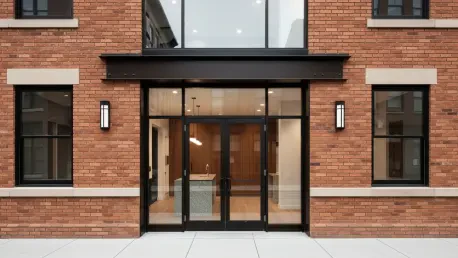
The redevelopment strategy for the Pantaloons Lofts centers on a “modern industrial” aesthetic that seeks to honor the building’s storied past while providing high-end contemporary living spaces. Developer Bill Chan and attorney Nate Fox have proposed a design that carves out six rental units, with each apartment averaging between 900 and 1,000 square feet of living space. By preserving the original exposed brick walls and hardwood flooring, the project aims to retain the “soul” of the structure, which has stood as a silent witness to the region’s industrial evolution for over a century. The interior upgrades, including granite countertops and premium appliances, are intended to attract professionals looking for unique housing options that differ from standard suburban apartment complexes. This approach relies on the idea that the character of the 19th-century architecture is the project’s primary asset, creating a niche market for adaptive reuse in an area that is predominantly residential.
Restoration is presented as a vital necessity for the building’s survival, as the current structure suffers from significant neglect and structural decay that threatens its long-term viability. Chan, who brings experience from similar historical restoration projects in nearby Perkasie and Hilltown, argued during recent meetings that residential conversion is the most realistic path for saving the edifice. At present, the factory is in a state of disrepair, with visible holes in the roof and a crumbling exterior that contributes to local blight. The developer maintains that without this type of private investment, the cost of stabilizing such a large, specialized building would be prohibitive for any other use. By shifting the property from a vacant industrial shell to a vibrant residential hub, the developers hope to provide a sustainable future for a piece of local history that would otherwise continue to deteriorate until it faced inevitable demolition or total structural collapse.
Navigating Parking Shortages and Zoning Constraints
A primary point of contention during the review process involves the adequacy of the proposed parking and the significant zoning relief required for such a compact lot. The current plan allocates 12 parking spaces for the six units, maintaining a two-to-one ratio that the developer believes is sufficient for a modern rental community. However, township supervisors and local residents expressed skepticism, noting that suburban lifestyles often involve multiple vehicles per household and frequent visitors. When questioned about where guests would park, the development team suggested using lease agreements to strictly limit the number of vehicles allowed per tenant. This proposal met with considerable pushback from officials who pointed out that such restrictions are difficult to enforce and that overflow parking would likely bleed into the private lots of neighboring businesses. The small lot size creates a fundamental conflict between the desired residential density and the physical space needed for modern vehicle storage.
The physical limitations of the site necessitate substantial zoning relief, as the project does not currently meet standard township requirements for setbacks, dimensional standards, or parking volume. Because the original factory was built long before modern zoning codes existed, the structure occupies a footprint that leaves very little room for contemporary infrastructure. Supervisors noted that granting such extensive variances could set a precedent for other redevelopment projects in the corridor, potentially leading to over-development in areas that lack the necessary support systems. The board’s hesitation stems from the concern that the “Pantaloons Lofts” may be attempting to fit too much activity into a site that was never intended for multi-family residential use. Consequently, the success of the application depends on the developer’s ability to prove that the proposed density will not negatively impact the surrounding properties or the general character of the New Britain Township community.
Safety Risks and Traffic Management at a Notorious Intersection
Public safety remains a top priority for township officials, particularly due to the building’s proximity to the intersection of New Galena Road and Hilltown Pike. This specific junction is notorious for its poor sight lines and has a documented history of traffic incidents, making the addition of residential traffic a sensitive issue for the local police department. Township Police Chief Richard Clowser confirmed that the intersection is problematic, specifically citing utility poles owned by PECO that obstruct visibility and cannot be easily relocated without massive infrastructure costs. Furthermore, the absence of sidewalks in the immediate vicinity creates a perilous environment for any future tenants who might wish to walk through the neighborhood. Officials are concerned that adding six households to this specific corner will exacerbate existing hazards, leading to a higher frequency of accidents in an area that is already considered a high-risk zone for drivers and pedestrians.
In response to these safety concerns, the developers argued that the transition to residential use would actually result in a “net gain” for the local traffic ecosystem. They posited that six apartments would generate significantly less traffic and fewer heavy vehicle movements than the building’s former industrial and commercial tenants. Historically, the site required frequent deliveries from large trucks and consistent employee shifts, both of which put more strain on the narrow roadways than a handful of residential commuters would. According to the development team, the “rush hour” associated with a small apartment building would be negligible when compared to the property’s historical baseline as an active factory or sign company. While this argument addresses the volume of traffic, it does not fully resolve the concerns regarding the specific geometry of the driveway entrance and the inherent dangers of the nearby intersection, leaving the board to weigh the theoretical reduction in trips against the practical reality of daily navigation.
Infrastructural Requirements and the Path Forward
Beyond the high-profile issues of traffic and parking, the project faces several practical challenges related to daily operations and compliance with modern safety codes. Residents and local service workers, including postal employees, voiced concerns regarding how mail trucks, trash collection vehicles, and emergency services would navigate the property’s limited turnaround space. There is a specific worry that the tight driveway might force larger vehicles to reverse into the busy roadway, creating a significant hazard. To address this, the developer discussed the potential installation of a cluster mailbox near the street to eliminate the need for mail trucks to enter the lot. Furthermore, the building requires extensive modernization to meet 21st-century safety standards, including the installation of a comprehensive fire sprinkler system and a new connection to public water services. These upgrades are non-negotiable requirements that add significant complexity and cost to the overall redevelopment effort.
The meeting concluded with a clear set of actionable steps for the developers, emphasizing that while the concept of adaptive reuse was appreciated, the execution required more refinement. The Board of Supervisors recommended that Granite Creek Properties prioritize a formal consultation with the fire marshal to address access and safety concerns before proceeding to the zoning hearing board. This feedback ensured that the developer understood the need for concrete solutions regarding emergency vehicle maneuvering and pedestrian safety. Ultimately, the future of the factory depends on whether the team can reconcile the architectural charm of a 19th-century relic with the rigorous logistical demands of modern suburban life. Moving forward, the project must demonstrate a comprehensive strategy for site management that mitigates the risks identified by the community. The board’s cautious approach established a framework for future historical projects, ensuring that preservation does not come at the expense of public welfare or operational efficiency.