
The Australian urban landscape is currently undergoing a radical transformation as developers prioritize carbon-neutral construction techniques to meet increasingly stringent climate targets and housing demands. Amidst a tightening market where efficiency and environmental responsibility have become non-negotiable, the developer MODEL has secured a landmark agreement with the industry giant Multiplex to redefine the build-to-rent sector in Melbourne. This collaboration, valued at approximately $330 million, involves two sophisticated residential developments in Abbotsford that are poised to set new global standards for sustainable urban living. By integrating cutting-edge materials with heritage conservation, the partnership addresses the dual challenge of providing high-density housing while significantly reducing the carbon footprint associated with traditional concrete and steel high-rises. These projects represent a significant shift toward a more circular economy in construction, where the life cycle of materials and the long-term energy performance of the building are prioritized from the very beginning of the design phase.
Structural Excellence: The Integration of Mass Timber and Heritage
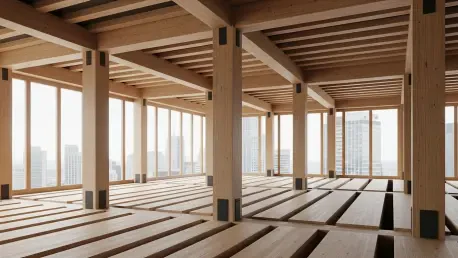
One of the most ambitious components of this development is the Johnston Street tower, which is slated to become the tallest mass timber residential building in the country. Standing as a testament to modern engineering, this 240-apartment structure utilizes cross-laminated timber and glulam beams to achieve structural integrity without the heavy emissions of conventional materials. The decision to use mass timber is not merely an aesthetic choice; it serves a vital functional purpose by drastically lowering embodied carbon and accelerating construction timelines through precision off-site manufacturing. This kit-of-parts approach allows for a level of quality control that was previously difficult to achieve in onsite high-rise builds. Furthermore, the natural insulating properties of wood contribute to the overall thermal efficiency of the building, ensuring that the finished tower offers a more comfortable and energy-efficient living environment for its future residents while maintaining a much smaller carbon footprint than traditional residential construction.
In contrast to the vertical timber expansion at Johnston Street, the Lithgow Street project adopts a philosophy of adaptive reuse by breathing new life into a historic Schweppes cordial factory. This development transforms a century-old industrial site into a modern community of 150 homes, demonstrating how existing urban fabric can be repurposed to meet contemporary needs. By retaining the original shell and structural elements, the project avoids the massive waste and energy expenditure typically required for demolition and new-build foundations. This preservation strategy respects the local architectural heritage of Abbotsford while integrating modern amenities and structural reinforcements to meet current safety and lifestyle standards. The marriage of old-world masonry with modern internal fit-outs creates a unique residential experience that emphasizes longevity and historical continuity, proving that the most sustainable building is often the one that already exists. This method significantly reduces the environmental impact of the development while enriching the local community culture.
Strategic Partnerships: Optimizing Performance Through Collaboration
The success of these complex projects relies heavily on a sophisticated Early Contractor Involvement model, which brought Multiplex into the planning process months before any ground was broken. This collaborative framework allowed for a thorough resolution of construction sequencing, cost planning, and carbon reduction strategies during the pre-construction phase. By leveraging the extensive experience of Multiplex in delivering high-performance timber and Passivhaus structures, the development team was able to mitigate the risks associated with market volatility and supply chain fluctuations. This phase focused on refining the modularization of building components, ensuring that every piece of the puzzle was optimized for rapid assembly and minimal onsite waste. The synergy between the developer’s vision and the builder’s technical expertise ensured that the project moved from a theoretical concept to a viable, high-quality residential asset that balances economic feasibility with environmental goals, serving as a model for future large-scale sustainable residential developments.
The engineering team achieved elite sustainability credentials by implementing 6 Star Green Star ratings and Certified Passivhaus standards across both Abbotsford locations. These buildings utilized high-performance thermal envelopes and all-electric infrastructure to minimize operational energy demands, effectively insulating residents from rising utility costs. This focus on durability and resident experience ensured that the structures remained valuable assets within the long-term build-to-rent portfolio. By prioritizing passive design principles, the developers reduced the need for active heating and cooling, which improved indoor air quality and acoustic performance. These projects demonstrated that integrating sustainable design with industrialized construction methods provided a scalable solution for the housing sector. The final delivery of these towers established a blueprint for future urban developments, proving that high-density residential projects could successfully prioritize environmental stewardship while maintaining commercial viability in a competitive market.