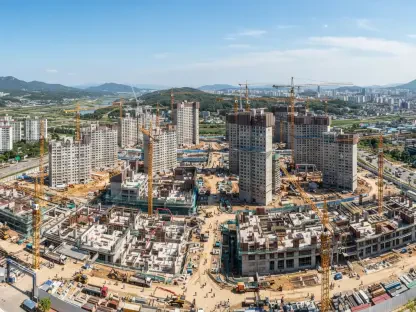

The global construction landscape is currently grappling with a sudden and violent fracture in project pipelines as geopolitical instability overrides domestic economic policy. According to recent metrics from the March Project Stress Index, the sector has experienced a sharp 4.2% month-over-month increase in construction stress—a vital indicator that monitors paused, delayed, or abandoned developments. This abrupt “snap back” follows a deceptive window of relative calm, yet the underlying figures reveal a sobering new reality: project abandonments have surged by a staggering 22.8%. This analysis explores how international conflict has transitioned from a distant diplomatic concern to a primary engine of domestic economic strain, forcing developers to make immediate, difficult decisions regarding the financial viability of their long-term investments.
Geopolitical Turmoil and the Sudden Fracturing of Project Pipelines
To grasp the magnitude of the current crisis, one must evaluate the volatile landscape leading into the present quarter. The industry spent much of the previous year navigating the fallout of aggressive interest rate hikes and domestic trade tariffs that pushed “on-hold” project statuses to record highs. While the market showed signs of stabilization at the start of the current year, the foundational pillars of construction economics—specifically predictable material costs and reliable energy prices—were fundamentally upended by the outbreak of war with Iran. Historically, construction stress is a slow-moving tide; however, the current spike represents a rare shift where geopolitical events have superseded domestic fiscal policy as the most significant threat to industry health.
From Interest Rate Hikes to Global Supply Chain Shocks
The developing conflict has targeted the very heart of global trade: the Strait of Hormuz. As this critical maritime corridor faces severe disruption, the chain reaction has been immediate and punishing for the construction sector. Oil prices have spiked, directly impacting the manufacturing and transportation of essential building materials like steel, concrete, and asphalt. This energy crisis has intensified an already difficult situation where input costs were rising at an annualized rate of 12.6% earlier this year. For many developers, the sudden inability to secure affordable fuel or guarantee the delivery of goods has turned once-profitable ventures into massive financial liabilities, leading to the current wave of permanent project exits.
Maritime Disruptions and the Energy Crisis
A nuanced analysis of recent data reveals that the private sector is bearing the brunt of this international instability. There is a stark contrast between niche, high-demand markets and the broader commercial construction world. For instance, the data center boom remains a resilient outlier, fueled by long-term digital infrastructure needs and pre-secured funding. However, when these specialized projects are excluded, commercial planning has plummeted by 12.7% compared to the same period last year. This suggests that without the “shield” of essential tech infrastructure, private developers are increasingly likely to scrap projects entirely rather than attempt to navigate the escalating costs of labor and materials in a war-time economy.
The Divergence of Private Sector Resilience
An overlooked aspect of the current market data is the fundamental shift in how “stress” is manifested within project lifecycles. Interestingly, while permanent abandonments are at an all-time high, other forms of stress, such as delayed bids and “on-hold” statuses, have actually seen slight declines. Private on-hold projects dropped by nearly 80% year-over-year. While this might initially appear to be a positive trend, economists clarify that it represents a “clearing of the deck.” Rather than keeping projects in a state of perpetual delay—as was common during the interest rate hikes of the previous year—developers are now opting for clean breaks. The uncertainty of a prolonged Middle Eastern conflict has made “waiting it out” a high-risk strategy, leading to a permanent departure from the market for many firms.
Reevaluating Project Status: From Delays to Departures
The future of the industry will be shaped by how quickly supply chains can adapt to a world where Middle Eastern stability is no longer a guarantee. We are seeing a pivot toward more localized sourcing and a renewed focus on energy-efficient construction methods to mitigate the impact of fuel price volatility. Furthermore, technological innovations in predictive analytics are becoming essential for developers to model “war-risk” scenarios before breaking ground. Predictions suggest that until the geopolitical landscape stabilizes, there may be a regulatory shift toward incentivizing essential infrastructure over speculative commercial builds, as governments seek to shore up domestic resilience against international shocks.
Navigating the High-Risk Environment of Late 2026
The combination of high interest rates and geopolitical supply chain shocks has created a uniquely hostile environment for private investment. For businesses and professionals, the recommended strategy is one of extreme caution and rigorous financial vetting. Best practices now dictate that project viability must be assessed using “worst-case” energy price models. For consumers and investors, this means being prepared for a continued slowdown in commercial availability. Applying these insights requires a shift in mindset: the industry is no longer in a “recovery” phase from previous years but is instead navigating a new era where international relations are as critical to a project’s success as the local labor market.
Strategic Adaptations for a Volatile Market
The 22.8% surge in construction abandonments served as a clear indicator of the profound impact of the Iran war on domestic industry. The shift from domestic policy concerns to international geopolitical risks created a landscape defined by volatility and hard choices. While the industry was technically less stressed than during the heights of the 2025 shutdown, the permanence of project abandonments suggested a deeper, more structural challenge to growth. As oil prices fluctuated and trade routes remained threatened, the construction sector prioritized agility and risk mitigation. The ability to forecast and adapt to global events became the primary requirement for survival in an increasingly interconnected and unpredictable world.