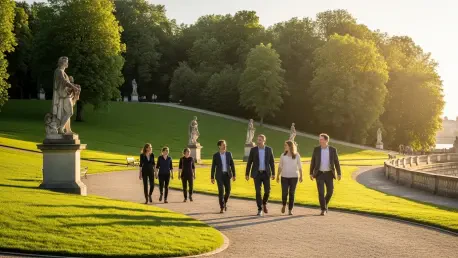

The lush, rolling greenery of the 29-acre Quarry Park in Shrewsbury has served as a central pillar of civic life for generations, yet maintaining such a storied landscape requires a sophisticated blend of modern technology and historical reverence. To address the mounting pressures of urban growth and environmental change, the Shrewsbury Town Council officially appointed a specialized multi-disciplinary team to spearhead a comprehensive conservation management plan. This team, led by the renowned landscape architecture firm Camlins, includes experts from Berrys, BCHN Architects, Salopian Consultancy, Hightopp Creations, and f.r.a. These specialists bring a diverse range of skills covering arboriculture, ecology, heritage, and wayfinding to the table. By uniting these distinct fields, the project aimed to create a roadmap that preserves the park’s status as a premier destination for local residents and national visitors alike, ensuring that its cultural and natural assets are protected against the stresses of high-traffic modern usage while maintaining the site’s historical soul and ecological diversity.
The Strategic Framework: Integrating Heritage and Functionality
The primary objective of this new initiative was to establish a resilient framework that allowed the park to navigate evolving environmental and operational challenges without losing its unique character. Integrating historical preservation with contemporary requirements meant that the team had to account for both large-scale public events and quiet daily recreation. This delicate balance necessitated a reliance on deep local knowledge, which the consultant team prioritized to ensure that the proposed roadmap remained both realistic and ambitious. By aligning the project with broader town development goals, the planners aimed to treat the park not as an isolated relic but as a living, breathing component of the city’s infrastructure. Arboricultural assessments and ecological surveys provided the data necessary to protect the ancient tree canopy while accommodating the foot traffic generated by thousands of visitors who frequent the banks of the River Severn. The resulting plan functioned as a cohesive strategy to safeguard the environment while enhancing the overall experience for every guest.
A Collaborative Model: Future-Proofing Urban Heritage
The consensus among project stakeholders indicated that a sensitive, highly collaborative approach was the only viable path forward for such a vital public asset. Significant community engagement played a central role in the development process, as officials like Councillor Rob Wilson emphasized the importance of preserving the site for future generations through transparent public dialogue. Paul Shirley Smith of Camlins highlighted how understanding the cultural significance of the space allowed the team to craft a unified strategy that successfully balanced heritage with modern functionality. These efforts provided a clear set of actionable steps, such as implementing advanced soil management techniques and revitalizing historic pathways with sustainable materials. The project demonstrated that long-term sustainability was achievable when local expertise was paired with specialized technical knowledge. This initiative ultimately redefined how urban green spaces could remain relevant, ensuring the park remained a resilient sanctuary for many years to come.