
Because the region’s primary hospitals are located north of the canal, any closure of the bridge presents a life-safety risk that necessitates robust public safety contingencies. The Portage Lake Lift Bridge stands as the most critical infrastructure link in Michigan’s Keweenaw Peninsula, carrying over 25,000 vehicles daily between the cities of Houghton and Hancock. This traffic volume is remarkably high, more than doubling the daily load of the famous Mackinac Bridge, making the lift bridge the lifeblood of regional commerce, tourism, and emergency services. To navigate the technical hurdles of such a vital project, MDOT has adopted the Construction Manager/General Contractor procurement model. By bringing the contractor, Zenith Tech, into the design phase early, the department treats the bridge as a complex moving machine rather than a static piece of pavement. This collaborative philosophy allows engineers and builders to identify mechanical risks before any physical work begins in the 2027 season.
Strategic Engineering Approaches: Navigating Complex Logistics
Comparative Analysis: The In-Place Repair Strategy
One potential path forward is the In-Place Repair Method, which focuses on a piece-by-piece replacement of the bridge’s internal components over several years. This strategy would see much of the heavy lifting occur during the winter months when the shipping season is dormant and the bridge does not need to lift for boats. While this approach is less disruptive to immediate traffic flow by avoiding a total shutdown, it would likely result in multiple seasons of single-lane closures that could test the patience of local commuters. If selected, this long-term strategy could see preliminary work beginning as early as the late summer of 2027. The engineering focus under this model remains on the longevity of the mechanical sheaves and cables, ensuring they are swapped out without compromising the structural integrity of the lifting towers. It is a slow, methodical approach that prioritizes continuous, albeit restricted, access over the waterway throughout the entire multi-year construction cycle.
Structural Innovation: The Floating Span Method
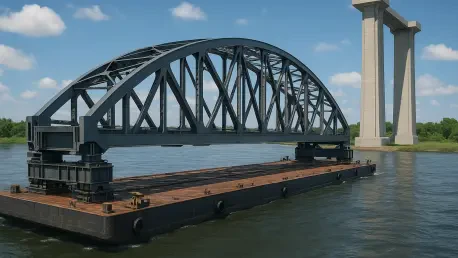
The more aggressive alternative being considered is the Floating Span Method, which involves pre-building the entire 260-foot central section off-site. Under this plan, the massive 4.5-million-pound structure would be floated into place on barges, mirroring the bridge’s original construction technique from decades ago. This method offers the advantage of a significantly shorter overall construction timeline, but it comes with a major catch: the bridge would have to be closed entirely during the swap. This approach would likely push the start of the main construction phase to 2028, requiring a brief but total severance of the Houghton-Hancock connection. Engineers are currently evaluating the hydrodynamic stability of the barges and the precision required to align the new span with the existing towers. While the logistical footprint is larger, the benefit of a brand-new, factory-tested span could reduce future maintenance costs significantly compared to an in-place refurbishment that relies on older structural joints.
Strengthening Urban Resilience: Infrastructure and Traffic Flow
Urban Core Modifications: Establishing Traffic Relief Valves
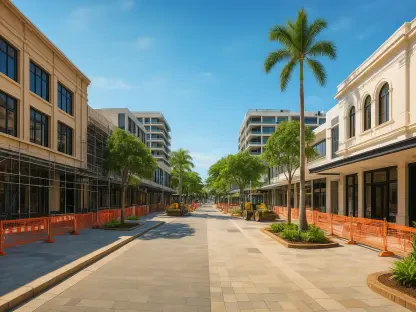
Recognizing that bridge work will inevitably cause congestion, MDOT has already begun auxiliary roadwork in the downtown districts of Houghton and Hancock to act as a relief valve. Since 2024, crews have been modifying Montezuma Avenue and Bridge Street to improve how traffic moves through the urban core. By creating new turn lanes and loops, the project will allow southbound US 41 traffic to pivot more easily, preventing motorists from having to travel long distances just to change direction. These adjustments are designed to give the local street grid maximum flexibility before the main bridge project introduces heavy restrictions. The goal is to ensure that local businesses remain accessible even when the primary thoroughfare is operating at reduced capacity. Urban planners have focused on these perimeter improvements to prevent the gridlock that often occurs when major transit nodes are constricted. This forward-thinking strategy acknowledges that the success of the bridge project depends on the resilience of the local streets.
Dynamic Traffic Management: Temporary Signalization Systems
Further enhancements to the traffic flow will include the installation of temporary signals at key intersections like Sheldon Avenue and Bridge Street, scheduled for the summer of 2027. These updates are intended to manage the anticipated bottlenecks and ensure that local residents can navigate their towns even when bridge capacity is reduced. By refining the surrounding infrastructure years in advance, MDOT hopes to minimize the economic and personal frustration of the thousands of commuters who rely on this crossing every day. The signal timing will be dynamically adjusted based on real-time traffic data, allowing for prioritized movement during peak morning and afternoon hours. This technological integration is a cornerstone of the mitigation strategy, moving beyond simple signage to active traffic management. Additionally, these temporary installations will include improved pedestrian crossings to ensure that the cities remain walkable despite the influx of heavy construction equipment and rerouted vehicles during the most intensive phases.
Prioritizing Community Safety: Reliability and Accessibility
Emergency Medical Logistics: Ensuring Life-Safety Continuity
The most sensitive aspect of the reconstruction planning involves maintaining access to emergency medical services, as the region’s primary hospitals are located on the north side of the canal. For residents on the south side in Houghton, a bridge closure represents a significant life-safety risk that MDOT must mitigate with precision. To address this, the department is coordinating with first responders to develop robust contingency plans. One proposed solution includes stationing a medical helicopter on the south side of the water to ensure that trauma patients can be airlifted to facilities if the bridge is impassable. This aerial redundancy is paired with the placement of secondary ambulance crews and fire suppression units on both sides of the canal. Such measures are vital for maintaining the standard of care during the construction window, especially if the floating span method is chosen. Public safety officials are currently conducting drills to test the efficiency of these emergency protocols.
Alternative Public Transit: Ferry and Pontoon Solutions
Beyond emergency services, MDOT is also exploring alternative transit options for the general public in the event of a total bridge outage. Depending on the duration of the closure required by the floating span method, the department may implement a temporary ferry service or even a floating pontoon bridge to maintain a link. While the final decision on these measures depends on which construction method is chosen, MDOT has committed to a transparent planning process that involves local stakeholders. Ferry operations would require the construction of temporary docking facilities on both the Houghton and Hancock shorelines, a logistical feat in itself. Alternatively, a pontoon bridge could provide a limited crossing for light vehicles and pedestrians, though it would likely be restricted to specific hours to allow for water traffic. These contingency models are being refined through rigorous feasibility studies, ensuring that if the bridge goes dark, the community does not stop moving. The emphasis remains on providing reliable transit.
Regional Future: Final Safety Protocols and Implementation
The preliminary planning stages for the Portage Lake Lift Bridge replacement successfully established a baseline for regional safety and logistical efficiency. As the community looked toward the next phase of development, the finalization of the project timeline by the summer of 2027 remained a critical milestone for residents. Stakeholders prepared for localized shifts in commerce by diversifying delivery routes and adjusting operational hours to avoid peak construction windows. This early collaboration between engineers and the public established a blueprint for future infrastructure projects across the state. Moving forward, the focus shifted to digital literacy regarding real-time traffic apps and notification systems, which served as the primary communication tools during active work. Investing in remote work capabilities further alleviated pressure on the physical crossing during the most intensive weeks of the floating span swap. By treating the bridge as a shared responsibility, the region ensured its vital connection remained resilient.