
The reactivation of the Great Charles Street site after more than seven decades of stagnation serves as a definitive bellwether for the maturation of Birmingham’s institutional residential market and its transition toward a dense, community-centric urban model. This landmark regeneration project, a collaboration between Moda Living and Apache Capital, marks the official conclusion of an era where a prime urban void lay dormant. By converting a neglected space into a premier build-to-rent neighborhood, the development promises to do more than just provide housing. It aims to bridge the gap between historic craftsmanship and modern luxury, creating a social and architectural anchor in the city’s famed Jewellery Quarter. As residential reservations progress, the project stands as a testament to the growing status of the region as a hub for sophisticated urban design.
From Dormant Ground to Architectural Landmark: The History of the Site
To understand the significance of Makers Place, one must look at the long-standing stagnation of the Great Charles Street site which, for seventy years, remained undeveloped. This “gateway” location served as a physical and psychological gap between the historic low-rise workshops of the Jewellery Quarter and the gleaming corporate towers of the Colmore Business District. Past economic shifts and industrial declines left this area underutilized, despite its proximity to the economic engine of the city. The transformation of this site represents a major victory for the planning and development sectors, finally healing a long-standing fracture in the urban fabric and signaling a departure from decades of inactivity toward a future of dense, high-quality residential growth.
Bridging Heritage and Modernity Through Design and Scale
Harmonizing the Skyline with Contextual Architecture
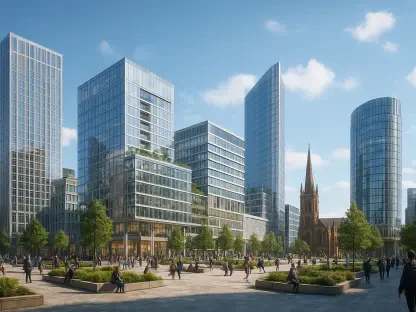
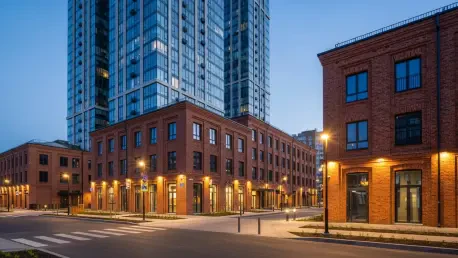
The architectural vision for the project, led by Ryder Architecture, is defined by a tiered approach that respects the past while embracing a modern aesthetic. Spanning three buildings that range from five to 39 stories, the project carefully balances scale to ensure it does not overwhelm the sensitive historic surroundings. The lower-rise structures utilize intricate brickwork, a direct nod to the red-brick heritage and artisanal history of the Jewellery Quarter. Conversely, the taller towers provide a contemporary profile that complements the evolving skyline of Birmingham. This dual identity prevents the development from feeling like an isolated enclave, ensuring it acts as a visual and physical transition between industrial roots and the contemporary financial district.
Empowering the Local Economy Through Social Value
Beyond its physical presence, the development served as a massive economic catalyst during its primary construction phase. The contracting team focused heavily on local employment, with nearly 800 workers sourced from within an 11-mile radius. This project prioritized social mobility by providing opportunities for 185 formerly long-term unemployed individuals and reaching out to marginalized groups, including care leavers and ex-military personnel. By integrating over 100 young people and dozens of apprentices into the workforce, the development successfully translated capital investment into tangible skill development and professional growth for the local community. This focus on human capital ensures that the benefits of urban renewal extend far beyond the property lines.
Cultivating Community with the “Makers” Philosophy
The development distinguishes itself from traditional rental properties through its deep-rooted connection to local culture. The “Makers” initiative brings five local independent creatives—ranging from poets and chefs to sommeliers and entrepreneurs—into the fold to curate the resident experience. By hosting culinary workshops, creative pop-ups, and curated auditory atmospheres, these local partners ensure that the spirit of the Jewellery Quarter permeates the building. This strategy moves the needle from simple property management to genuine community building, fostering a sense of belonging that is often missing in high-density urban developments. It reflects a shift in market demand where residents seek more than four walls; they seek an identity.
The Future of Build-to-Rent: Trends and Urban Connectivity
The project is a bellwether for the future of the build-to-rent sector in the United Kingdom. There is a clear shift toward lifestyle-first developments where amenities like 24-hour fitness studios, co-working spaces, and sky lounges are no longer luxuries but standard expectations for the modern professional. Furthermore, the project highlights the increasing importance of transit-oriented development in reducing environmental impact. Situated within walking distance of major rail hubs like Snow Hill and New Street stations, the neighborhood aligns with global trends of reducing car dependency in favor of regional connectivity. As the city continues to attract professional talent, integrated hubs like this set the standard for managing population growth and workforce housing.
Key Takeaways for Urban Stakeholders and Residents
The success of this regeneration offers several lessons for developers, city planners, and prospective tenants alike. For the public sector, it demonstrated how public-private partnerships can effectively unlock gateway sites that have been stagnant for generations through shared vision and rigorous planning. For developers, the project emphasized that differentiation in a competitive market comes from a commitment to local character and social impact rather than just maximizing square footage. Residents, meanwhile, looked to this project as a model for how modern living can be integrated with heritage. This approach offers a lifestyle that balances professional convenience with a rich, localized cultural experience, proving that high-density living can still feel personal and authentic.
A Lasting Impact on Birmingham’s Identity
Makers Place functioned as more than a residential complex; it acted as a catalyst for the continued maturation of the urban landscape. By honoring the craftsmanship of the Jewellery Quarter while providing the density required for a modern city, the project successfully bridged two distinct eras of local history. As the development welcomed its first wave of residents, it reinforced the reputation of the city as a forward-thinking metropolis that valued both its architectural legacy and its social future. The transformation of this long-neglected site marked a definitive turning point, proving that thoughtful, design-led regeneration revitalized the heart of the city. Future developments should prioritize this blend of social value and contextual design to ensure long-term urban resilience and community cohesion.