
The silent transformation of the nation’s coastline is finally gaining momentum as the U.S. Coast Guard begins a staggering $612 million infrastructure overhaul. This massive financial injection marks a departure from the “patch-and-repair” mentality that has characterized federal facility management for decades. Instead, the service is pursuing a holistic modernization strategy designed to ensure that shore-side support can keep pace with the sophisticated demands of 21st-century maritime security.
A New Era for Maritime Readiness: The Strategic Pivot in Coast Guard Infrastructure
For years, the U.S. Coast Guard has operated out of facilities that were often more historic than functional, leading to a mounting backlog of deferred maintenance. This current $612 million investment represents a strategic pivot toward proactive modernization, moving beyond the limitations of aging 20th-century assets. Industry analysts suggest that this shift is not just about aesthetics; it is a critical necessity for maintaining operational readiness in an increasingly volatile global maritime environment where technology and speed are paramount.
The modernization efforts are concentrated on two vital hubs: Training Center (TRACEN) Cape May in New Jersey and Base Charleston in South Carolina. By focusing on these specific locations, the service is attempting to strike a balance between personnel development and fleet logistics. While Cape May serves as the forge where new recruits are shaped, Charleston provides the heavy-duty support required for the next generation of cutters. This dual-pronged approach ensures that the “people” and “platforms” of the Coast Guard are equally supported by modern infrastructure.
Strengthening the Foundation of Domestic Maritime Security
Engineering a Resilient Workforce: Scaling Recruit Capacity at TRACEN Cape May
At the heart of the personnel surge is a $400 million overhaul of TRACEN Cape May, aimed at increasing recruit throughput from 5,500 to 8,000 annually by 2030. This expansion is essential for a service facing evolving threats that require a larger, more technically proficient workforce. Military planners emphasize that the physical environment in which a recruit is trained directly impacts their early professional development, making the replacement of 1920s-era structures a top priority for leadership.
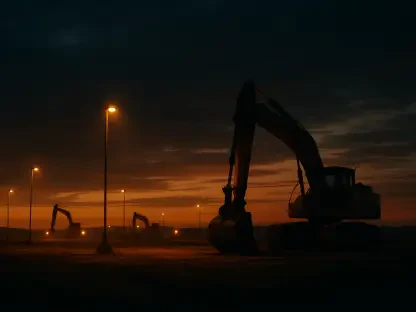
Modernizing this training ground involves the construction of climate-controlled facilities and 21st-century barracks that offer a more conducive environment for learning and recovery. However, the logistical challenge of maintaining active training cycles while navigating the largest shore-side construction project in the service’s history is significant. Engineers must coordinate complex demolition and construction schedules to ensure that the pipeline of new sailors remains uninterrupted despite the ongoing heavy machinery and site disruptions.
Pier Mike and the Future of Fleet Support: Operational Upgrades at Base Charleston
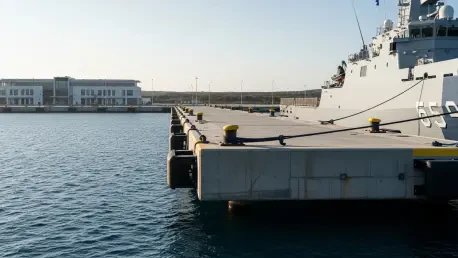
In South Carolina, the $212 million investment into Base Charleston focuses on the physical hardware of maritime power. The centerpiece of this effort is the reconstruction of Pier Mike, a high-capacity structure designed to homeport the upcoming fleet of offshore patrol cutters. Unlike the legacy piers they replace, these new structures are built with the versatility to accommodate various vessel classes, including national security cutters, ensuring the base remains a flexible asset for decades to come.
Beyond the waterfront, the investment prioritizes the human element of fleet support through a new 30,000-square-foot healthcare facility. Healthcare experts within the military community argue that integrated medical and dental readiness is a force multiplier, reducing the time personnel spend away from their units for routine care. Furthermore, the implementation of modernized entry control points and visitor processing centers will tighten security while streamlining the movement of authorized personnel and equipment into the high-security zone.
The Design-Build Revolution: Streamlining Federal Procurement for Speed and Quality
The Coast Guard is increasingly leaning on the “multiple award” framework to accelerate these massive projects, partnering with established firms like Whiting-Turner and Brasfield & Gorrie. This design-build model integrates the design and construction phases, theoretically reducing the administrative bottlenecks that often plague federal procurement. By allowing contractors to contribute their expertise early in the planning process, the government can achieve higher quality results in a shorter timeframe compared to traditional methods.
However, some procurement specialists raise concerns about the concentration of high-stakes military projects within a small group of large-scale contractors. While these firms offer the stability and experience required for half-billion-dollar contracts, over-reliance on a few players could potentially stifle competition in the long run. Balancing the need for speed with the health of the broader industrial base remains a complex challenge for federal agencies managing long-term infrastructure modernization.
Quality of Life as a Mission Objective: Linking Infrastructure to Retention
There is a growing consensus among military leaders that infrastructure serves as a silent recruiter and a powerful retention tool. Upgraded galleys, fitness tracks, and modern housing are no longer viewed as luxuries but as essential components of mental and physical readiness. When personnel live and work in environments that reflect the value of their service, morale tends to increase, which is a critical factor in a competitive and tightening labor market.
Comparative analyses of modern military facilities show a strong correlation between high-quality shore infrastructure and long-term career commitment. As the Coast Guard moves toward a more sustainable and technologically integrated campus model, the focus is shifting toward creating “communities” rather than just “bases.” This approach considers the daily lived experience of the service member, recognizing that a sailor who is well-fed, well-housed, and physically fit is far better prepared for the rigors of life at sea.
Future-Proofing Federal Assets: Strategic Takeaways for Large-Scale Modernization
Managing a capital injection of this magnitude requires a sophisticated approach to project oversight that prevents the disruption of ongoing missions. One key strategy involves the integration of private-sector project management expertise to navigate the complexities of environmental regulations and supply chain fluctuations. Agencies that successfully modernize at this scale often prioritize clear communication between the operational side of the house and the construction teams to ensure that mission requirements always drive the design process.
Moreover, integrating wellness and safety features into high-security military construction projects is emerging as a best practice for future developments. Features such as advanced ventilation in fire stations and ergonomic designs in training halls represent a forward-thinking approach to personnel safety. These details may seem minor in a $612 million budget, but they provide the long-term durability and functionality needed to protect the government’s most valuable asset: the people who operate the equipment.
Securing the Horizon: The Long-Term Impact of a Transformed Shore Infrastructure
The historic investment into East Coast facilities successfully bridged the gap between a legacy of aging infrastructure and the rigorous operational demands of the future. By transforming “bricks and mortar” into a more agile and prepared force, the Coast Guard demonstrated that shore-side readiness is just as critical as the ships that patrol the deep. This transition provided the necessary foundation for the service to meet its global mandates with a newfound level of efficiency and resilience.
Looking ahead, federal agencies might consider how these modernization principles can be applied to other aging infrastructure sectors to ensure national security remains robust. The focus on sustainable design and personnel-centric facilities set a new standard for military construction that will likely influence procurement strategies for the next generation. Ultimately, the successful execution of these projects proved that strategic investment in the physical environment is a direct investment in the success of the mission itself.