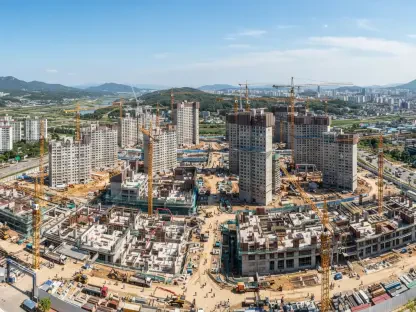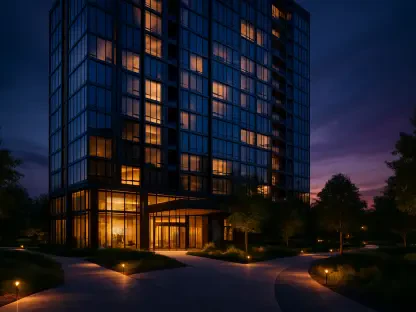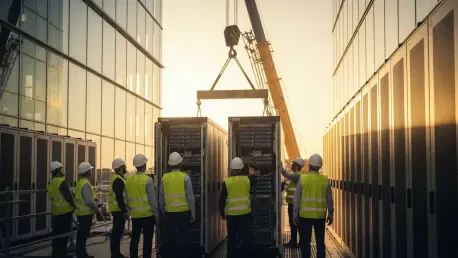

The American construction landscape is currently undergoing a radical transformation as the traditional pillars of the industry face a cooling climate while high-tech developments race toward unprecedented heights. As of March 2026, the nonresidential construction sector has entered a period of significant transition, marked by a month-to-month contraction of 0.2% in total spending. This marginal dip serves as a indicator for a broader slowdown that has begun to affect both public and private investment across the nation. However, these aggregate figures do not tell the full story, as they mask a profound and high-stakes divergence within the marketplace.
Traditional building projects are clearly losing their previous momentum, yet a specialized niche of digital infrastructure is expanding at a historic pace. This widening gap between struggling conventional segments and the meteoric rise of data centers provides a comprehensive look at the forces currently reshaping the American skyline. The sector is moving away from a generalized growth model and toward a more fragmented reality where the ability to support the digital economy determines financial success. While the top-line data suggests a cooling market, the underlying activity reveals an industry in the midst of a fundamental pivot toward technological utility.
The Historical Context of a Fragmenting Market
Understanding the current slump requires a look at the landscape of the previous few years, which were characterized by aggressive post-pandemic stimulus and a massive push for domestic manufacturing. The industry reached a peak during that era that proved difficult to sustain as the initial wave of federal funding began to subside. Historically, nonresidential construction relied on broad-based growth across office buildings, retail spaces, and industrial plants. However, as interest rates remained elevated and economic uncertainty persisted throughout the early portion of this decade, the momentum in these traditional areas started to fade significantly.
The manufacturing sector, once the primary engine of the construction world, has faced a particularly sharp correction, with expenditures dropping 17% over the last year. This shift marks the end of an era of general expansion and the beginning of a more specialized market where success is increasingly tied to technological needs rather than general commercial demand. The cooling of these massive industrial projects has left a void that general contractors are struggling to fill. This historical transition highlights why the current market feels so different from the broad-based recoveries of the past, as capital is now being deployed with surgical precision rather than widespread abundance.
Analyzing the Divergent Paths of Nonresidential Spending
The Spreading Weakness in Traditional Infrastructure
The downturn that began in manufacturing has now permeated the wider market, affecting nine out of sixteen nonresidential subcategories. General commercial construction, alongside highway and street projects, reported noticeable spending decreases in March. This spreading weakness is particularly evident in the private sector, where construction spending has fallen by more than 2% on a year-over-year basis. The decline suggests that businesses are becoming increasingly cautious with capital expenditures for physical storefronts and traditional office environments that no longer command the same utility they once did.
The Unprecedented Surge in Digital Infrastructure
In stark contrast to the surrounding gloom, the data center industry has emerged as a powerhouse of growth and a primary source of industry momentum. Spending on data center construction skyrocketed by a staggering 34.3% compared to the previous year, proving that the digital revolution shows no signs of slowing. This is not merely a moderate increase; it is an aggressive expansion driven by the global hunger for computing power and the ongoing integration of artificial intelligence into every facet of modern business. This surge has created a vital floor for the construction market, preventing a more severe total collapse in overall spending figures.
The Ripple Effects on Power and Energy Requirements
The massive scale of data center development has necessitated a parallel expansion in utility infrastructure to keep up with demand. Because these facilities require immense amounts of electricity for processing and cooling, power construction projects saw a 4.6% increase over previous levels. This connection highlights a complexity in the market: digital infrastructure cannot be built without simultaneously rebuilding the national energy grid. Regional differences are becoming more pronounced as areas with reliable access to high-voltage power lines become the new hubs for construction activity, often at the expense of traditional logistical centers.
Emerging Trends and the Road to Future Recovery
Looking ahead, the industry is poised for further evolution as technological and regulatory changes take hold across the country. Despite the current slump in overall spending, a sense of cautious optimism persists among contractors and industry leaders who see the current dip as a temporary realignment. This positive outlook is fueled by the expectation that the demand for digital infrastructure is still in its early stages of a multi-year cycle. Furthermore, federal initiatives aimed at modernizing the national power grid are expected to provide long-term stability and a steady stream of work for those with the right expertise.
The industry is likely to see a permanent shift where construction firms reorganize their business models to favor specialized technical proficiency over general contracting. The future of the industry is increasingly defined by smart construction, which involves projects that integrate energy efficiency and high-density cooling from the ground up. As the regulatory environment shifts to favor greener buildings, those who can marry data center needs with sustainable energy solutions will find themselves at the forefront of the next growth wave. This transition period is essentially a culling process that favors firms capable of handling the extreme technical requirements of the digital age.
Strategic Responses to a Concentrated Growth Environment
For businesses and professionals operating in this environment, the key to survival is rapid adaptation to the new market realities. The current data suggests that growth is concentrated in a narrow set of categories, meaning that firms must pivot their skill sets to remain competitive in a landscape where traditional projects are scarce. Contractors are increasingly investing in specialized training for high-voltage electrical work and complex HVAC systems specifically required by data centers. By shifting focus toward these high-growth areas, firms can insulate themselves from the volatility seen in the retail and general commercial sectors.
Additionally, developers are finding success by diversifying their portfolios to include hybrid projects that combine traditional spaces with modern tech infrastructure. Understanding that the current market favors specialized infrastructure over general commercial projects allows stakeholders to better align their investments with the sectors that are actually receiving capital. This strategic realignment is not just about changing what is built, but how it is built, with an emphasis on speed-to-market for digital facilities. Those who master the logistics of rapid data center deployment are securing the lion’s share of the available contracts in the current fiscal climate.
A New Chapter for the Construction Industry
The construction landscape of 2026 stood as a testament to a sector in flux, where traditional methods of growth gave way to a more tech-centric reality. While the 0.2% decline in overall spending highlighted real challenges for the broader economy, the 34.3% explosion in data center investment signaled a profound structural shift that defined the era. This trend was not a temporary fluctuation but a fundamental realignment of what society chose to build and value. As traditional manufacturing and commercial sectors cooled, the rise of the data center ensured that the construction industry remained a vital component of the national economy. Navigating this reality required a recognition that the future of construction became increasingly digital, powered by data, and anchored by the energy grid. Stakeholders who embraced this specialization found new paths to profitability despite the broader nonresidential slump.