
Leading construction firms are now deploying digital twins to provide hyperscale clients with real-time virtual replicas for post-construction maintenance and power simulations. This technological leap comes at a time when the global construction industry is navigating an unprecedented surge in demand for data center infrastructure, primarily driven by the explosive growth of artificial intelligence and the massive computing power required for large language models. As tech giants accelerate their efforts to deploy next-generation digital capabilities, traditional builders are finding that the old ways of managing projects are no longer sufficient to meet the scale or speed required by the market. The current environment has necessitated a fundamental transformation in how megaprojects are conceptualized and executed, moving away from siloed operations toward a more holistic, tech-driven approach. Success in this high-stakes landscape requires more than just a passing familiarity with new software; it demands a radical rethinking of onsite logistics, human capital management, and the very nature of the relationship between owners and contractors. By merging sophisticated digital planning with industrial-grade physical execution, the industry is setting a new benchmark for what is possible in modern engineering.
Managing Global Velocity and Volume
Synchronized Development: Aligning Building with Silicon Cycles
The primary force driving the current transformation is the rise of hyperscalers—massive entities like Amazon, Google, and Meta—whose operational timelines are strictly dictated by the rapid cycles of semiconductor development. In the current market, the speed-to-market has become the ultimate priority, often outweighing traditional capital constraints because the cost of a delayed launch far exceeds the cost of accelerated construction. When a new AI chipset is released, the physical infrastructure to house it must be ready almost immediately to maintain a competitive edge in the global tech race. This urgency has rendered old-fashioned construction schedules obsolete, forcing a move toward deeply integrated partnerships where developers and builders operate as a singular, synchronized unit. The building process no longer starts when the design is finished; instead, construction and design occur in parallel bursts that mirror the agile software development cycles used by the clients themselves, creating a continuous feedback loop that keeps projects on track even when technical requirements change overnight.
This synchronized approach also requires a high level of logistical foresight to ensure that global supply chains do not become a bottleneck for local progress. Contractors are now forced to track the production of microchips and cooling systems as closely as they track their own concrete pours, because a delay in one can stop the other. To manage this complexity, firms have established dedicated global procurement divisions that secure manufacturing capacity years in advance, sometimes even before a specific project site has been selected. This level of forward planning is essential to insulate hyperscale projects from the volatility of the global electronics market. By treating the data center as a massive, habitable computer rather than a traditional building, contractors can better align their delivery milestones with the hardware integration phases. This shift in perspective ensures that the facility is not just a shell, but a high-performance environment ready to accept thousands of racks of liquid-cooled servers the moment the certificate of occupancy is signed.
Adapting: Engineering for Hardware Evolution
In the current landscape, the physical layout of a data center must remain fluid to accommodate the rapidly increasing power densities of AI-specific hardware. Unlike the standard racks of the past decade, today’s AI clusters require significantly more power and advanced cooling solutions, such as direct-to-chip liquid cooling or rear-door heat exchangers. Contractors have responded by developing flexible building shells that can be easily modified during the late stages of construction. This flexibility is achieved through the use of modular structural elements and oversized utility corridors that can support additional piping or electrical capacity if a client decides to upgrade their server specifications mid-build. This “future-proofing” is a core component of modern project delivery, as it allows owners to take advantage of the latest hardware innovations without needing to redesign the entire facility from scratch. Builders who can offer this level of technical adaptability are increasingly winning the largest contracts in the hyperscale sector.
Furthermore, the integration of these advanced cooling and power systems requires a specialized workforce that understands the intersection of mechanical engineering and high-density computing. Construction firms are investing heavily in training their personnel to manage the installation of complex fluid dynamics systems and high-voltage power distribution units that were once reserved for laboratory environments. The onsite teams now include specialized “integration managers” whose sole job is to ensure that the physical infrastructure seamlessly matches the requirements of the IT hardware. This evolution in the workforce reflects the changing nature of the product being delivered; the data center is now a precision instrument. By bridging the gap between traditional mechanical-electrical-plumbing (MEP) work and IT systems integration, contractors are able to provide a more comprehensive service that reduces the risk of commissioning failures. This deep technical expertise is what allows projects to move at the breakneck speed demanded by the current AI-driven market.
Shifting Toward Integrated Project Delivery
Strategies: Early Engagement and Risk Mitigation
One of the most significant changes in the industry is the widespread abandonment of the traditional design-bid-build model in favor of early contractor engagement. By bringing builders and specialized trade partners into the design phase long before ground is broken, project owners can identify potential bottlenecks in the supply chain and address them proactively. This collaborative approach allows for greater flexibility in material specifications, ensuring that long-lead items like high-voltage transformers or custom chillers do not stall the entire project. In a market where lead times for critical electrical components can stretch from 2026 to 2028, having the contractor’s input during the early design stages is the only way to ensure that the selected equipment will actually be available when needed. This proactive framework enables the team to design around availability rather than just preference, drastically reducing the likelihood of expensive delays and schedule overruns.
This level of transparency also allows for a more realistic assessment of risk across all stakeholders. Instead of the adversarial relationship often seen in traditional construction, the integrated project delivery (IPD) model encourages a “one-team” mentality where risks and rewards are shared. For hyperscale clients, the ability to pivot mid-construction to accommodate emerging hardware or changing environmental regulations is a vital necessity that only a deeply integrated team can provide. Open-book accounting and shared contingency funds are becoming standard practices, providing the financial transparency needed to make quick decisions in a fast-moving environment. This collaborative atmosphere ensures that the design remains fluid enough to adapt to technological shifts while keeping the project on a strict trajectory toward completion. By removing the barriers between the design and construction teams, firms can solve problems in hours that would have previously taken weeks of formal requests for information and change orders.
Collaborative Contracting: Transparency and Financial Alignment
The shift toward more collaborative contracting methods is also redefining the financial landscape of large-scale data center projects. Many firms are now utilizing “Cost-Plus-Fixed-Fee” or “Target Price” contracts, which align the incentives of the builder with those of the owner. In these arrangements, the contractor is rewarded for finding efficiencies and reducing the overall project cost, rather than being incentivized to inflate change orders. This financial alignment is particularly important in the hyperscale sector, where the sheer volume of work means that even small percentage gains in efficiency can result in millions of dollars in savings. Contractors are now acting as financial partners, providing detailed cost-modeling and real-time budget tracking that allows owners to make data-driven decisions about project scope and features. This level of financial integration is essential for managing the massive capital expenditures associated with contemporary AI infrastructure projects.
Moreover, this collaborative culture extends to the subcontractors and vendors, who are increasingly treated as long-term partners rather than temporary laborers. By establishing multi-project frameworks with key trade partners, general contractors can guarantee a steady stream of work in exchange for prioritized service and predictable pricing. This ecosystem of trusted partners is a major competitive advantage, as it ensures that the most skilled tradespeople are available for the most complex projects. In the current market, the ability to secure a reliable labor force is just as important as securing building materials. These long-term partnerships also foster a culture of continuous improvement, as teams move from one project to the next, bringing lessons learned and best practices with them. The result is a more stable and predictable construction environment that can consistently meet the aggressive timelines and high-quality standards demanded by the world’s leading technology companies.
The Industrialization of the Construction Site
Standardized Assembly: Prefabrication and Modular Systems
The modern data center construction site is evolving from a traditional building zone into a sophisticated logistics and assembly hub. Prefabrication and modularization have become the industry standard, moving the bulk of the high-precision work from the unpredictable field into controlled factory environments. By manufacturing wall systems, electrical skids, and server racks offsite, contractors can significantly reduce field variability and enhance both safety and quality control. This industrial approach allows for multiple components to be built simultaneously in different locations, effectively decoupling the construction schedule from the local site conditions. Once the site is prepared, these massive modular units are transported and “clicked” into place, a process that is significantly faster and more reliable than traditional stick-built methods. This transition to a “product-based” mindset is enabling the industry to deliver massive multi-building campuses in a fraction of the time previously required.
Logistics management has become the core competency of the modern project manager, who now functions more like a production coordinator in an automotive factory. Construction sites are being redesigned to facilitate the flow of these massive modular units, with some layouts even allowing delivery trucks to drive directly through the buildings to drop off components at their final installation points. This “production line” approach creates a repeatable process that speeds up the delivery of facilities across global portfolios. Every movement on the site is carefully choreographed to minimize downtime and maximize the use of heavy equipment like cranes and transporters. By treating the construction site as an assembly plant, firms can apply lean manufacturing principles to eliminate waste and optimize the flow of materials. This systematic approach not only improves the speed of delivery but also enhances the predictability of the project, a factor that is highly valued by hyperscale clients who need to plan their global IT deployments with pinpoint accuracy.
Digital Twins: Innovation Through Virtual Models
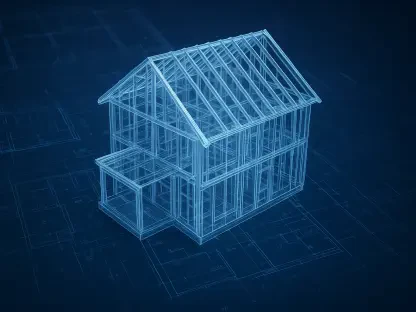
Digital tools have moved far beyond basic 3D modeling to become essential operational assets throughout the lifecycle of a facility. Building Information Modeling (BIM) is now used to generate fabrication-ready drawings and track the real-time progress of manufacturing across a global network of suppliers. This granular data allows contractors and owners to visualize potential schedule risks and resolve clashes in the virtual world before they manifest as costly physical delays on the job site. For the owner, the ultimate goal is the creation of a “digital twin”—a perfect virtual replica of the physical data center. This tool allows operations teams to simulate maintenance tasks, test power configurations, and model cooling performance with extreme precision once the construction phase is over. In the current market, static progress reports have been replaced by real-time dashboards and 3D look-ahead views that provide total transparency into the project’s health and readiness.
The implementation of these digital twins also facilitates a more seamless handoff between the construction team and the operations team. Historically, the transition from building to operating a data center was a period of high risk and potential confusion, as operating manuals and as-built drawings were often incomplete or difficult to navigate. Now, the digital twin serves as a living document that contains every detail of the facility’s construction, from the specific serial numbers of the electrical switchgear to the maintenance history of the cooling pumps. This wealth of information is immediately available to the facility managers, allowing them to begin optimizing the building’s performance from day one. Furthermore, these virtual models can be used to train new staff in a safe, simulated environment, reducing the risk of human error during critical maintenance procedures. The rise of the digital twin represents a shift from viewing construction as a one-time event to seeing it as the first phase of a long-term digital asset.
Navigating Labor Scarcity and Design Fluidity
Managing Constraints: Labor Scarcity and Global Demand
Despite the influx of advanced technology and modular methods, the industry remains constrained by a finite pool of specialized labor capable of executing these complex projects. The talent required to commission and audit massive fiber networks, as well as the electricians capable of working on high-voltage power systems, is in extremely high demand globally. This creates a constant resource-balancing act for contractors, where crews are often shifted between different project sites across continents to meet fluctuating needs and critical milestones. This scarcity places an immense premium on efficient schedule management and site-level productivity, as even a minor delay in one phase can ripple through the entire global labor supply chain. To combat this, many firms are investing in proprietary labor-tracking software that uses artificial intelligence to predict future manpower needs and optimize the allocation of skilled workers based on their specific certifications and past performance.
Furthermore, the industry is seeing a shift toward “traveling” labor models, where specialized crews move from one hyperscale campus to the next, bringing a high level of expertise to each site. This creates a unique challenge for project managers, who must provide onsite amenities and support systems to maintain the morale and productivity of a workforce that is often far from home. Housing, transportation, and health services are now frequently managed by the construction firm as part of the overall project logistics. At the same time, there is a growing emphasis on local workforce development, with contractors partnering with community colleges and technical schools to train the next generation of data center specialists. This two-pronged approach—leveraging global experts while building local capacity—is essential for sustaining the massive construction volumes required between 2026 and 2030. By treating labor as a strategic asset rather than a commodity, firms are better able to navigate the competitive talent market.
Controlling the Flow: The Innovation Spigot and Design Lock
A unique and persistent challenge in the data center sector is what many in the industry call the “innovation spigot”—the tendency for owners to request mid-stream design changes to incorporate the latest cooling or power technologies. While contractors strive to be as flexible as possible to accommodate these requests, they must also maintain the discipline necessary to deliver a functional facility on time. Managing this tension requires a delicate balance of satisfying the client’s desire for cutting-edge tech while eventually “locking in” the design to meet hard completion deadlines. Builders are increasingly using “decision gates” in their schedules, where certain design elements are frozen to allow for procurement and construction to proceed. Any changes requested after these gates have passed must be weighed against the potential impact on the overall timeline, a process that requires clear communication and a high degree of trust between the owner and the builder.
This management of design fluidity is further complicated by the increasing integration of sustainable technologies and renewable energy sources. As hyperscalers commit to carbon-neutral operations, contractors are often asked to incorporate massive battery storage systems, onsite solar arrays, or hydrogen fuel cells into the facility’s power architecture. These additions often come late in the design process as new technologies become commercially viable. Contractors have responded by developing “utility-neutral” designs that can accept a variety of power sources without requiring a total overhaul of the electrical distribution system. This ability to integrate sustainable innovation without derailing the construction schedule is a key differentiator in today’s market. By establishing clear protocols for how and when changes can be made, construction firms are able to keep the “innovation spigot” open as long as possible without drowning the project in technical debt or schedule delays.
The Competitive Landscape and Cultural Evolution
Market Dynamics: Stratification and the Billion Dollar Club
The hyperscale data center market has created a stark divide between massive general contractors capable of absorbing billion-dollar risks and smaller regional firms. To play in the “billion dollar club,” a contractor must have not only a massive balance sheet and extreme bonding capacity but also a global footprint that matches the expansion plans of their clients. Many mid-sized players find themselves effectively “frozen out” of these megaprojects due to the aggressive, traveling nature of the work and the high-pressure environment that demands 24/7 operations. However, this stratification has also led to a burgeoning niche market for regional firms who can attract talent seeking a better work-life balance away from the high-stress data center sector. These smaller firms often specialize in the “edge” data centers or enterprise-level facilities that, while smaller in scale, still require a high degree of technical proficiency but offer more predictable working conditions.
This divide is also fueling a war for talent at the corporate level, as firms compete for executives and project directors who have experience managing the unique complexities of hyperscale construction. The compensation packages for these “mega-project” leaders have reached record highs, reflecting the critical importance of their expertise in delivering billion-dollar assets on time. At the same time, the industry is seeing an increase in strategic mergers and acquisitions, as larger firms look to acquire specialized MEP contractors to bring more of the delivery chain in-house. This vertical integration allows general contractors to have more control over the most volatile parts of the construction process, further reducing risk for the client. The result is a more consolidated and professionalized industry, where the top-tier firms operate more like global technology consultants than traditional builders. This evolution is necessary to meet the sheer scale of the digital infrastructure required in the coming years.
Industry Transformation: Coopetition and Shared Lessons
Interestingly, the extreme intensity of these projects has fostered a unique culture of “coopetition,” where rival contractors often find themselves working side-by-side on the same massive data center campus. These environments act as live laboratories where different construction methods, digital tools, and logistics strategies are compared in real-time, helping to establish industry-wide best practices. This spirit of shared lessons is accelerating the evolution of the entire construction industry, turning the AI-driven data center crunch into a catalyst for global innovation in project delivery. Contractors who were once guarded about their proprietary methods are now finding that the scale of the challenge is so great that they must collaborate on safety protocols, labor standards, and technical specifications to ensure the health of the entire ecosystem. This collective approach is raising the floor for the entire industry, making modern construction safer, faster, and more technologically integrated.
This cultural evolution also extends to the way the industry engages with the broader community and the environment. As data centers become more prominent features of the landscape, contractors are taking a more active role in managing the social and environmental impact of their projects. This includes everything from implementing advanced noise-reduction systems during construction to developing water-recycling programs that benefit the local community. The focus on “social license to operate” has become a key part of the project delivery strategy, as delays in local permitting can be just as costly as delays in the supply chain. By viewing the project as part of a larger social and ecological system, contractors are able to build more sustainable and resilient facilities. This holistic perspective is the hallmark of the modern construction professional, who must balance the needs of global tech giants with the realities of local communities and the planet.
Advancing the Standard of Digital Infrastructure
The construction industry successfully adapted its workflows to meet the unprecedented demands of the AI infrastructure boom by embracing industrialization and digital integration. As projects moved forward, it became clear that the most effective firms were those that treated physical construction as a component of a larger digital lifecycle. This transition required a significant cultural shift, moving from traditional, competitive bidding toward collaborative, transparent partnerships that prioritized speed and flexibility above all else. The successful deployment of modular assembly and digital twin technology demonstrated that construction could be both a high-speed and high-precision endeavor, setting a new expectation for how all infrastructure projects should be managed. By standardizing these advanced methods, the industry created a more predictable and resilient supply chain that was better equipped to handle the rapid evolution of server technology and power requirements.
Looking toward the future, the lessons learned during this period of intense growth suggested that the industry must continue to invest in specialized labor and sustainable building practices. To maintain this momentum, firms should focus on formalizing the “coopetition” models that allowed for rapid knowledge sharing, ensuring that safety and quality standards kept pace with construction speed. Owners and contractors must also continue to refine their “design lock” protocols to allow for innovation without compromising delivery dates. As the focus shifts toward even higher density computing and more remote “edge” locations, the ability to deploy standardized, modular units with a pre-integrated digital twin will be the primary factor in determining market leadership. The construction sector proved that it could evolve alongside the technology it houses, transforming itself from a traditional trade into a critical pillar of the global digital economy. This evolution established a robust foundation for the next decade of infrastructure development, ensuring that the physical world remains capable of supporting the digital one.