
The modern jobsite remains a place where the difference between a routine shift and a catastrophic event often hinges on a worker’s ability to interpret a hidden danger. Despite decades of safety advancements, recent research reveals a staggering gap in hazard recognition, with the average tradesperson identifying less than half of the physical threats present during standard briefings. This cognitive disconnect is frequently worsened by a fragmented landscape of industry terminology, where safety protocols and descriptions of danger vary wildly between different firms and regional territories. As construction projects grow in scale and technical complexity, the absence of a “common tongue” has evolved into a significant barrier to risk mitigation, making the push for industry-wide linguistic standards a literal matter of life and death.
Industry veterans are beginning to move away from site-specific jargon to embrace a universal vocabulary designed to save lives across the board. The goal of this movement is to create a cohesive environment where a worker can move from a project in the Pacific Northwest to a site in the Southeast without having to relearn how to identify lethal threats. By streamlining the way we talk about danger, the sector is attempting to bridge the gap between theoretical safety and the reality of the field. This shift is not merely about administrative convenience; it is a fundamental restructuring of how human beings perceive and react to environmental energy that could lead to a fatality.
Addressing the Critical Deficit in Jobsite Hazard Recognition
The persistent inability of workers to spot every hazard is not necessarily a reflection of negligence, but rather a byproduct of cognitive overload and inconsistent training. When every contractor uses different names for the same risk, the mental energy required to translate those terms detracts from the worker’s ability to actually see the physical threat in front of them. This confusion creates a “fog of safety” where essential warnings are lost in a sea of corporate acronyms and shifting definitions. By standardizing these descriptions, the industry aims to sharpen the focus of every person on-site, ensuring that the most critical dangers are identified immediately and without hesitation.
Furthermore, the complexity of modern builds means that hazards are no longer as obvious as a simple hole in the floor. Energy sources like high-pressure systems or complex electrical grids require a high degree of technical literacy to manage safely. Without a standardized way to describe these sophisticated threats, communication breakdowns are almost inevitable. Construction leaders are now recognizing that clarity in language is just as important as the quality of personal protective equipment. The move toward a universal safety lexicon represents a commitment to cognitive ergonomics, making it easier for the human brain to process and prioritize life-saving information in high-stress environments.
Establishing a Unified Framework for Life-Saving Communication
Decoding the “STCKY” Lexicon: Prioritizing High-Energy Threats Over Minor Incidents
Central to the burgeoning safety movement is the classification of “STCKY”—an acronym for “Stuff That Can Kill You.” This terminology forces a sharp distinction between minor injuries, such as minor abrasions or sprains, and Serious Injuries and Fatalities (SIFs). Industry data suggests that the precursors to life-threatening accidents are fundamentally different from those of minor mishaps. By adopting the “STCKY” label, firms can ensure that workers do not become desensitized to safety warnings by treating a paper cut with the same linguistic weight as a structural collapse. This focus on “High Energy” hazards ensures that the most lethal threats are always described with a unique sense of urgency.
Implementing this lexicon across all firms reduces the cognitive load on mobile workforces that frequently switch employers. When the term “High Hazard” means the same thing on every jobsite, the response becomes instinctual rather than analytical. This linguistic precision allows safety managers to cut through the noise of daily operations, directing the workforce’s attention toward the specific energy sources that possess the greatest potential for catastrophe. By isolating these high-stakes risks, the industry is moving toward a more disciplined and effective method of communication that prioritizes human life above all other metrics.
The Upstream Shift: Integrating Risk Mitigation into Project Pursuit and Design
The push for standardized language is fundamentally changing when and where safety planning occurs within the project lifecycle. Leading contractors are moving safety discussions “upstream,” shifting the focus from the jobsite trailer to the initial stages of project pursuit and design. By identifying high-risk scopes, such as deep excavations or complex steel erection, months before breaking ground, firms can utilize standardized terminology to “engineer out” hazards. This proactive approach allows for structural redesigns or scheduling adjustments that eliminate worker exposure to high-energy environments entirely, rather than just managing the risk after it exists.
Moreover, this early-stage integration ensures that safety is not a reactive field discipline but a foundational element of project management. When safety experts are involved in the design phase, they can use standardized vocabulary to communicate risks to architects and engineers who may not be as familiar with field-level dangers. This collaborative effort ensures that the project is built safely from the drafting table to the final inspection. By the time a task reaches the frontline, the most significant “STCKY” risks have already been addressed, leaving the field team to focus on the remaining operational hazards with a clear and predefined plan.
Visual Hazard Identification: Simplifying Risk Through the Energy and STCKY Wheels
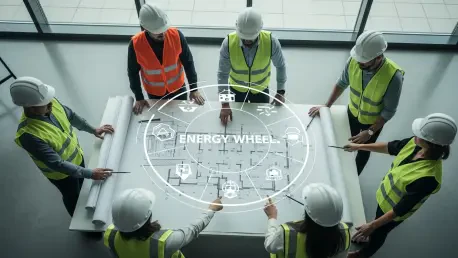
To supplement verbal standards, the industry is increasingly relying on visual tools like the “Energy Wheel” and the “STCKY Wheel.” These tools serve as a universal shorthand, identifying various forms of energy—gravity, motion, and pressure—that can lead to catastrophe. By placing these visual aids side-by-side during pre-task planning, teams can intuitively categorize risks regardless of their primary language or experience level. This move toward visual literacy challenges the traditional assumption that safety manuals must be text-heavy, offering a more dynamic and accessible way to recognize the precursors of a fatality in real-time.
These wheels act as a psychological trigger, helping workers to scan their surroundings for specific types of energy that might otherwise be overlooked. For example, the Energy Wheel might prompt a worker to look for “mechanical energy” in a way that a simple checklist might not. This visual approach democratizes safety knowledge, ensuring that even the most junior apprentice can contribute to the hazard identification process. By standardizing these visual cues across the industry, contractors are creating a consistent mental framework that travels with the worker, reinforcing the verbal lexicon and creating a multi-sensory approach to jobsite protection.
Balancing Top-Down Engineering Control with Bottom-Up Craft Participation
A unique tension exists in the implementation of standardized language between the need for corporate oversight and the necessity of frontline buy-in. While executive leadership provides the engineering framework and resource allocation, the ultimate success of terms like “STCKY” depends on the workers physically delivering the project. For the language to be effective, it cannot be a mere corporate directive; it must be a practical tool used by craft workers to dictate their own safety. This dual approach ensures that while engineers design out the most significant risks, the workforce remains empowered to use a shared vocabulary to call out dangers on the ground.
When craft workers are invited to participate in the development and application of safety language, they take greater ownership of the outcomes. This creates a more cohesive and resilient safety culture where communication flows in both directions. The standardized language acts as a bridge, allowing a laborer to speak to a project manager with the same technical clarity and authority regarding high-energy threats. This leveling of the playing field ensures that the “universal language” is lived and breathed on the jobsite, rather than just being a set of posters on a wall. It transforms safety from a compliance requirement into a shared values system.
Strategic Recommendations for Implementing Universal Safety Standards
To successfully adopt these standardized protocols, firms should prioritize the integration of “High Energy” concepts into every pre-job meeting and project bid. It is recommended that companies move beyond general compliance—such as “following safety rules”—and move toward technical precision, such as identifying specific anchorage points for fall protection. Best practices include the widespread use of visual tools like the Energy Wheel to transcend language barriers and the inclusion of safety experts during the earliest design phases of a project. By standardizing these behaviors and terms, contractors can ensure that their safety expectations are clear, measurable, and consistently applied across all jobsites.
Furthermore, firms ought to invest in training that emphasizes the “why” behind the language, helping workers understand the physical principles of energy management. Consistency is key; if a firm adopts “STCKY” as its primary fatality-prevention term, it must be used consistently in all documentation, meetings, and field interactions. This eliminates the ambiguity that often leads to accidents. By making these linguistic standards a non-negotiable part of the company culture, leaders can foster an environment where safety is a core competency rather than a secondary concern. The goal is to reach a point where the language of safety is so ingrained that it becomes the default mode of operation for every individual on the site.
The Future of Construction Safety: A Matured Culture of Clearer Communication
The movement toward a standardized safety language represented a significant maturation of the construction industry’s approach to human life. By replacing fragmented jargon with a focused, universal vocabulary centered on high-energy hazards, the industry created a safer environment for every worker, regardless of their location or employer. This transition marked a shift from reactive field safety to a culture of proactive, engineering-based mitigation. Ultimately, the widespread adoption of “STCKY” and “High Energy” frameworks served as a powerful reminder that clear communication is the most effective tool in the construction arsenal.
Moving forward, the industry should look toward digital integration, where these standardized terms are embedded into building information modeling and wearable technology to provide real-time hazard alerts. The groundwork laid by linguistic standardization allowed for more advanced data analytics, as firms could finally compare safety metrics using the same definitions. This evolution did not just reduce the number of accidents; it fundamentally changed the relationship between the worker and the jobsite. By empowering individuals with a clear and consistent way to identify the “stuff that can kill them,” the construction sector ensured that safety became a truly universal and unbreakable standard.