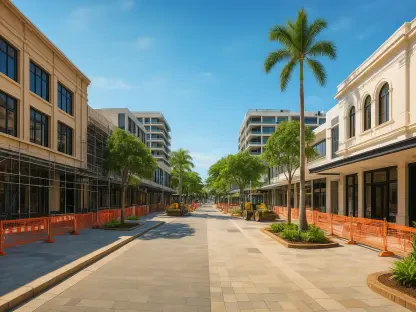

The Canadian commercial real estate landscape has finally moved past the volatile fluctuations of the early decade, marking a decisive shift as national vacancy rates for both the office and industrial sectors decline in unison for the first time in six years. This simultaneous tightening across two distinct asset classes signals that the period of post-pandemic correction has transitioned into a more predictable phase of market equilibrium. Data from the first quarter of the year reveals a significant uptick in leasing activity, suggesting that corporate decision-makers have found their footing amidst shifting work models and economic pressures. The transition is particularly noteworthy because it distances the current market from the persistent uncertainty that previously dampened investment appetites. As inventory levels stabilize and absorption rates improve, the industry is seeing a renewed focus on long-term sustainability rather than immediate crisis management, fostering a climate where developers and investors can project future performance with much greater confidence than in the recent past.
The Office Market Evolution
Flight to Quality: The New Standard for Urban Centers
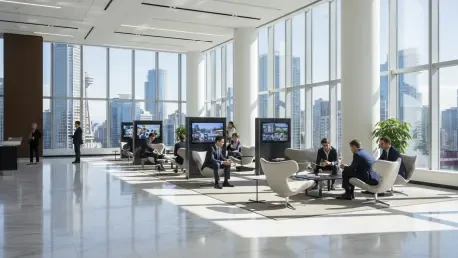
The office sector is currently navigating a sophisticated recovery characterized by a stark divergence in performance between high-end assets and legacy properties. While the national vacancy rate has softened to 13.6 percent, this figure masks a hyper-competitive environment for Class A buildings in major metropolitan hubs like Toronto and Vancouver. Corporations are increasingly prioritizing modern environments that offer advanced technological infrastructure, high-tier amenities, and sustainable building certifications to entice employees back into physical workspaces. This “flight to quality” has created a two-tiered market where premium spaces see rapid absorption and rising rents, while secondary and tertiary assets face prolonged periods of inactivity. This trend emphasizes that the value proposition of the office has changed; it is no longer just a place to sit, but a strategic tool for talent retention and collaboration. Consequently, older buildings are being forced to undergo substantial renovations or risk permanent obsolescence in a market that now demands excellence.
Supply Scarcity: The Impact of Construction Stagnation
Building on this competitive landscape, a primary driver for the current stabilization of vacancy rates is the unprecedented slowdown in the delivery of new office inventory nationwide. Construction starts have essentially ground to a halt, with current development pipelines holding less than two million square feet of space across the entire country, a sharp decline compared to the massive delivery cycles seen a few years ago. Because commercial developments typically require a lead time of three to seven years from the initial planning phase to occupancy, the market is unlikely to see any substantial supply injections before the end of the decade. This lack of new inventory is serving as a natural mechanism to rebalance the market, allowing existing vacancies to be absorbed without the threat of a supply glut. Furthermore, the strategic repurposing of underutilized office towers into residential or mixed-use developments has begun to remove millions of square feet of inefficient space from the commercial pool, effectively establishing a solid floor for property valuations and rent levels.
Industrial Performance and Regional Resilience
Absorption Dynamics: Demand Surpassing New Deliveries
The industrial real estate sector has demonstrated a return to its historical role as a primary driver of market growth, with national vacancy rates tightening to 3.5 percent as of the latest quarterly reporting. This resilience follows a brief period where trade uncertainties and supply chain adjustments caused a temporary pause in expansion, yet the current data indicates that absorption is now significantly outpacing the delivery of new warehouse and logistics space. In the first three months of the year alone, over 3.6 million square feet of industrial space were newly occupied, whereas only three million square feet were brought to market by developers. This positive net absorption is most visible in regional powerhouses such as Calgary and Vancouver, where limited land availability and high demand for last-mile delivery centers keep the market exceptionally tight. The surplus of space that was built during the peak demand years has finally been integrated into the supply chain, leaving the market in a position where available large-scale units are becoming increasingly difficult for new tenants to find.
Future Headwinds: Navigating Geopolitical and Trade Uncertainties
As the market entered this period of stabilization, stakeholders had to navigate a complex set of geopolitical factors that influenced the trajectory of leasing and investment decisions. The upcoming renegotiations regarding the Canada-United States-Mexico Agreement introduced a layer of strategic caution among industrial tenants, many of whom adopted a “wait-and-see” approach before committing to expansive long-term leases. This hesitation suggested that while the fundamentals of the market were strong, the pace of growth could be tempered by external policy shifts that affected cross-border trade and manufacturing logistics. To mitigate these risks, investors should prioritize diversification across asset types and geographic regions while closely monitoring shifts in trade legislation that could impact demand for logistics hubs. Moving forward, the focus should shift from simply securing space to optimizing existing portfolios through better energy management and technological integration. The successful transition into this more balanced era depended on proactive strategies that accounted for both domestic stability and international volatility.