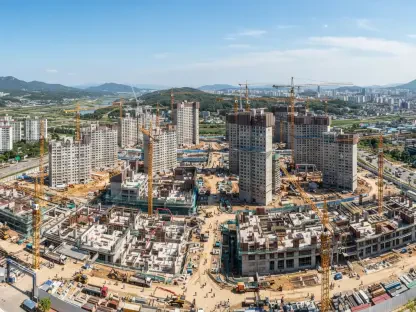
The skyline of Central Texas is currently witnessing a historic transformation where the focus has shifted from iconic vertical landmarks to expansive regional infrastructure and industrial developments that redefine the urban fabric. While the 1,025-foot Waterline tower remains a symbol of Austin’s ambition as the tallest building in the state, the true weight of the market now rests on massive horizontal expansions. Construction starts in the metropolitan area reached an impressive $20.4 billion last year and are projected to hit $21.8 billion throughout 2026. This surge is primarily driven by “megaprojects” that extend far beyond the city center, including the massive Samsung semiconductor facility, the University of Texas expansions, and the multi-billion-dollar overhaul of Interstate-35. This evolution signifies a move toward a more resilient and diversified regional economy that prioritizes long-term utility over purely aesthetic dominance in the central business district.
Operational Evolution through Advanced Building Methods
As the volume of work scales to unprecedented heights, the primary challenge facing the industry involves the severe strain on the region’s finite pool of skilled labor and specialized trade contractors. Industry leaders such as DPR Construction have recognized that the traditional approach to staffing is no longer sustainable given the scarcity of electricians, ironworkers, and pipefitters. To maintain project timelines in this high-demand environment, firms are evolving their operational strategies to focus on human capital management and streamlined coordination. The competition for talent has forced a transition from reactive hiring to proactive workforce development and retention programs. This shift is not merely a response to a temporary shortage but a fundamental change in how large-scale projects are managed across the Austin-Round Rock corridor. By prioritizing the stability of the trade supply chain, contractors are attempting to insulate themselves from the volatility of a tight labor market.
The industry consensus suggests that building smarter is the only viable path forward, leading to the widespread adoption of prefabrication, offsite manufacturing, and virtual design and construction. These technological innovations allow contractors to improve sequencing and overall productivity while mitigating the inherent risks associated with a stretched workforce. Virtual Design and Construction (VDC) has moved from a niche offering to a core requirement for any firm participating in the current megaproject wave. By creating highly detailed digital twins before the first shovel hits the ground, teams can identify potential clashes and logistical bottlenecks in a virtual environment. This foresight reduces the need for onsite rework, which is both costly and labor-intensive. Furthermore, offsite manufacturing allows for the assembly of complex mechanical systems in controlled environments, which are then delivered and installed rapidly. This precision-driven approach ensures that the limited labor pool can be utilized with maximum efficiency.
Expanding Institutional and Life Science Landscapes
Sector-specific data indicates a dramatic boom in the institutional and healthcare construction segments, reflecting the needs of a rapidly growing and aging population in Central Texas. Healthcare starts alone more than doubled over the previous year, reaching an estimated $1.23 billion as major providers expand their footprint to match suburban sprawl. Simultaneously, the city of Austin is proactively creating specialized zoning categories for the life sciences sector to encourage the development of laboratory and research spaces. This targeted regulatory support is designed to cement the region’s status as a premier technology hub while diversifying the local economy beyond software and semiconductors. These new zones allow for higher density and specific safety requirements tailored to modern biotechnology facilities. Such efforts ensure that the built environment can accommodate the specific technical needs of global pharmaceutical and research companies looking to establish operations in Texas.
Regulatory shifts are also playing a crucial role in reshaping the local development landscape, with state legislation such as Texas Senate Bill 840 mandating more flexible mixed-use developments. These legislative changes are forcing municipalities to streamline their approval processes and allow for a more diverse range of residential and commercial integrations. However, despite these advancements at the state level, local bureaucratic hurdles in the permitting process remain a significant challenge for many developers. Persistent delays in fire and energy reviews continue to act as a friction point, slowing the delivery of critical housing and commercial inventory. To navigate these obstacles, many firms are investing heavily in specialized permitting consultants who can facilitate communication between private developers and city officials. The ability to manage these regulatory complexities has become a competitive advantage for firms capable of delivering projects on schedule despite the administrative friction.
Strategic Outlook for Central Texas Infrastructure
The downtown market is currently characterized by a hopeful buzz as it begins to recover from recent economic shifts, supported by significant public investments and favorable interest rates. The upcoming redevelopment of the Austin Convention Center stands out as a anchor project that is expected to revitalize the core of the city and stimulate surrounding retail and hospitality growth. Additionally, major renovations to the local airport are underway to accommodate the massive influx of international travel and cargo associated with the region’s industrial expansion. These public-facing projects provide a necessary counterweight to the massive industrial sites located on the outskirts of the metropolitan area. The synergy between public infrastructure and private industrial investment creates a balanced economic ecosystem that is less susceptible to fluctuations in a single sector. As long as the demand for advanced manufacturing and data centers remains high, the region will continue to attract investment.
The future of the Central Texas construction market rested on the industry’s ability to balance immense demand with technological innovation and efficient labor management. Stakeholders recognized that long-term success required a departure from outdated construction methodologies in favor of integrated project delivery systems. It became clear that fostering a robust pipeline of skilled tradespeople was just as important as securing capital for new developments. Moving forward, the industry prioritized the expansion of vocational training programs and the integration of automation to bridge the productivity gap. Planners also focused on creating resilient infrastructure that could support the increased density mandated by new state laws. By embracing these strategic adjustments, the region solidified its position as a global leader in advanced manufacturing and sustainable urban growth. The lessons learned during this period of rapid expansion provided a clear blueprint for other high-growth metropolitan areas facing similar logistical and labor challenges.