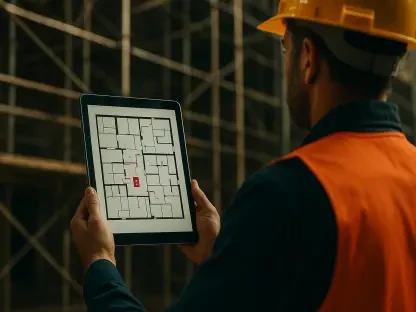

Strategic partnerships with firms like Rise PropTech and CuriosityVC underscore a growing consensus that the construction industry is ripe for a structural overhaul of commercial data. While heavy machinery and advanced engineering have modernized the physical aspects of the job site, the administrative backbone has largely remained anchored in the 20th century. This disconnect often manifests as a chaotic mix of manual Excel entries, overflowing paper folders, and fragmented PDF attachments that slow down project timelines. Reebuild, a Vienna-based technology firm, is changing this narrative by providing a bridge between high-tech field operations and the digital desert of the back office. By successfully raising €3 million in seed funding, the company is positioning itself to eliminate the paperwork bottleneck that has plagued construction firms for decades. The focus is not just on simple digitization but on creating a cohesive ecosystem where financial data flows as seamlessly as the concrete poured on a skyscraper floor.
The Financial Foundation: Investing in Construction Tech
The recent €3 million injection, led by Fortino Ventures, highlights a significant pivot in how European venture capital views the construction technology sector. Fortino, known for its focus on software-as-a-service and AI-driven scale-ups, recognized that the ConTech landscape is ready for a second wave of innovation centered on administrative precision. This seed round also drew participation from previous supporters like the Hansmann Family Office and various public grants from Austrian agencies such as aws and FFG. These investments are fueled by the realization that while building techniques have improved, the commercial management of those projects has suffered from stagnation. By securing this capital, Reebuild has the resources to refine its machine learning models and expand its reach into broader European markets. This financial backing serves as a validation of the company’s approach to solving the unsexy but vital problems of material procurement and bill reconciliation.
Beyond the immediate capital, these strategic partnerships provide a network of expertise that allows the startup to navigate the cultural complexities of the construction world. The industry is traditionally conservative, often resisting digital shifts unless there is a clear, undeniable economic benefit. Investors are betting that the current economic climate, defined by rising costs and labor shortages, will force firms to embrace automation as a matter of survival rather than choice. This shift is particularly visible in the German-speaking markets, where Reebuild has already established a firm foothold. The involvement of specialized firms like Rise PropTech ensures that the product roadmap remains aligned with the actual needs of project managers and financial controllers. As a result, the funding is not merely a runway for operations but a catalyst for establishing a new standard in how construction documents are verified and processed in an increasingly digital economy.
Operational Impact: Driving Efficiency Through Automation
At the core of this transformation is an AI-powered engine that moves beyond the limitations of standard optical character recognition by performing a deep, line-by-line analysis of delivery notes and invoices. This precision allows the system to perform automated reconciliation, a task that once required hours of manual comparison. By matching delivery notes with order confirmations and final bills, the software identifies discrepancies in pricing or quantity before they become costly errors. In an industry where profit margins are razor-thin, reducing the time required to process an invoice from twenty minutes to just three represents a monumental shift in overhead efficiency. Current data shows that the total approval cycle has been compressed from five days to just 1.5, allowing firms to maintain better relationships with their supply chain. With more than 120 companies managing over €530 million in invoice volume, the platform has proven that specialized AI can handle the specific vocabulary of heavy industry.
Strategic decision-makers in the construction sector recognized that the transition to a digital-first administrative model was no longer optional. The successful deployment of Reebuild’s AI tools demonstrated that firms could reclaim significant portions of their workweek by automating the procure-to-pay cycle. As a result, industry leaders shifted their focus toward integrating these agentic systems into their core operations to maintain competitiveness in a high-cost environment. Companies were encouraged to conduct internal audits of their current documentation workflows to identify the most severe bottlenecks before implementing automated solutions. It was recommended that firms prioritize the training of their staff to work alongside AI agents, ensuring a smooth transition to more strategic roles. The progress made in the mid-2020s served as a blueprint for how heavy industry could successfully bridge the gap between physical labor and digital precision to ensure long-term viability.