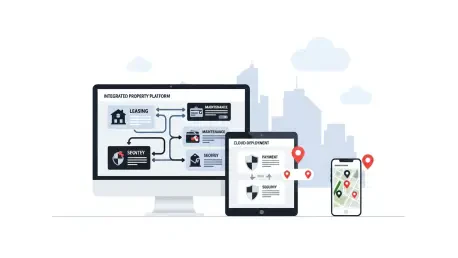

Leasing cycles accelerated, maintenance requests triaged themselves, and portfolio insights surfaced before problems hit the balance sheet, signaling a decisive break from fragmented tools toward intelligent platforms that learn with every lease, ticket, and payment. That is the promise animating the next wave of property software—and the question is how quickly the market captures it.
Focus and Key Questions for the 2033 Property Software Landscape
This research examined how cloud, SaaS, AI/ML, and mobile are reframing operations, economics, and user experience across real estate. The inquiry centered on value concentration: which segments scale fastest, which use cases deliver the clearest ROI, and which delivery models lower friction for broad adoption.
It also probed constraints. Adoption gaps among SMEs and in emerging markets, data governance and cybersecurity risk, and workforce readiness could slow a shift from reactive work to proactive, analytics‑driven workflows. The analysis sought the plays that close these gaps.
Market Context and Why This Matters Now
The market is set to expand from USD 3.2 billion to USD 7.8 billion by 2033 at an 8.9% CAGR, with cloud already holding more than three‑fourths of deployments. SaaS flexibility, scale, and remote access have tipped the balance away from on‑premise and unlocked 30–40% operational IT savings.
Mobile‑first execution compounds gains. End‑to‑end tasks on smartphones produce roughly 20% better tenant engagement and up to 15% time savings. Residential leads in growth at a 10.7% CAGR, while marketing and advertising drove 2023 revenue on SEO, social, and content‑led demand generation.
Research Methodology, Findings, and Implications
Methodology
The study synthesized market sizing and segment breakouts; benchmarked ROI via cloud vs. on‑premise TCO and mobile productivity metrics; and mapped AI/ML adoption across leasing, maintenance, marketing, and finance. Vendor roadmaps and case studies informed integration trends with IoT and smart building systems.
Scenario modeling tested regulatory paths, privacy mandates, and macro sensitivity through 2033. Regional assessments identified SME barriers where awareness, training, and financing remain thin.
Findings
Growth to USD 7.8 billion by 2033 appears supported by cloud’s 75%+ share and SaaS primacy. Savings of 30–40% in operational IT and measurable mobile productivity strengthen the business case. Residential’s tenant‑centric self‑service accelerates adoption, while marketing tech remains a revenue lever.
The operating model is moving from manual and reactive to proactive and data‑driven through platform consolidation and integrated analytics. The main brake is limited awareness among small landlords and traditional firms, which signals opportunity for simplified onboarding and value‑based pricing.
Implications
Owners and operators should prioritize cloud migration, mobile workflows, and AI‑assisted leasing and maintenance to capture efficiency and experience gains. Vendors can unlock SME demand with modular packaging, guided training, and proof‑of‑value pilots.
Investors may favor platforms with strong ARR, low churn, and AI‑enhanced margins. Centralized data raises the bar for governance and cyber controls, while integrations with IoT, payments, insurance, and marketing tech will define category leaders.
Reflection and Future Directions
Reflection
Uneven emerging‑market data, shifting AI capabilities, and fuzzy “tenant engagement” definitions complicated comparisons. Triangulation across vendor claims, third‑party benchmarks, and portfolio case studies increased confidence, though longitudinal post‑migration evidence remained sparse.
Risk domains—AI bias and evolving cybersecurity threats—require ongoing scrutiny. ESG reporting links and resilience metrics also merit deeper evaluation.
Future Directions
Next research should test AI copilots in leasing, maintenance triage, and revenue optimization at portfolio scale. Predictive maintenance outcomes will improve as IoT density rises; interoperability, open APIs, and data portability should be tracked as platforms consolidate.
SME adoption curves in LATAM, Africa, and Southeast Asia need targeted playbooks. New KPIs—automation share, TCO deltas, tenant NPS shifts—will anchor accountability and guide capital plans under changing privacy mandates and macro shocks.
Conclusion and Final Perspective
By 2033, cloud dominance, mobile‑first execution, and expanding AI/ML adoption had reshaped property software economics and workflows. Value concentrated in residential growth, marketing‑led demand, and proactive, analytics‑driven operations. The largest upside for vendors and owners lay in closing SME awareness gaps with education and low‑friction onboarding, while tightening governance and security safeguards. The market’s trajectory pointed toward platform‑centric, recurring‑revenue models, with actionable next steps in AI deployment, IoT‑enabled maintenance, and standardized data practices.