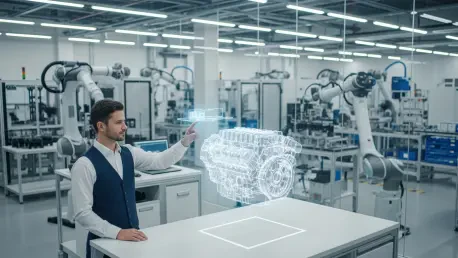

The manufacturing sector is currently navigating a profound transformation where the traditional boundaries between human creativity and computational precision are rapidly dissolving into a unified digital ecosystem. As of 2026, the integration of advanced artificial intelligence into engineering workflows has evolved from a speculative luxury into a fundamental operational necessity for firms aiming to maintain a competitive edge. Autodesk has officially signaled its commitment to this shift by embedding sophisticated AI agents across its Product Design and Manufacturing portfolio, moving beyond simple automation toward a state where software truly understands the spatial and physical logic of 3D design. This strategic rollout represents a deliberate attempt to harmonize general frontier models with the proprietary, high-fidelity data that defines the modern industrial landscape. By doing so, the company provides a bridge for organizations to transition from legacy manual processes to a future where design intent is interpreted and executed by context-aware systems that significantly reduce the cognitive load on human engineers.
Transforming Workflows: The Rise of Contextual Assistance
Functional Orchestration: Enhancing Software Interactivity
The central pillar of this technological expansion is the Autodesk Assistant, a tool that transcends the capabilities of standard chatbots by actively orchestrating complex actions within specialized CAD environments. In the Fusion platform, this assistant utilizes prompt-to-API capabilities that allow users to trigger nearly any software function through natural language commands, effectively removing the barriers traditionally associated with learning complex menu hierarchies. For engineers working in Inventor, the tool facilitates the execution of intricate tasks and the extraction of vital design information without the need for manual coding or deep script knowledge. Furthermore, in specialized applications like Moldflow, the assistant streamlines simulation cycles by guiding users through troubleshooting steps and providing expert-level interpretations of cooling and flow results. This multi-faceted approach ensures that even novice users can achieve high levels of productivity while experienced professionals focus on higher-order creative challenges rather than the minutiae of software navigation.
Structural Integration: Simplifying Product Data Management
Beyond the immediate design interface, these AI enhancements are fundamentally altering how technical teams interact with historical data and complex simulation parameters across the enterprise. Within the Vault environment, the assistant enables personnel to locate specific design iterations and learn hidden software features by simply asking questions in plain English, which eliminates the time-consuming process of manual searching through vast databases. This capability is particularly vital as manufacturers contend with increasing data volumes and the need for rapid retrieval of legacy information during new product development cycles. By providing a natural language interface for data management, the software ensures that organizational knowledge remains accessible and actionable rather than buried in static files. This shift toward intuitive data interaction allows teams to maintain a fluid workflow where information flows seamlessly between design, simulation, and production stages, fostering a more responsive and agile manufacturing culture that can adapt to market demands.
Future-Proofing Industry: Extensibility and Strategic Growth
Model Context Protocols: Bridging Internal Systems
A critical advancement in this rollout involves the introduction of new public Model Context Protocols, specifically the Fusion MCP and the Fusion Data MCP, which offer technical teams unprecedented flexibility in customization. These protocols are designed to allow organizations to extend the native capabilities of their design tools into bespoke internal environments, creating a bridge between standardized software and proprietary corporate systems. By leveraging these protocols, engineering departments can automate multi-step workflows that span across different software platforms and query design data across multiple projects with a level of granularity previously unavailable. This level of extensibility ensures that the AI agents are not just isolated features but are instead integrated components of a larger, customized digital infrastructure. For companies with high digital maturity, these tools provide the necessary framework to build autonomous systems that can handle repetitive engineering tasks, allowing the human workforce to concentrate on innovation and strategic decision-making.
Operational Maturity: Navigating the Path to Automation
The successful implementation of these intelligent agents required a fundamental shift in how manufacturers perceived the relationship between digital tools and human expertise. By offering a combination of ready-to-use assistance and highly customizable developer protocols, the strategy met diverse organizations at their specific stages of digital evolution, ensuring that the transition to AI-driven manufacturing was both practical and scalable. These advancements effectively converted static design files into dynamic, intelligent assets that informed every stage of the lifecycle, from the initial sketch to the final production line optimization. Leaders in the field utilized these new capabilities to reduce lead times and improve material efficiency, which directly contributed to more sustainable and profitable business models. As these technologies became standard, the focus shifted toward refining the interaction between human intuition and machine precision, ensuring that the next generation of engineers remained equipped to lead in an automated landscape.