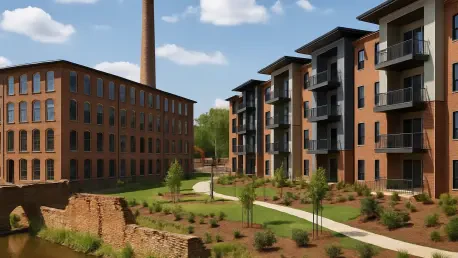

The transformation of the former Union Bleachery Mill site into a vibrant residential hub marks a significant departure from South Carolina’s industrial past toward a future defined by urban connectivity and environmental renewal. Spanning 250 acres, this massive redevelopment project addresses the dual challenges of remediating legacy land and accommodating the influx of new residents seeking high-quality housing in the Southeast. By reclaiming a site that once served as a cornerstone of the regional textile industry, developers are creating a blueprint for how underutilized industrial corridors can be repurposed to serve modern societal needs. This ambitious undertaking, known as the On the Trail master plan, begins with a phase that emphasizes luxury living and immediate access to nature, effectively bridging the gap between historical preservation and contemporary lifestyle demands.
Foundations of Urban Revitalization
Strategic Financing and Regional Growth
Securing the necessary capital for a project of this magnitude required a robust financial framework, which was solidified through a $47 million construction loan from CIBC. This investment facilitates the development of Venture on the Trail, the initial 222-unit residential community that serves as the anchor for the broader 250-acre master plan. The financial commitment reflects deep confidence in Greenville’s economic trajectory, as the region continues to outperform national averages in population growth and job creation. By focusing on the Alston Street corridor, the project taps into a high-demand submarket where traditional housing stock has struggled to keep pace with the needs of a workforce that is increasingly mobile and tech-oriented. This first phase is not merely a standalone apartment complex but a foundational investment intended to catalyze further commercial and hospitality developments within the historic mill’s footprint.
The demographic shift toward Greenville County, which has seen an 11% increase in population since 2020, necessitates a diverse range of housing options that cater to varying household sizes. Venture on the Trail addresses this by offering floor plans that span from efficient 600-square-foot studios to more spacious 1,350-square-foot three-bedroom apartments. This variety ensures that the development can accommodate a wide spectrum of residents, from young professionals and digital nomads to expanding families. The integration of high-end interior finishes, such as quartz countertops and shaker-style cabinetry, aligns the project with the expectations of modern renters who prioritize both aesthetics and functionality. By situating these modern units within a historically significant site, the developers are leveraging the unique character of the area to create a sense of place that is often missing from suburban sprawl or generic high-rise developments.
Remediation and Infrastructure Integration
Transforming an industrial relic like the Union Bleachery Mill into a safe, habitable environment involved years of meticulous environmental remediation and land preparation. This process was essential to mitigate the impact of decades of textile manufacturing and to ensure the site met modern safety standards for residential use. Beyond environmental cleanup, the master plan incorporates substantial infrastructure improvements designed to integrate the new community into the existing urban fabric of Greenville. A key component of this effort is the planned construction of an elevated pedestrian bridge over the Blue Ridge Highway. Supported by a federal RAISE Grant, this bridge is a critical safety feature that will provide residents with seamless and secure access to the surrounding neighborhoods, effectively removing the barrier created by high-traffic roadways and fostering a more walkable environment.
The emphasis on infrastructure extends beyond basic transportation to include the creation of specialized communal spaces that encourage social interaction and active living. The development includes a standalone clubhouse and co-working spaces specifically designed to support the growing number of residents who work remotely or operate small businesses. These facilities are complemented by a resort-style pool and two pickleball courts, reflecting the regional trend toward lifestyle-oriented amenities that promote physical health and social engagement. By combining these private amenities with public-facing infrastructure like the pedestrian bridge, the project aims to create a cohesive ecosystem where residents can live, work, and recreate without relying exclusively on personal vehicles. This holistic approach to site development ensures that the transition from a closed industrial site to an open residential hub is both sustainable and beneficial to the wider community.
Integrating Recreation and Modern Living
Connectivity to the Prisma Health Swamp Rabbit Trail
A defining characteristic of the Venture on the Trail development is its direct frontage on the Prisma Health Swamp Rabbit Trail, a 22-mile multi-use greenway that has become a central artery for recreation in Greenville. This proximity is a primary driver of value for the project, as modern residents increasingly prioritize immediate access to outdoor spaces and non-motorized transit options. To capitalize on this geographic advantage, the community includes an expansive bike storage room and specialized facilities tailored to trail users. This design choice recognizes that the trail is not just a recreational asset but a vital transportation corridor that connects the site to downtown Greenville and various local parks. By blurring the lines between private residential space and public greenways, the development offers a lifestyle that emphasizes wellness and environmental stewardship.
The strategic importance of the trail is further highlighted by the way it influences the overall layout of the community, with buildings positioned to maximize views and ease of access to the path. Stakeholders have noted that proximity to the Swamp Rabbit Trail has become one of the most sought-after features in the local real estate market, often commanding a premium over more traditional locations. This trend reflects a broader shift in urban planning where natural and recreational assets are treated as essential infrastructure rather than optional perks. For the residents of Venture on the Trail, the ability to step out of their front door and onto a world-class trail system represents a significant quality-of-life improvement. This seamless integration ensures that the development remains competitive in a crowded market while contributing to the long-term vitality of Greenville’s greenway network.
Future Expansion and Mixed-Use Vision
While the initial residential units are currently under construction with a completion target set for 2027, the long-term vision for the On the Trail site encompasses a much broader range of uses. The master plan envisions a multi-phase expansion that will eventually include commercial retail spaces, hospitality venues, and additional residential phases. This diversified approach is intended to create a self-sustaining neighborhood where daily needs can be met within walking distance of one’s home. The inclusion of retail and dining options will not only serve the residents of the mill site but also act as a destination for trail users and visitors from across the region. This evolution from a single-use industrial site to a complex, mixed-use environment is a sophisticated strategy to ensure the long-term economic resilience of the redevelopment project.
The phased nature of the development allows for adjustments based on market demand and emerging urban trends, ensuring that each subsequent stage builds upon the success of the previous ones. As the first 222 units are delivered, they will set the tone for the architectural style and community culture that will define the entire 250-acre tract. The transition from heavy industry to a vibrant community hub serves as a powerful example of how historical sites can be reimagined for the 21st century. By focusing on connectivity, modern amenities, and a diverse mix of uses, the developers are positioning the former Union Bleachery Mill to remain a relevant and productive part of Greenville’s landscape for decades to come. This forward-looking strategy ensures that the site continues to contribute to the city’s economic growth while providing much-needed housing in a high-demand area.
The revitalization of Greenville’s historic mill site demonstrated that large-scale industrial remediation could be successfully paired with lifestyle-oriented residential development to meet contemporary housing demands. As the project moves toward its projected completion in 2027, the focus must shift toward ensuring that the promised infrastructure, particularly the pedestrian bridge and trail connections, was delivered in a way that truly integrated the site with the surrounding city. Future urban redevelopments should look to this model as a way to leverage existing natural assets, such as greenway trails, to create value and foster a sense of community. Planners and investors ought to prioritize the creation of mixed-use environments that reduced car dependency and promoted public health through active transit options. The success of such projects will ultimately be measured by their ability to maintain a balance between luxury amenities and the broader public benefit of improved urban connectivity.