
The prospect of staring at a barren plot of tilled earth can be daunting for homeowners who envision a lush sanctuary for their upcoming seasonal gatherings. While traditional horticulture often dictates a slow, multi-year progression for plant development, modern landscape design strategies now offer a sophisticated shortcut to achieving visual maturity in mere months. This acceleration is not about forcing nature beyond its limits but rather about manipulating spatial perception and biological growth cycles through high-density planting and structural anchoring. By the time the summer solstice arrives in late June 2026, a meticulously planned site can shed its newly installed appearance in favor of a deep, layered aesthetic that suggests decades of careful cultivation. Achieving this requires a shift from the minimalist approach of previous eras toward a more intentional, high-impact methodology that prioritizes immediate mass and architectural permanence over the sparse, incremental growth patterns typical of amateur gardening.
Establishing the Structural Framework with Permanent Anchors
Creating a sense of permanence starts with the strategic placement of architectural bones, which serve as the visual foundation for the entire landscape. Rather than waiting for small saplings to mature, designers in 2026 recommend investing in the largest specimen shrubs and ornamental grasses that the project budget can accommodate. These larger installations act as immediate anchors, providing height and volume that ground the space and draw the eye away from the flat, undeveloped soil. Fast-growing evergreens and structural woody plants offer a year-round form that mimics the stability of a long-standing garden. By selecting varieties with significant branch density and established root balls, a homeowner can effectively skip the vulnerable early stages of a plant’s life cycle. This approach ensures that the garden possesses a skeleton that feels substantial and intentional from the very first day, creating an immediate psychological impression of age and reliability.
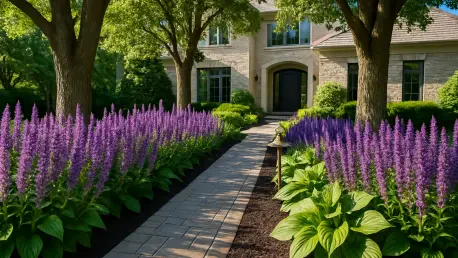
The arrangement of these structural elements is just as critical as their initial size, as the goal is to eliminate the scattered look common in new installations. A primary mistake in novice landscaping is adhering too strictly to conservative spacing guidelines, which results in unsightly gaps of bare mulch. To counter this, professionals often plant at the tighter end of recommended intervals, allowing the foliage to knit together into a continuous canopy by mid-summer. Layering height is another essential technique; by placing taller specimens at the rear of the bed and tapering down to mid-sized shrubs and ground covers, one creates a sense of depth that implies a complex, naturalized ecosystem. This tiered approach mimics the way plants compete for light in established forests, filling the vertical plane so that the eye perceives a wall of greenery rather than a series of isolated points. This density is the most effective visual shorthand for a garden that has been growing for years.
Accelerating Visual Density through Strategic Foliage Selection
While permanent shrubs provide the structure, they often undergo a settling period that limits their growth in the first season. To bridge this aesthetic gap, the aggressive integration of high-performance flowering annuals and rapid-growth foliage plants is a necessary tactic. Species such as petunias, begonias, and zinnias are uniquely bred for prolific blooming and rapid expansion, capable of tripling their size within a few weeks of warm weather. These plants serve as the filler that masks the smaller footprint of young perennials, providing a saturated color palette that makes the garden feel vibrant and full. In the 2026 gardening season, the focus remains on selecting varieties that offer continuous blooms rather than those that peak early and fade. By saturating the foreground with these vigorous growers, the entire composition gains a level of polish and abundance that distracts from the developing permanent residents, ensuring a lush environment for summer hosting.
Beyond the temporary splash of flowers, the inclusion of massive foliage plants provides a textural weight that thin-stemmed varieties cannot achieve. Plants like coleus, sweet potato vines, and various canna lilies offer oversized leaves and dramatic colors that occupy significant physical space in a short timeframe. These foliage-heavy options are superior to wildflower mixes, which often appear disorganized or sparse during their initial months of germination. The bold textures of these fast growers create a “bulk” that fills the visual field, making the garden beds look crowded and healthy. Furthermore, these plants are excellent at suppressing weeds through natural shading, which maintains the clean, curated appearance of a mature landscape. This combination of floral intensity and leafy volume creates a lush, jungle-like density that suggests the garden has been thriving for quite some time, providing a sophisticated backdrop that feels both deliberate and deeply established.
Prioritizing Investment in High-Traffic Focal Points
A frequent challenge when attempting to mature a landscape quickly is the distribution of limited resources across a wide area. Rather than spreading a modest budget thinly across the entire perimeter of a property, the most effective strategy involves concentrating high-impact elements in primary focal points. Areas such as the front entryway, the immediate view from the kitchen window, or the perimeter of the main outdoor seating deck should receive the highest density of plants and the largest specimens. By ensuring these high-traffic zones look finished and lush, a homeowner can create a powerful first impression that colors the perception of the entire yard. Guests typically focus on the spaces where they linger, so a densely planted patio area with mature container gardens and specimen trees will make the surrounding, perhaps thinner, sections of the yard feel like a deliberate choice rather than a lack of completion.
This “hub-and-spoke” investment model allows for a strategic mix of sizes that balances immediate gratification with long-term financial sustainability. A savvy designer might splurge on a single, high-quality anchor plant—such as a multi-stemmed birch or a large citrus tree—to serve as a centerpiece while surrounding it with more affordable, smaller perennials. Smaller plants often establish their root systems more quickly and with less transplant shock than their massive counterparts, meaning they will eventually catch up in size within a few seasons. However, the presence of that one large, mature specimen provides the historical “weight” necessary to anchor the younger plants. This approach creates a hierarchy of growth that feels natural and rhythmic, ensuring the most important parts of the property are ready for the summer season while the rest of the landscape continues to develop its long-term character at a more sustainable pace.
Enhancing Biological Health and Simulating Historical Patina
The perceived maturity of a landscape is often tied to the health and vigor of its flora; a garden that is thriving and deep green always appears more established than one that is struggling with nutrient deficiencies. Achieving this level of vitality by summer requires intensive preparation of the soil long before the first heatwave arrives. Loosening compacted earth and integrating high-quality organic compost ensures that roots can expand without resistance, accessing the water and nutrients required for rapid growth. A thick layer of dark mulch serves a dual purpose by regulating soil temperature and providing a uniform, clean aesthetic that makes plant colors stand out. This dark background hides the uneven heights of new plants and creates a professional finish that mimics the well-maintained look of a public botanical garden. Consistent hydration and a tailored fertilization schedule further ensure that the foliage remains lush and resilient.
The final layer of an established garden is the infusion of character through curated accessories that simulate the passage of time. New gardens often feel sterile because of their lack of “patina,” which can be corrected by introducing weathered elements like stone birdbaths, aged iron benches, or antique-style lanterns. These objects provide a sense of history and human presence that young plants simply cannot provide on their own. Positioning a weathered wooden chair amidst a cluster of new shrubs suggests a history of use and care, immediately grounding the space. Lighting also plays a pivotal role in 2026; permanent-looking fixtures, such as copper path lights that will eventually develop a green oxidation, anchor the space to the home’s architecture. By framing the most successful parts of the garden with these durable, timeless accessories, one can direct the eye toward the finished vignettes and away from any areas that are still in the process of filling in.
Implementing Long-Term Maintenance and Design Cohesion
Homeowners successfully navigated the transition from a bare plot to a lush landscape by adhering to a rigorous schedule of maintenance and design principles. They recognized that the illusion of an established garden depended on consistent intervention, such as deadheading spent blooms to encourage new growth and monitoring for signs of pests that could derail the seasonal progress. The use of liquid fertilizers provided the necessary boost for annuals to reach their full potential by the July deadline, while pruning leggy stems ensured that plants remained bushy and dense. This proactive approach allowed the garden to achieve a level of visual saturation that typically takes years to develop naturally. By treating the garden as a living installation that required constant refinement, the resulting space felt both intentional and deeply rooted in its environment, providing a functional sanctuary for summer hosting and personal relaxation.
The integration of hardscaping and softscaping proved to be the most effective way to simulate maturity in a short timeframe. Owners focused on high-density planting and the strategic use of “filler” species to hide the gaps inherent in new installations, while weathered accessories provided the necessary historical weight. They avoided the mistake of leaving the soil exposed, opting instead for deep mulch and ground covers that created a unified floor for the outdoor room. Moving forward, the focus will remain on managing the transition as the temporary annuals fade and the permanent perennials begin their long-term growth cycles. This design methodology offered a roadmap for immediate gratification without sacrificing the future health of the ecosystem. Ultimately, the successful 2026 garden season demonstrated that with the right combination of structural anchoring and horticultural acceleration, a new landscape could be transformed into a mature, welcoming environment in a single season.